

Across Africa’s savannas, some of the continent’s most iconic predators share a striking feature: spots. From cheetahs to leopards and servals, these patterns are not decorative. They are the result of millions of years of evolution, shaped by habitat, hunting strategy, and survival.
But not all big cats are spotted. Lions, for example, largely lack these markings. Understanding why reveals how different predators occupy very different ecological roles within the same landscape.
What are spots and how do they form?
Spots are created by pigmentation patterns in the skin and hair follicles, determined during early development. These patterns arise through genetic processes that control how pigment cells spread across the body.
While biology determines the structure of these markings, natural selection refines them. Over time, patterns that improve hunting success and survival become more common, leading to the distinct coat markings we see today.
The primary function: camouflage
The primary role of spots is camouflage. More specifically, they provide disruptive coloration, breaking up the outline of the animal’s body and making it harder for prey to recognise a predator’s shape.
In environments filled with tall grass, dappled light, and shifting shadows, this becomes highly effective. For predators that rely on stealth and ambush, remaining undetected until the final moment is critical.
Cheetahs: spots for speed and open ground
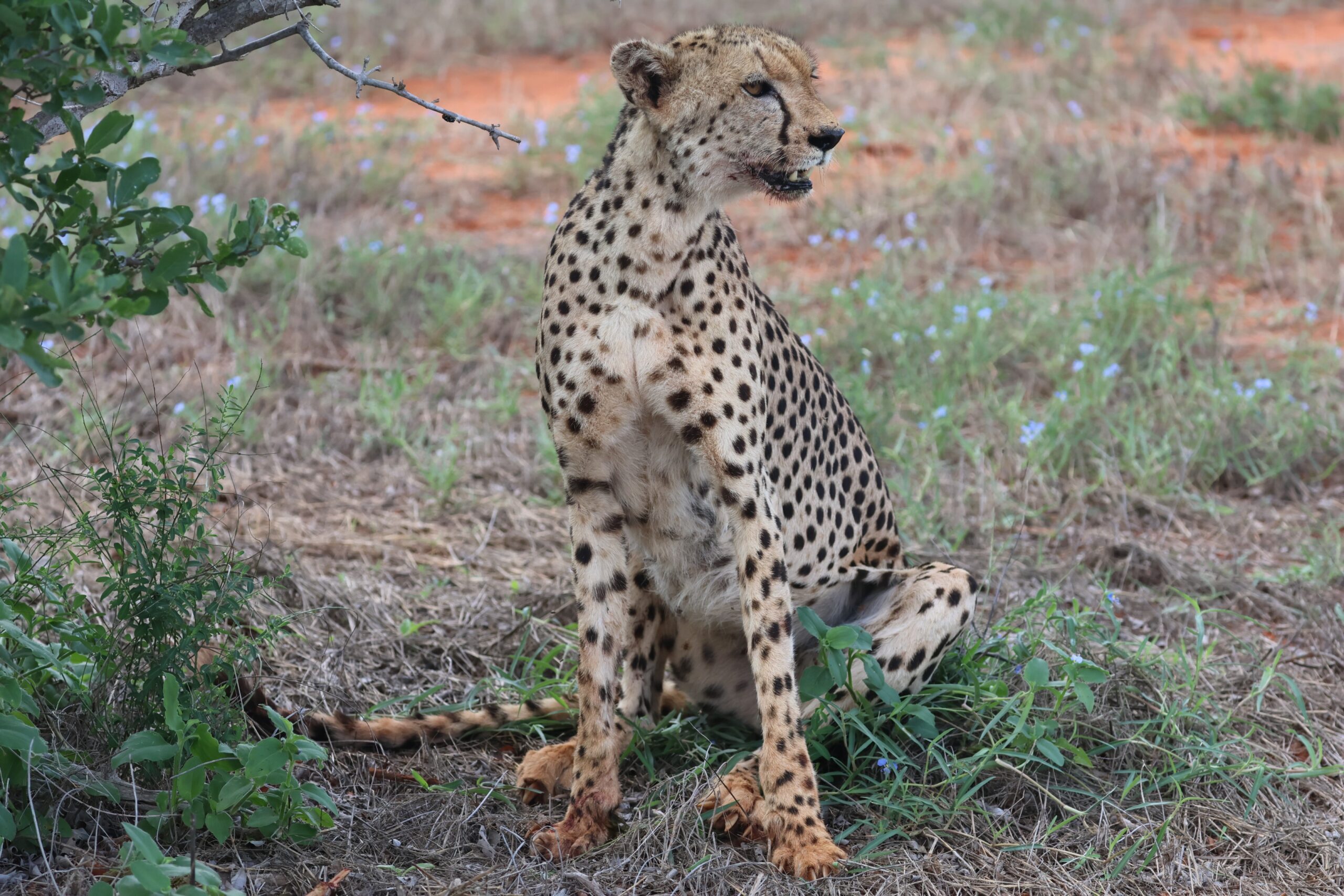
Cheetahs have small, solid black spots evenly distributed across their bodies. These patterns help them blend into open savanna and dry grasslands, reducing detection during the early stages of a hunt.
Unlike other big cats, cheetahs rely on speed rather than prolonged stealth. Their camouflage allows them to get close enough before launching a high-speed chase.
They also possess distinctive black tear marks running from the eyes to the mouth. These markings reduce glare from the sun, improving focus during daytime hunting. Their tails, with contrasting black and white tips, serve an additional role. Cubs use these markings to follow their mother through tall grass, maintaining contact in environments where visibility is limited.

Leopards: rosettes for concealment in dense cover
Leopards have more complex patterns known as rosettes, clusters of spots forming circular shapes. These are particularly effective in woodland, bush, and riverine environments.
Rosettes mimic shifting patches of light and shadow, making leopards extremely difficult to detect, even at close range. As solitary ambush predators, they depend heavily on concealment, both when stalking prey and when resting or guarding kills.
In younger leopards, this camouflage is even more pronounced. Their softer, more muted coats can resemble fallen leaves on the forest floor, helping them remain hidden while they are still vulnerable and spending more time on the ground.

Servals: patterns for precision hunting
Servals have bold spots that vary between individuals. These patterns are well suited to tall grass and wetland habitats.
Servals hunt small prey such as rodents and birds using acute hearing and precise vertical pounces. Their markings help conceal their movement as they move through grass, where even slight visibility could alert prey.
In Tsavo, melanistic servals are also occasionally seen. These individuals appear almost entirely black, but their underlying spot pattern is still present and can often be seen faintly in certain light. Although less visually distinct, these patterns continue to provide camouflage, particularly in shaded or low-light environments where darker coloration can be advantageous.

Why don’t lions have spots?
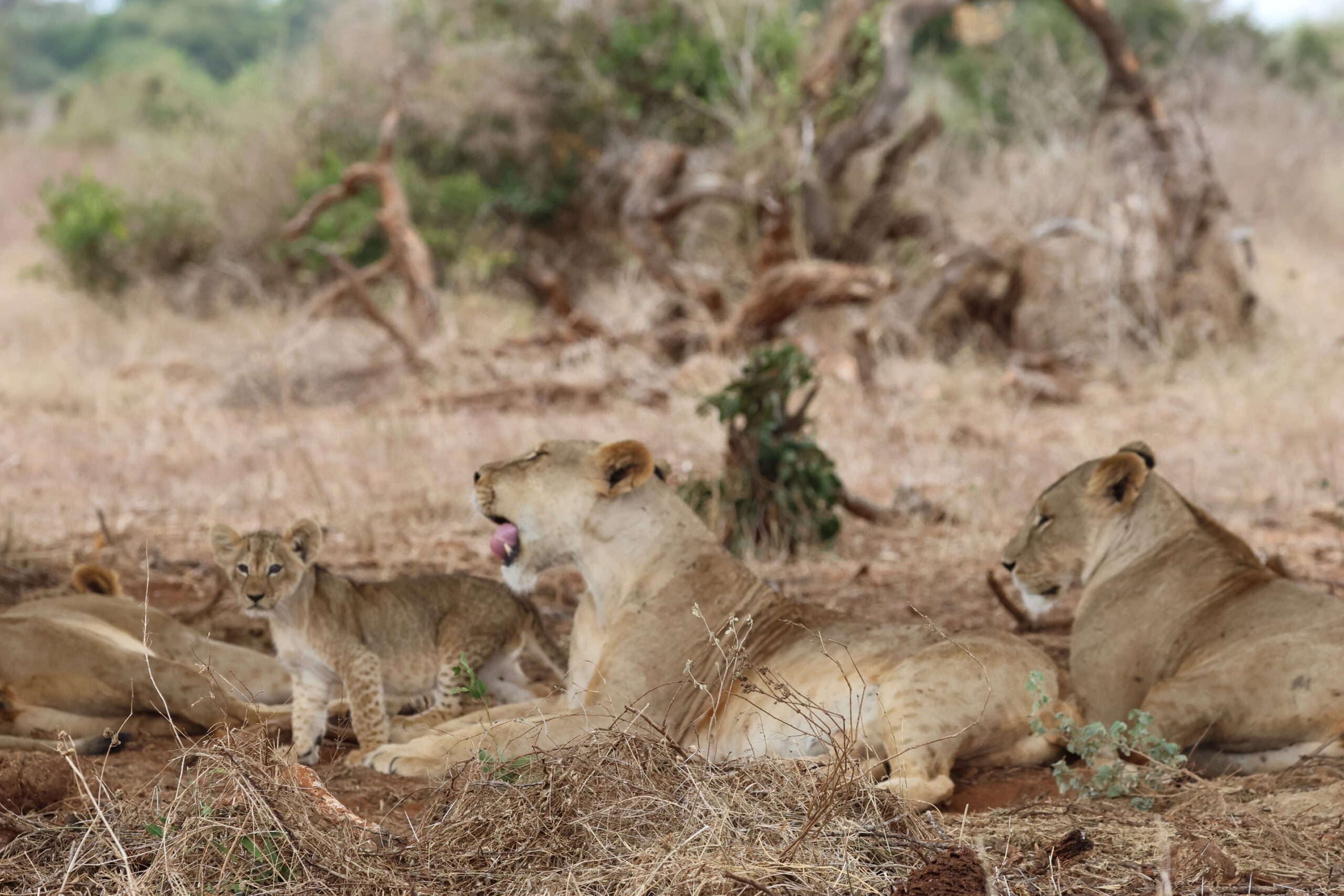
Unlike cheetahs, leopards, and servals, adult lions lack prominent spots. This reflects their different ecological strategy.
Lions inhabit open environments where a uniform tawny coat blends effectively with dry grass, particularly in low light conditions when most hunting occurs. More importantly, lions are social hunters. They rely on coordinated group movement and strength rather than individual stealth, reducing the need for highly disruptive camouflage.
Lion cubs are born with faint spots, which help conceal them when they are vulnerable. As they grow and integrate into the pride, these markings fade, reflecting their shift in role and behaviour.
Follow-me signals and visual communication
Not all markings are designed to hide. Some are meant to be seen.
Lions, for example, have black markings on the back of their ears and a dark tail tuft. These features act as visual signals, helping cubs follow adults through tall grass and maintain group cohesion.
Cheetahs use similar visual cues. The contrasting tail tip allows cubs to track their mother, particularly in dense vegetation where visibility is limited. These markings play an important role in communication, especially for species with dependent young moving through complex environments.
Why patterns differ between species
Differences in coat patterns are shaped by habitat, hunting strategy, and social structure. Cats living in open landscapes tend to have simpler markings, while those in dense vegetation develop more complex patterns that better mimic light and shadow.
Solitary predators rely heavily on stealth and concealment, while social predators depend more on coordination and strength. These differences drive the variation we see across species.
An evolutionary balance
Spots and markings are the result of natural selection. Individuals better adapted to their environment are more successful hunters and more likely to survive and reproduce.
Over generations, this process produces highly specialised patterns that match specific ecological niches.
Final thoughts
Spots are not random. They are functional adaptations.
They allow predators to disappear, communicate, and hunt more effectively. Whether it is the rosettes of a leopard in dense bush, the clean spots of a cheetah on the plains, or the subtle signalling markings of a lion, each pattern reflects a finely tuned balance between environment, behaviour, and survival.