

African elephants have one of the most specialised dental systems of any land mammal. Unlike most species, they do not rely on a fixed set of permanent teeth. Instead, their teeth are replaced through a horizontal “conveyor belt” system that allows them to process large quantities of abrasive vegetation over a long lifetime.
This system is highly effective, but it is also finite. Ultimately, the way elephant teeth function places a natural limit on how long an individual can survive.
What teeth do African elephants have?
The African elephant has a total of 26 teeth:
24 molars (cheek teeth) used for grinding food
2 tusks, which are modified upper incisors
Tusks
Tusks grow continuously throughout an elephant’s life and serve multiple functions. They are used for digging for water, stripping bark, moving vegetation, and in social interactions such as dominance displays.
Some elephants are naturally tuskless, a trait linked to genetic variation that has become more common in populations exposed to intense ivory poaching.
Elephants also show a form of lateral preference. Most individuals have a “master tusk”, which they use more frequently. As a result, this tusk is often shorter and more worn at the tip.
Tusks can reach considerable size. The heaviest recorded tusks, found near Mount Kilimanjaro, weighed 102.3 kg and 97.3 kg.
While tusks are the most visible teeth, they are not the most important for survival.

Molars
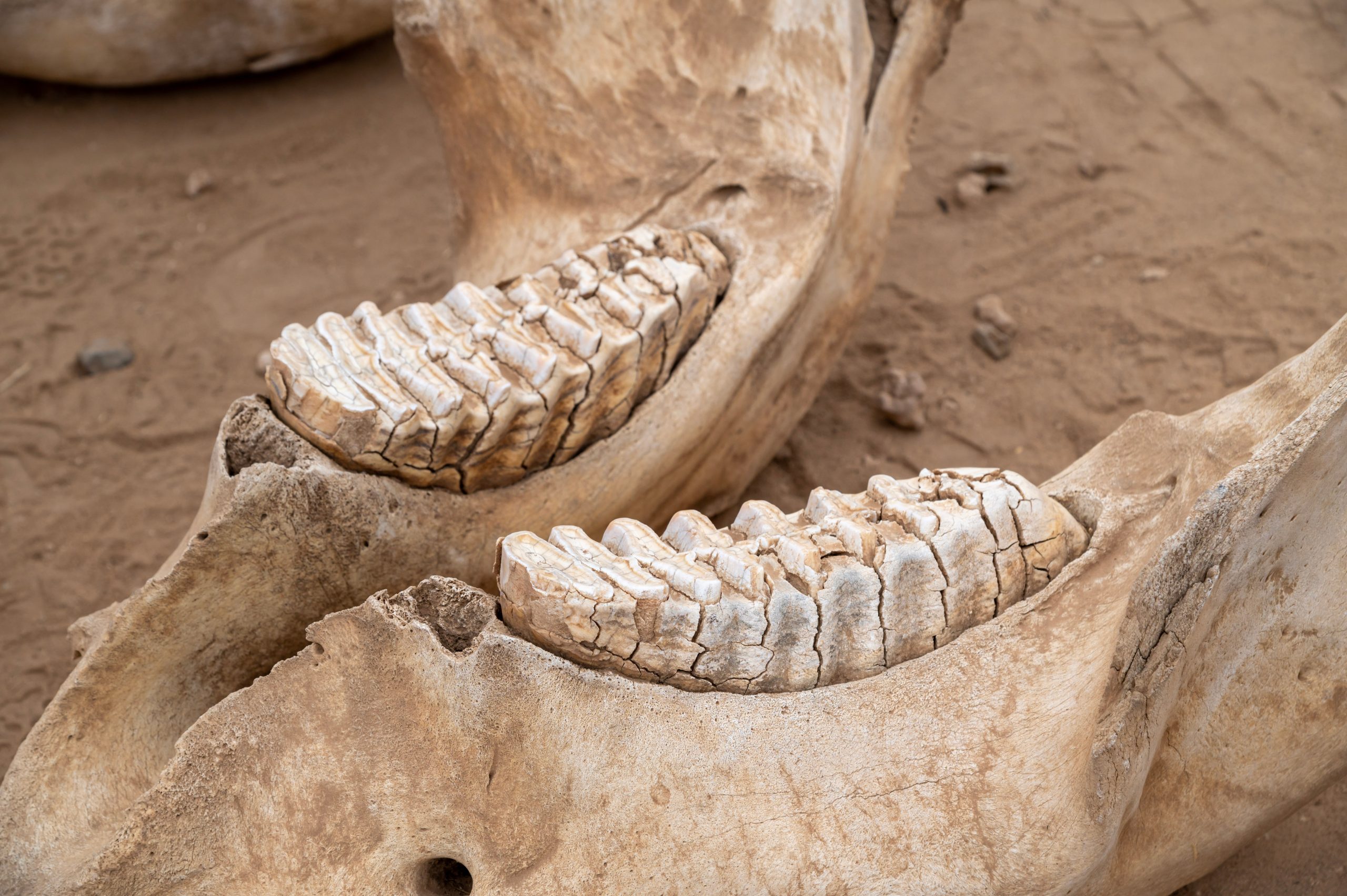
Molars are large grinding teeth located at the back of the mouth. They are composed of enamel ridges, dentine, and cementum, forming a structure designed to process tough plant material.
These teeth are essential. Without functional molars, an elephant cannot properly break down food.
The conveyor belt system
Elephants do not replace teeth vertically like humans. Instead, they have a horizontal replacement system.
Over their lifetime, elephants develop six sets of molars per quadrant. These teeth emerge at the back of the jaw and slowly move forward.
The process works as follows:
A new molar forms at the back of the jaw
It gradually pushes forward
The older, worn tooth at the front breaks apart and falls out
At any given time, only one or two molars are fully functional on each side of the jaw.
This system allows elephants to maintain effective grinding surfaces for decades, despite consuming highly abrasive diets.
Why elephant teeth are built this way
Elephants feed on a wide range of vegetation, including grasses, bark, and roots. These foods are often tough and may contain silica or grit, which accelerates tooth wear.
To cope with this, elephant molars are structured with parallel enamel plates that form distinctive diamond-shaped (loxodont) ridges. These ridges increase grinding efficiency and are characteristic of the genus Loxodonta, meaning “oblique-toothed” or “slanting tooth”.
What happens when elephants run out of teeth?
After the sixth and final molar, no further replacement occurs. Over time, these last teeth wear down completely.
As tooth surfaces flatten and lose their grinding ridges, elephants become less able to process fibrous vegetation. This leads to reduced food intake, gradual weight loss, and eventual starvation. This process is a natural part of ageing in elephants rather than a disease.
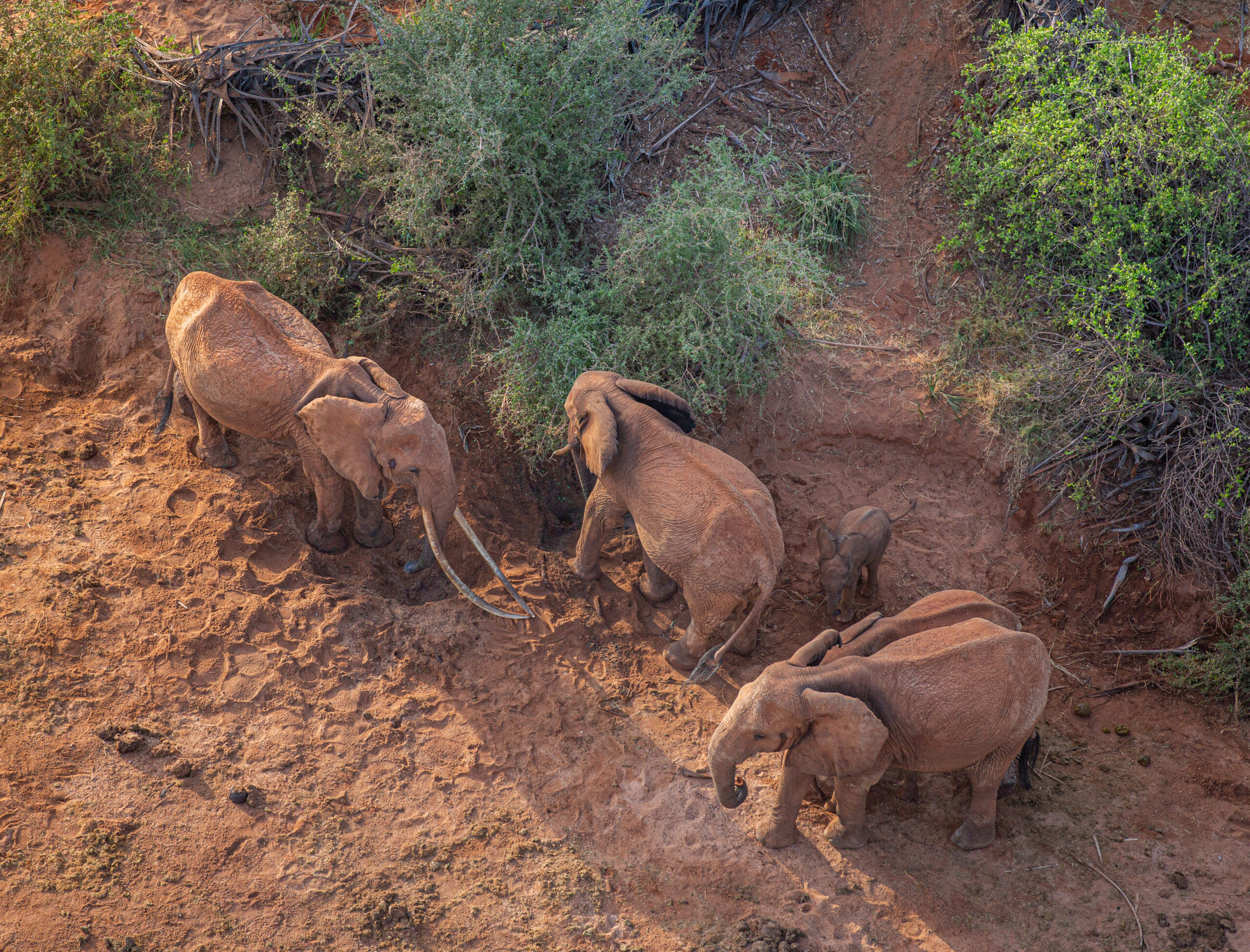
Field observations support this pattern. Older individuals are often seen in declining body condition, particularly during dry periods when soft vegetation is limited. The iconic Tsavo cow Dida, for example, was observed to become increasingly thin and emaciated towards the end of her life, likely linked to reduced feeding efficiency as her molars wore down.
For long-lived species such as elephants, this dental limit represents a biological endpoint, where survival is ultimately constrained by the ability to process food.
Feeding demands and digestive limitations
Elephants have a relatively inefficient digestive system. Only a portion of the plant material they consume is fully digested.
To compensate, elephants must feed for up to 18 hours a day, consuming large quantities of vegetation. This constant feeding places continuous pressure on their teeth, accelerating wear over time.
The combination of high intake and abrasive diet explains why the molar replacement system is necessary, and why it ultimately limits lifespan.
Behaviour of older elephants
As their teeth wear down, older elephants often change their behaviour and habitat use.
They are frequently found near:
swamps
marshes
riverine areas
These environments provide softer vegetation, such as aquatic plants and fresh shoots, which require less grinding.
This shift in habitat and diet reflects the close link between dental condition and survival.
A historical case: Jumbo the elephant
The importance of natural tooth wear is illustrated by historical cases in captivity. One of the most well-known examples is Jumbo, a 19th-century elephant kept in captivity.
Jumbo’s diet did not replicate the abrasive, fibrous foods consumed in the wild. As a result, his teeth did not wear down properly. Instead of progressing through the normal replacement cycle, his molars became overcrowded, leading to significant discomfort.
Accounts from the time suggest that his keeper, who struggled with alcoholism, gave Jumbo alcohol, possibly in response to his distress. While details vary, the case highlights how disrupting natural feeding and wear processes can have serious consequences for elephant health.
Final thoughts
African elephants rely on a unique and highly specialised dental system. Their conveyor-belt tooth replacement allows them to survive on abrasive diets for decades, but it is ultimately finite.
As elephants age, their survival becomes increasingly tied to the condition of their molars. When those teeth are gone, so too is their ability to feed effectively.
Understanding elephant teeth provides insight into how these animals live, move, and age, and highlights the importance of protecting the environments that sustain them throughout their lives.