

Throughout history, humans have looked to nature for food, shelter, and medicine. Today, scientists and engineers are looking to it for something else entirely: inspiration.
Every organism alive today is the product of millions of years of evolution. Over countless generations, animals, plants, fungi, and even bacteria have evolved remarkable solutions to the challenges of surviving in their environments. Rather than reinventing these solutions, researchers are increasingly asking a simple question: what if we copied them?
This approach, known as biomimicry, has inspired everything from energy-efficient buildings to high-speed trains and antibacterial surfaces. Some of our most innovative technologies owe their existence to lessons learned from elephants, kingfishers, sharks, termites, and even a giant single-celled slime mould.
Here are five remarkable examples of nature inspiring human design.
1. Elephant skin could help cool the cities of the future
African elephants live in some of the hottest environments on Earth. Unlike humans, they possess very few sweat glands, yet they are remarkably effective at preventing themselves from overheating.
Part of the answer lies in their skin.
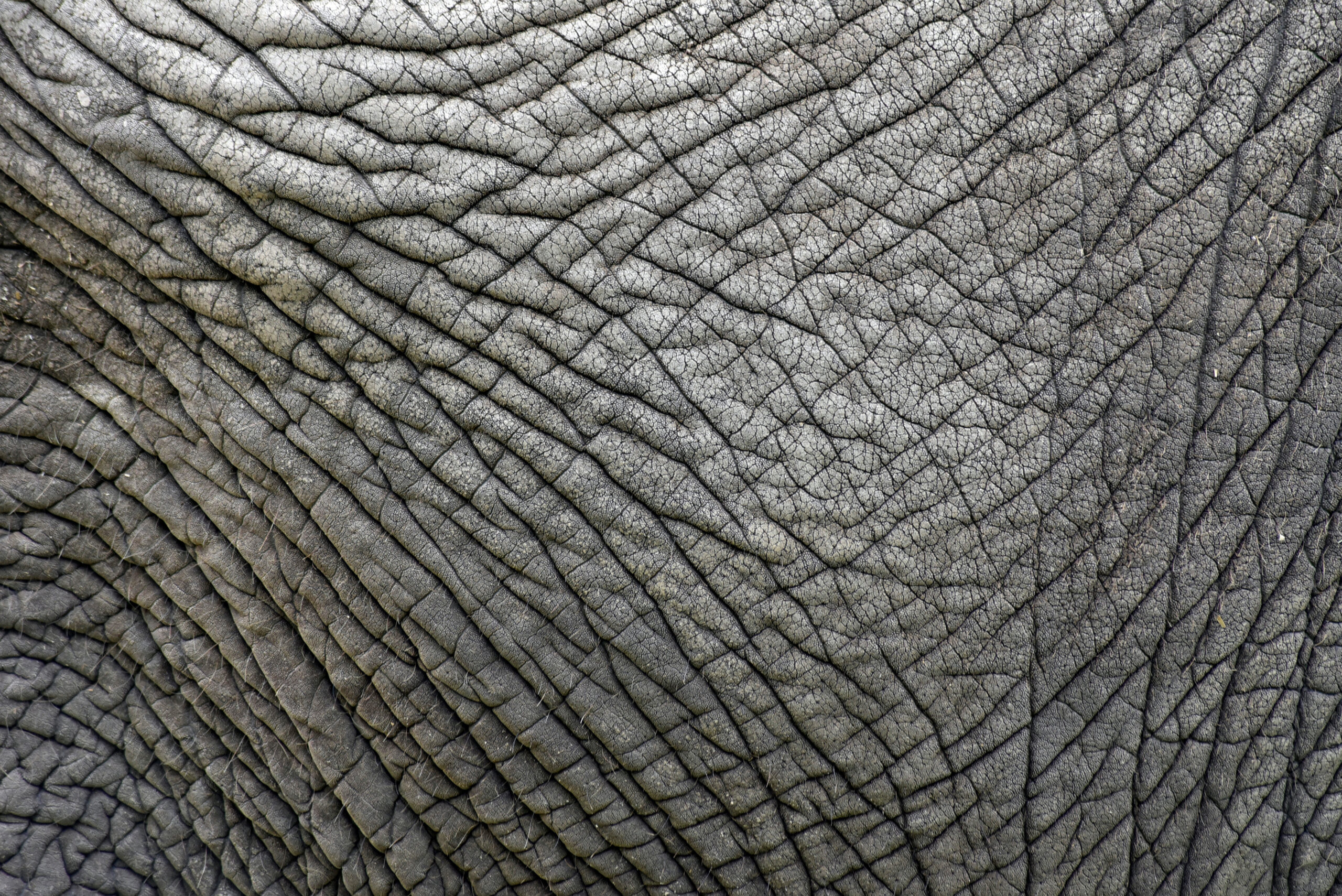
Elephant skin is covered in a network of deep cracks and crevices. These microscopic channels trap water and mud after bathing, allowing moisture to evaporate slowly over time. This provides a natural cooling effect that can last for hours while also protecting the skin from drying out.
Inspired by this discovery, researchers at the University of Pennsylvania developed concrete tiles containing similar networks of tiny channels. Like elephant skin, these engineered surfaces retain water and release it gradually through evaporation, helping cool buildings without relying solely on energy-intensive air conditioning.
As areas of the world are challeged with warming temperatures, this simple adaptation from one of Africa’s largest mammals could help make buildings more energy efficient while reducing carbon emissions.
Nature had already solved the problem millions of years ago.
2. A giant slime mould can design transport networks
One of the world’s most impressive engineers has no brain, no nervous system, and isn’t even an animal.
Physarum polycephalum, commonly known as slime mould, is a giant single-celled organism that spreads across the forest floor searching for food. As it grows, it constantly builds and removes connections between food sources, eventually producing a network that balances efficiency, resilience, and energy use.
Researchers demonstrated this by placing oat flakes on a map representing cities around Tokyo. The slime mould quickly connected the food sources using a network strikingly similar to Tokyo’s existing railway system.
When obstacles were introduced, the organism simply reorganised itself, finding alternative routes while maintaining efficiency.
Engineers have since used these principles to improve the design of transport systems, communication networks, and logistics. By copying an organism with no brain at all, we have gained new insights into solving some of our most complex engineering problems.
3. The kingfisher helped redesign Japan’s bullet trains
Japan’s famous Shinkansen trains once faced an unexpected problem.
As trains emerged from tunnels at high speed, compressed air created a loud sonic boom that could be heard kilometres away.
The solution came from an unlikely source.
The bird’s long, streamlined beak allows it to pass smoothly between air and water while minimising resistance.
Engineers redesigned the nose of the bullet train to mimic the kingfisher’s beak.
The results were remarkable. The trains became quieter, consumed less electricity, and were able to travel even faster than before.
4. Shark skin is helping fight harmful bacteria
Shark skin is covered in millions of microscopic tooth-like scales called dermal denticles. These tiny ridges reduce drag as sharks swim through the water, but they also have another remarkable property.
The textured surface makes it extremely difficult for bacteria and other microorganisms to attach and grow.
Scientists have copied this microscopic pattern to create antibacterial surfaces used in hospitals and medical equipment. Rather than relying on chemical disinfectants or antibiotics, these materials physically discourage microbes from settling in the first place.
The same principle has also inspired coatings for ships and aircraft, reducing the growth of organisms that increase drag and fuel consumption.
It is an elegant reminder that sometimes the best way to solve a problem is not to kill it, but to stop it taking hold in the first place.
5. Termites mastered natural air conditioning long before humans
At first glance, termite mounds appear to be little more than towers of hardened soil.
Inside, however, they are engineering masterpieces.
Many African termites cultivate fungi within their nests, and these fungal gardens require remarkably stable temperatures despite dramatic changes in the weather outside. To achieve this, termites construct intricate networks of tunnels and ventilation shafts that continually circulate air throughout the mound.
Rather than relying on conventional air conditioning, the building uses carefully designed ventilation to regulate internal temperatures, dramatically reducing energy consumption compared with similarly sized buildings.
Millions of tiny insects had perfected passive climate control long before humans began designing skyscrapers.
Learning from 3.8 billion years of research and development
The remarkable thing about biomimicry is that evolution has spent approximately 3.8 billion years refining solutions through natural selection. Every successful adaptation seen in nature has survived countless generations of testing.
Elephants perfected passive cooling.
Slime moulds developed efficient transport networks.
Kingfishers solved high-speed aerodynamics.
Sharks evolved surfaces that resist bacterial growth.
Termites became masters of natural ventilation.
Each represents a solution that engineers can study rather than recreate from scratch.
Why conservation matters for innovation
Protecting wildlife is often discussed in terms of biodiversity, ecosystem services, or preventing extinction. Yet there is another compelling reason to conserve nature.
Every species carries unique adaptations shaped by millions of years of evolution. Once a species disappears, we lose not only an irreplaceable part of Earth’s biodiversity but also a library of biological knowledge that may hold solutions to challenges we have not yet encountered.
The next breakthrough in medicine, architecture, engineering, or materials science may already exist in the natural world, waiting to be discovered.