

Evolution is often associated with efficiency, favouring traits that improve an animal’s chances of surviving and reproducing. Yet many species possess features that appear surprisingly inefficient, costly, or even dangerous. Elaborate feathers, oversized tusks, extravagant courtship displays, and bizarre ornaments all demand significant energy and can increase the risk of predation or injury.
The reason behind this is a fascinating process known as sexual selection.
While natural selection favours traits that improve an animal’s ability to survive, sexual selection favours traits that improve its chances of reproducing. Proposed by Charles Darwin in 1871, sexual selection explains why many animals evolve elaborate ornaments, powerful weapons, and extraordinary behaviours that seem to offer little obvious survival benefit.
Natural selection versus sexual selection
Natural selection is often summarised as “survival of the fittest.” Animals that are better adapted to finding food, avoiding predators, resisting disease, or surviving drought are more likely to live long enough to reproduce.
Sexual selection is different.
Here, the challenge is not simply staying alive. It is competing for mates.
Sexual selection generally operates in two ways. The first is mate choice, where one sex, usually females, preferentially chooses certain partners. The second is competition, where individuals of the same sex compete directly for access to mates.
In many species, both processes occur simultaneously.
Super Tuskers: more than just enormous tusks
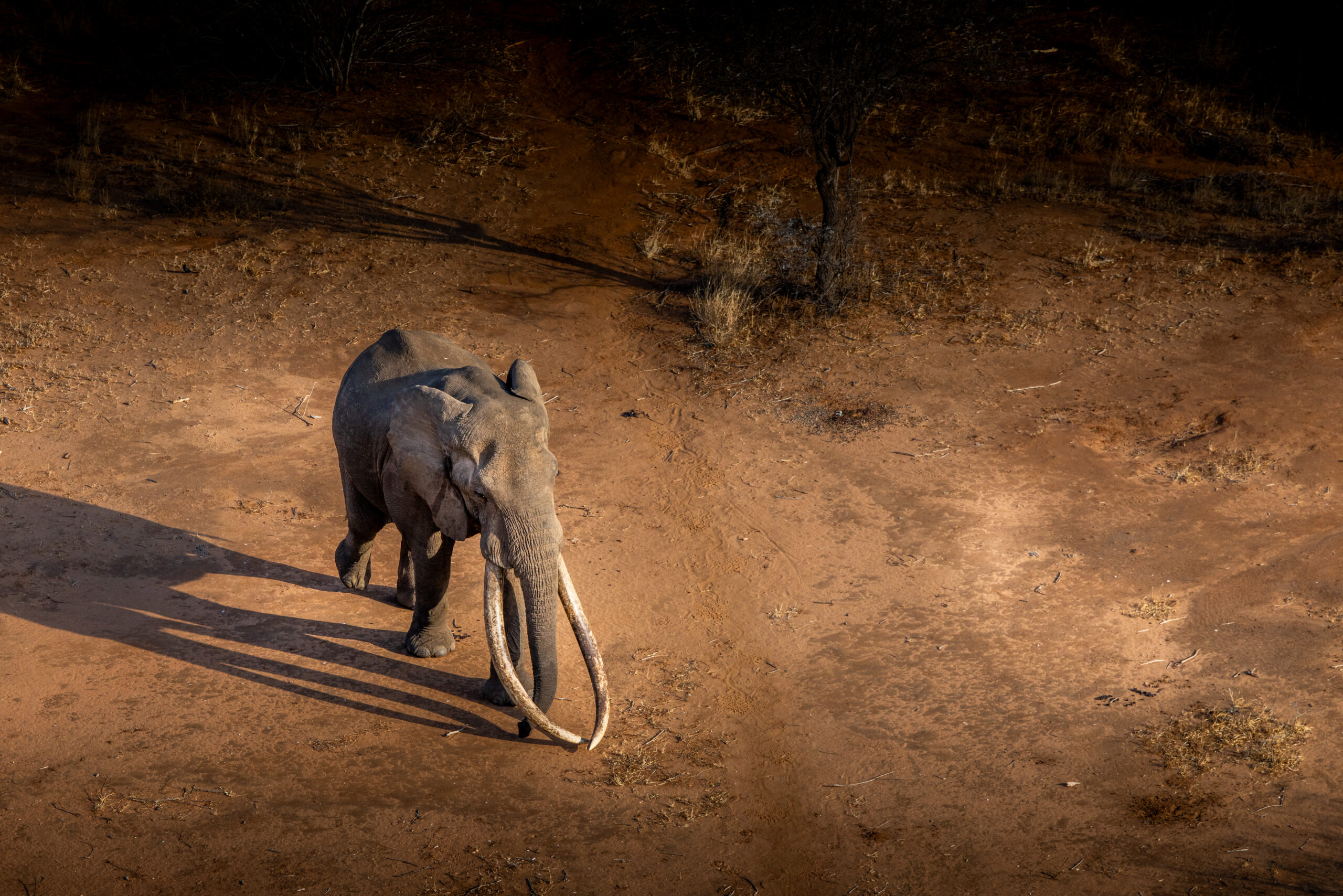
Super Tuskers are extraordinary bulls carrying tusks weighing more than 45 kilograms (100 pounds) each, making them some of the rarest elephants on Earth. Tusks are invaluable tools that help elephants dig for water and minerals, strip bark, move obstacles, defend themselves, and interact with one another. However, beyond these practical functions, large tusks can also provide an advantage during competition between males and may serve as visual signals of age, health, and genetic quality. This suggests that the evolution of exceptionally large tusks has been shaped by both natural selection and sexual selection.
The relationship between tusk size and reproductive success, however, is more complex than it first appears. Research shows that breeding success in male elephants depends primarily on age, dominance, and musth, the periodic condition in which testosterone levels rise dramatically. During musth, testosterone concentrations can increase by as much as sixty times normal levels. Bulls become more dominant, compete more successfully with rivals, and gain greater access to receptive females.
Older bulls also remain in musth for longer, giving them more opportunities to breed. While large tusks may help during contests between males and honestly advertise an individual’s age and long-term health, they are rarely the deciding factor on their own. An elephant must also survive for many decades, maintain excellent body condition, and successfully compete with other mature bulls.
Rather than guaranteeing reproductive success, enormous tusks are one piece of a much larger picture involving hormones, age, experience, body condition, and social dominance. In many ways, Super Tuskers represent the combined effects of natural and sexual selection. They are not simply elephants with exceptional ivory, but individuals that have survived long enough, remained healthy enough, and risen high enough in the social hierarchy to become some of Africa’s most successful breeding bulls.
Honest signals
Many extravagant features in animals are thought to function as honest signals.
The idea, known as the handicap principle, suggests that costly traits are difficult to fake. Only individuals in excellent condition can afford to produce and maintain them.
Large elephant tusks require decades of growth and access to sufficient minerals and food.
A stag’s enormous antlers demand huge amounts of calcium and energy each year.
Bright feathers require good nutrition and freedom from parasites.
Because these traits are expensive to produce, they honestly advertise the quality of the individual carrying them.
When females choose
Perhaps nowhere is female choice more obvious than in birds.
Male peafowl grow spectacular trains that can exceed 1.5 metres in length. These feathers make flying more difficult and increase visibility to predators, yet females consistently prefer males with larger, more elaborate displays.
Even more striking are the birds-of-paradise of New Guinea. Males invest enormous amounts of time cleaning display courts, performing intricate dances, and presenting brilliant plumage to visiting females. In some species, females inspect several males before choosing just one to mate with.
One of the strongest demonstrations of female choice comes from the long-tailed widowbird of Africa. In a classic experiment, researchers artificially shortened the tails of some males and lengthened those of others. Males given longer tails attracted significantly more females, providing direct evidence that female preference alone can drive the evolution of exaggerated features.
Another remarkable example is the satin bowerbird of Australia. Rather than impressing females with its own appearance, the male builds an elaborate avenue-like structure known as a bower, decorating it with blue feathers, flowers, berries, shells, and even pieces of plastic. Females inspect both the quality of the construction and the male’s display before deciding whether to mate.
When competition drives evolution
Not all extravagant traits arise through female choice alone.
In many mammals, males compete directly with one another.
Red deer use their enormous antlers to wrestle rivals during the breeding season. Elephant seals engage in violent battles for access to beaches where females gather, with dominant males fathering the majority of pups.
Elephants combine both forms of sexual selection. Older bulls compete physically and behaviourally during musth, while females also appear to prefer mature, dominant males.
The result is selection for size, strength, experience, and the ability to survive long enough to reach old age.
Evolution’s strangest tusks
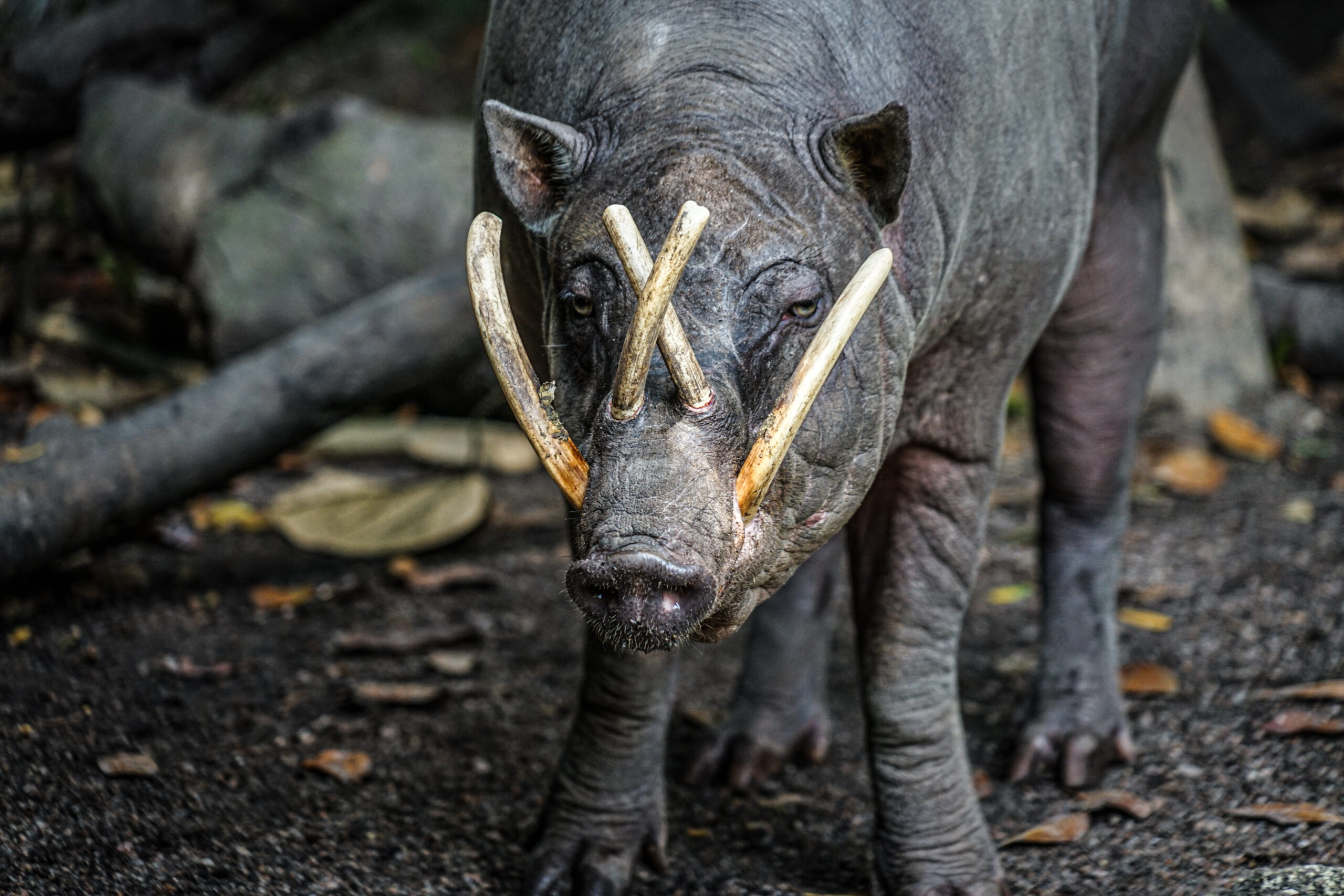
Male babirusas possess upper canine teeth that grow upwards through the skin of the snout before curving backwards over the forehead. In very old males, these tusks can continue growing until they eventually penetrate the skull if they are not worn down or broken.
These remarkable tusks appear to have little practical value for fighting and may even become a disadvantage.
Many researchers believe they evolved primarily through sexual selection, acting as visual signals of age and condition rather than as functional weapons. Although their exact role is still debated, the babirusa demonstrates how mate choice can sometimes produce structures that seem almost irrational from a survival perspective.
When attraction becomes a balancing act
If sexual selection continually favours larger tusks, longer tails, or brighter colours, why do these traits not become infinitely exaggerated?
The answer is that natural selection continues to impose limits.
A peacock with an excessively large train becomes easier for predators to catch.
A deer with antlers that are too large may struggle to move through woodland.
An elephant carrying exceptionally heavy tusks must invest enormous amounts of energy and minerals in growing and supporting them.
Evolution therefore balances two competing pressures. Sexual selection pushes traits towards greater extravagance because they improve reproductive success, while natural selection limits them when the costs become too great.
The characteristics we observe today represent a compromise between these opposing forces.
What this means for conservation
Understanding sexual selection has important implications for conservation.
For much of the twentieth century, ivory hunting disproportionately removed the largest and oldest bull elephants from African populations. These were often the very individuals that contributed most to breeding because of their age, dominance, and prolonged periods of musth.
Removing these bulls did more than reduce elephant numbers. It altered the natural processes of sexual selection that had shaped elephant populations over thousands of generations.
Today, Tsavo remains one of the last strongholds for Super Tuskers. Protecting these extraordinary elephants helps preserve not only a rare genetic trait but also the natural breeding dynamics that have long characterised healthy elephant populations.
Their enormous tusks are not simply symbols of beauty or rarity. They are the product of exceptional genetics, decades of survival, and the evolutionary forces that continue to shape one of Africa’s most iconic species.
Final thoughts
Evolution is often described as a struggle for survival, but survival is only half the story.
To pass on their genes, animals must also compete for mates, and this competition has produced some of the most remarkable features found anywhere in nature. The elaborate dances of birds-of-paradise, the towering antlers of deer, the extraordinary tusks of babirusas, and the immense ivory carried by Tsavo’s Super Tuskers all reflect the influence of sexual selection.
These traits remind us that evolution is not always about efficiency. Sometimes it rewards the individual that survives longest, displays most impressively, or convinces a mate that it carries the best genes.
For Tsavo’s Super Tuskers, their enormous tusks are therefore more than an extraordinary spectacle. They are the visible outcome of millions of years of evolution, shaped by the combined forces of natural selection, sexual selection, and a lifetime of survival.