
The Impact of sand dams • Since 2019
A sand dam is a reinforced wall built across a seasonal sandy riverbed. When the rains come, sand carried by flash floods settles behind the wall while the water passes over. Season by season the reservoir fills with sand, which stores water in the spaces between the grains, protected from the sun and slowly recharging the surrounding aquifer.
Since 2019, in support of KWS and in partnership with Sand Dams Worldwide and the Africa Sand Dam Foundation, Tsavo Trust has helped build fourteen sand dams across the Tsavo Conservation Area. Quarterly monitoring show what they deliver: water through the dry season, and a reliable draw for the landscape’s wildlife.
The Sand Dam Concept
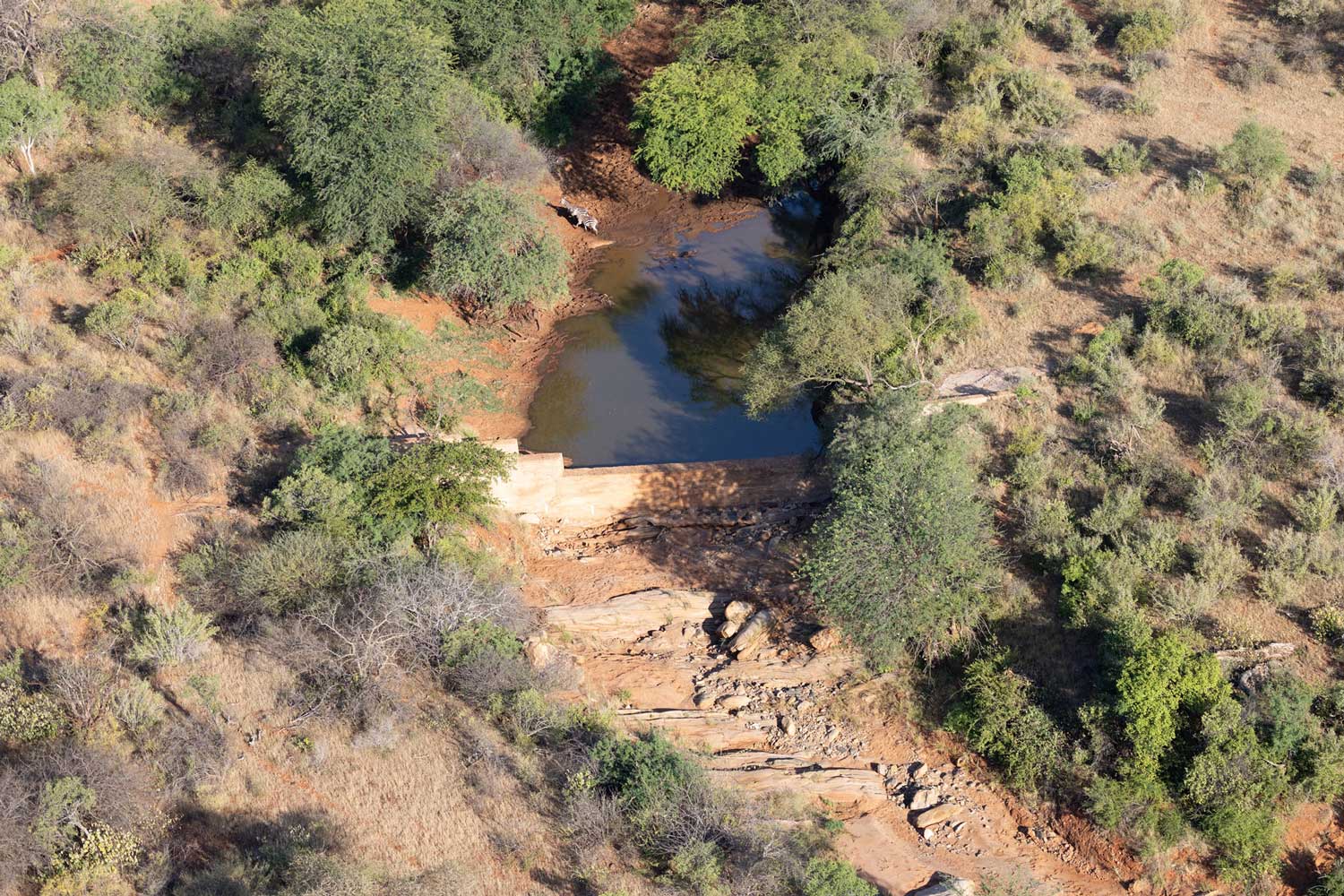
What the dams deliver
A river that remembers the rain.
Quarterly monitoring
The wildlife signal is unmistakable. The animals have made the dams their own.
Elephant, critically endangered black rhino, lion, leopard and even African wild dog, one of the continent’s rarest carnivores, have all been recorded drinking at the dams. Wildlife keeps using them even in the wet season, a sign they have become preferred features of the landscape.
Part Two · Infrastructure
The infrastructure behind protection.
Alongside water for wildlife, Tsavo Trust supports KWS and WRTI with parts of the physical backbone of park operations — from ranger bases and outpost, boreholes to fire management. A shared effort. The examples below are some of many.
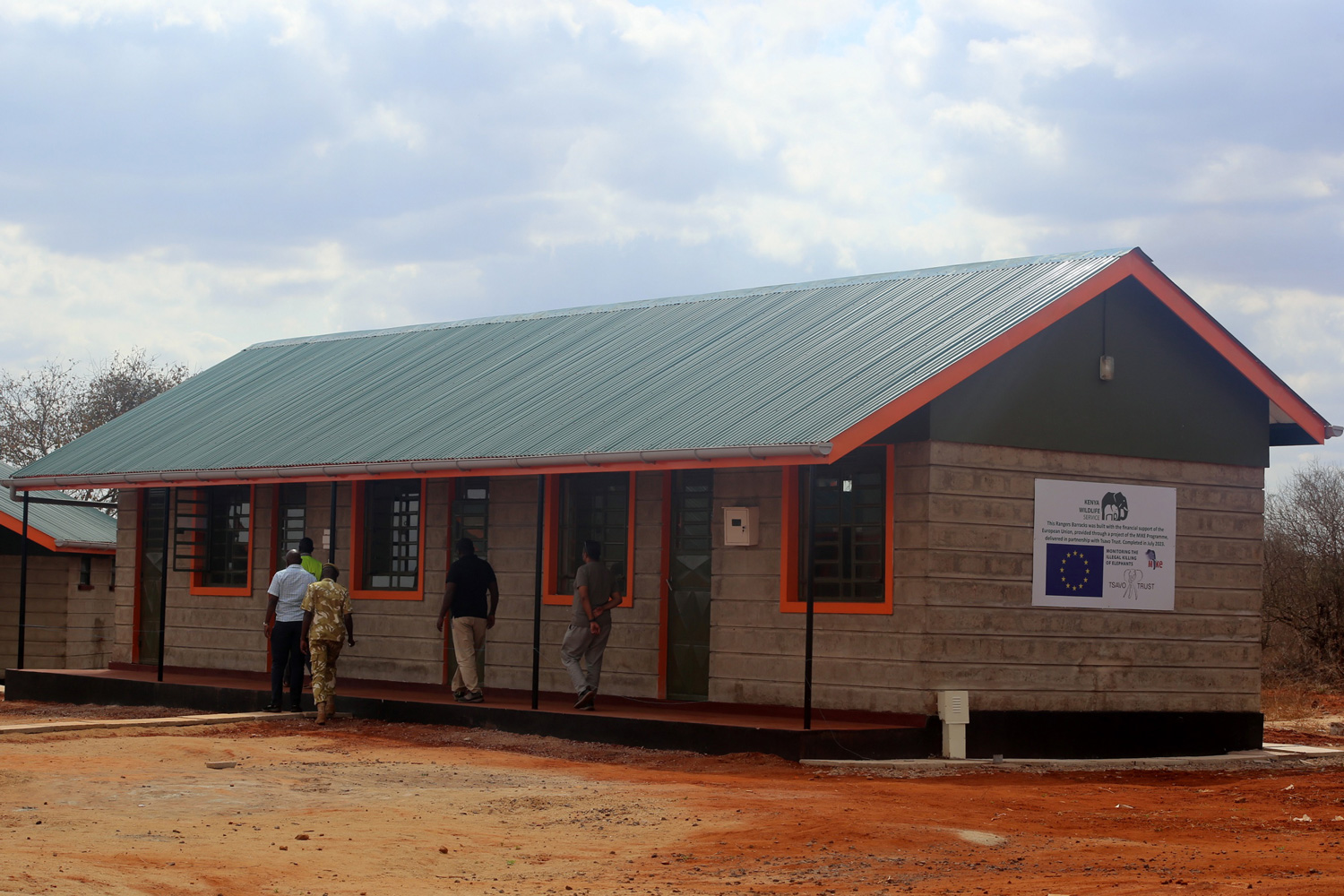
Ranger Bases & Gates
We have built and supported key operational bases, including the Tsavo West IPZ Base and the Ngulia Rhino Sanctuary HQ in Tsavo West and the Dakota base in Tsavo East, and contributed to the rehabilitation of ranger bases such as Maktau and Jipe and the Old Chyulu Gate.
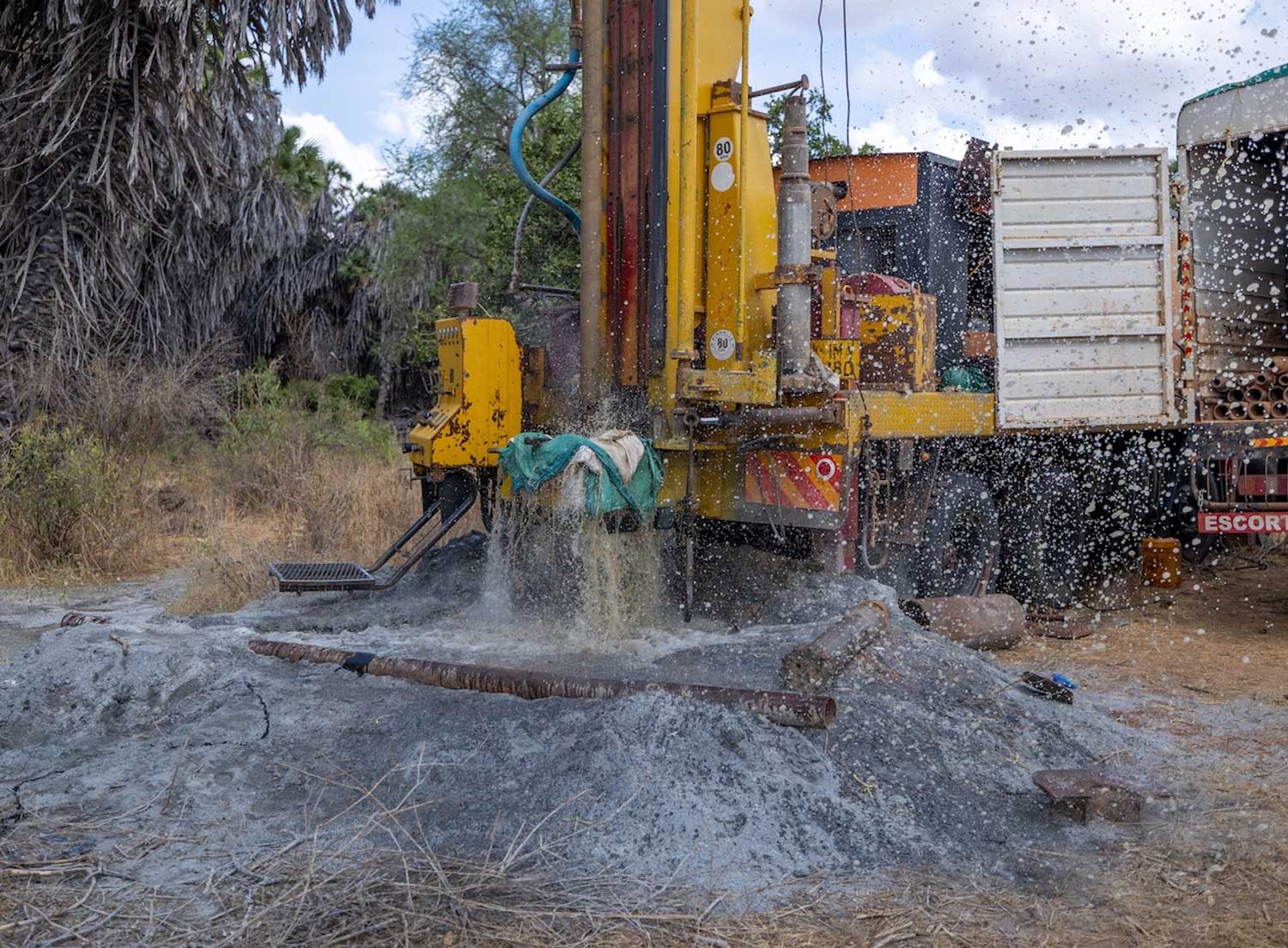
Water for Outposts
Boreholes, pipelines and water points that keep isolated posts supplied through the dry season, including fencing and a borehole at Roka in Tsavo East that established a temporary ranger base site for KWS.
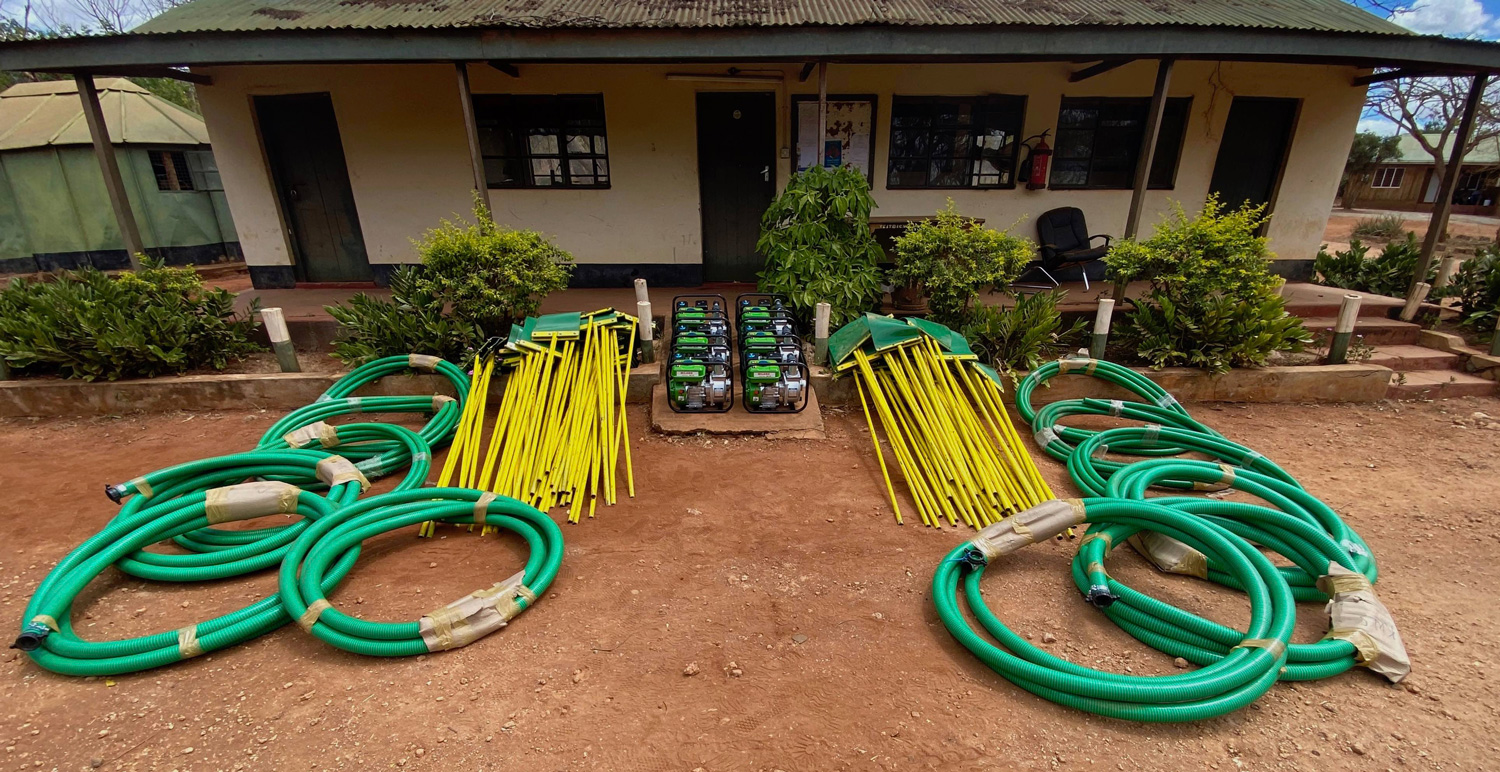
Fire Management
Support to cutting and maintaining fire breaks, and providing fire-fighting equipment, helping KWS defend habitat, grazing and infrastructure from destructive bush fires.
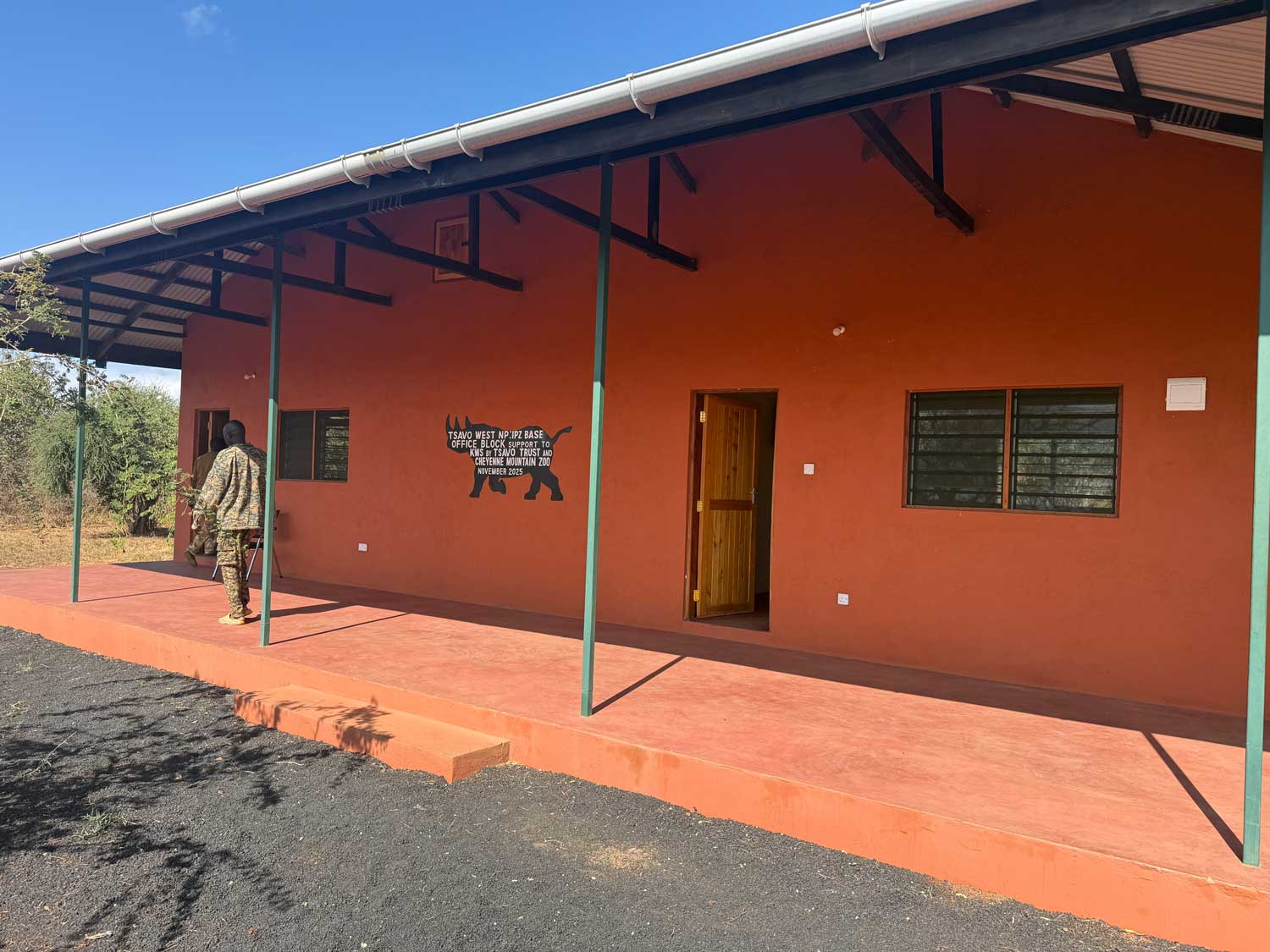
Infrastructure
Support to watch towers, security fencing and the everyday field infrastructure that keeps protection operations running across the TCA.
Why it matters
Water and infrastructure are quiet work. They are also the foundation everything else stands on.
A dam that holds water through the drought keeps wildlife on protected land. A rehabilitated base keeps rangers where they are needed. None of it makes headlines, but without it, none of the rest of the work is possible. It is long-term, low-maintenance investment in the resilience of the whole ecosystem, in support of KWS and WRTI.
Build the foundations of protection.
A sand dam lasts for decades. Your support helps put water in the ground and keep rangers in the field.