

In Africa’s savannas, making a kill does not guarantee a meal. For predators, the hunt is often only half the contest. What follows can be a tense standoff, a rapid feeding frenzy, or a violent confrontation. This behaviour, known as kleptoparasitism, describes the stealing of food from another predator. It is widespread, energy-efficient, and central to understanding how Africa’s large carnivores interact.
Rather than a simple ranking of strength, predator dominance is shaped by body size, social structure, injury risk, and numbers. In ecosystems such as the Tsavo Conservation Area, these dynamics play out daily.
Cheetahs: built for speed, not conflict
The Cheetah sits at the most vulnerable end of the hierarchy.
Cheetahs are highly specialised hunters, built for acceleration and speed rather than combat. They are lightweight, with relatively small skulls and lower bite force compared to other large carnivores. Most hunt alone or in small coalitions.
Because they are largely solitary, injury risk is critical. A broken limb or deep wound can mean starvation. As a result, cheetahs rarely defend kills against larger predators. Lions, hyenas, leopards, and even groups of wild dogs can displace them.
Their strategy is simple: hunt efficiently, eat quickly, and avoid confrontation. In many cases, they abandon kills rather than risk escalation.
Leopards: powerful but solitary
The Leopard is physically stronger than a cheetah and capable of killing large prey. However, like the cheetah, the leopard operates alone.
Solitary life shapes its risk tolerance. An injured leopard cannot rely on group support. Even a moderate injury can compromise hunting ability. As a result, leopards are highly injury-averse and selective about confrontation.
The Tree Strategy
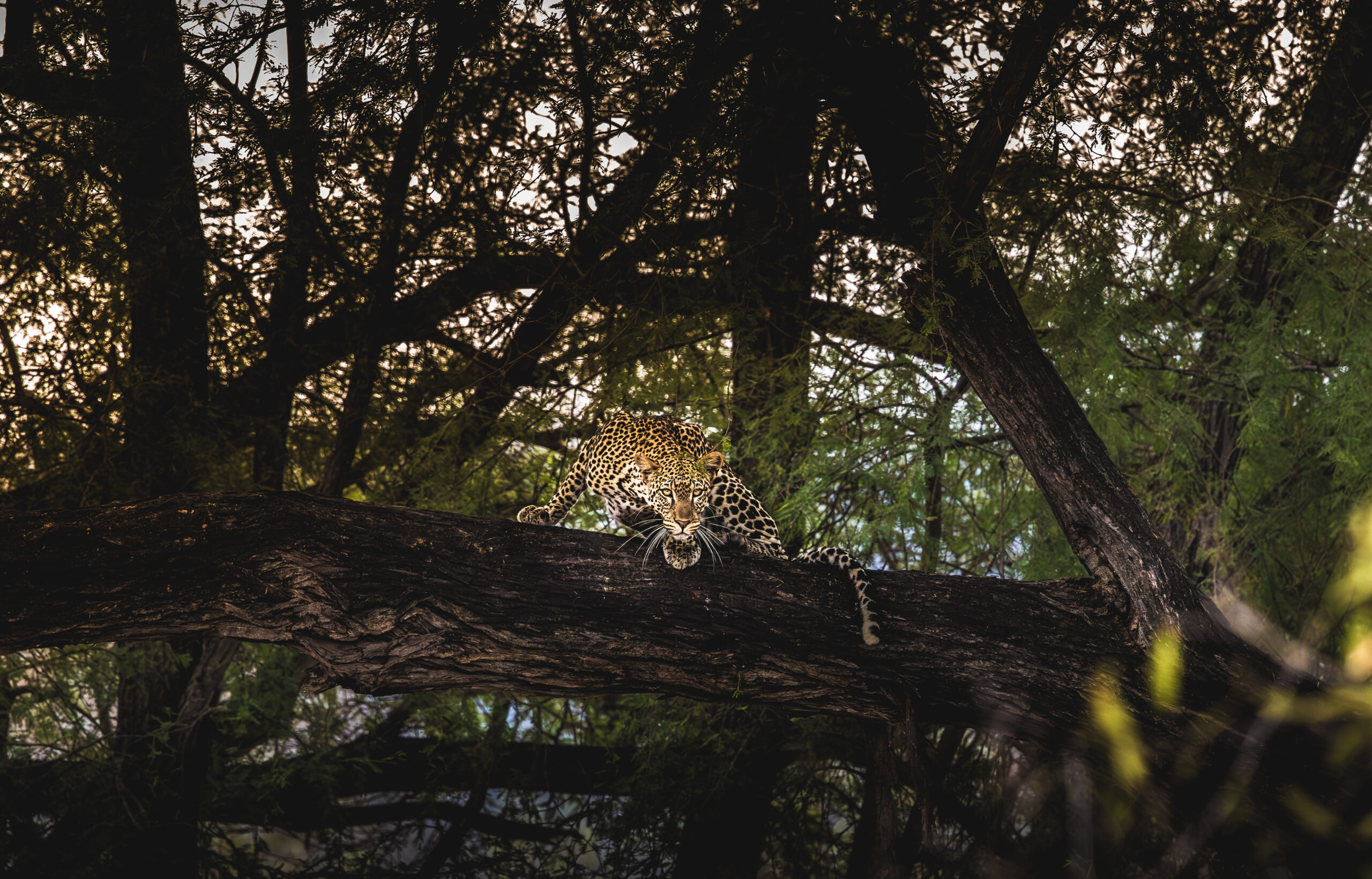
Leopards have evolved a distinctive anti-theft strategy: dragging kills into trees. By hoisting carcasses above ground, they reduce the risk of kleptoparasitism from hyenas and lions. A tree cache allows a leopard to feed over several days.
However, this strategy depends on habitat. In more open landscapes such as parts of Tsavo, suitable trees may be limited. Lions can sometimes reach low branches, and hyenas may wait below.
Leopards will often abandon a kill if confronted by lion or a hyena.
African wild dogs: cooperation and speed
The African wild dog occupies a unique position.
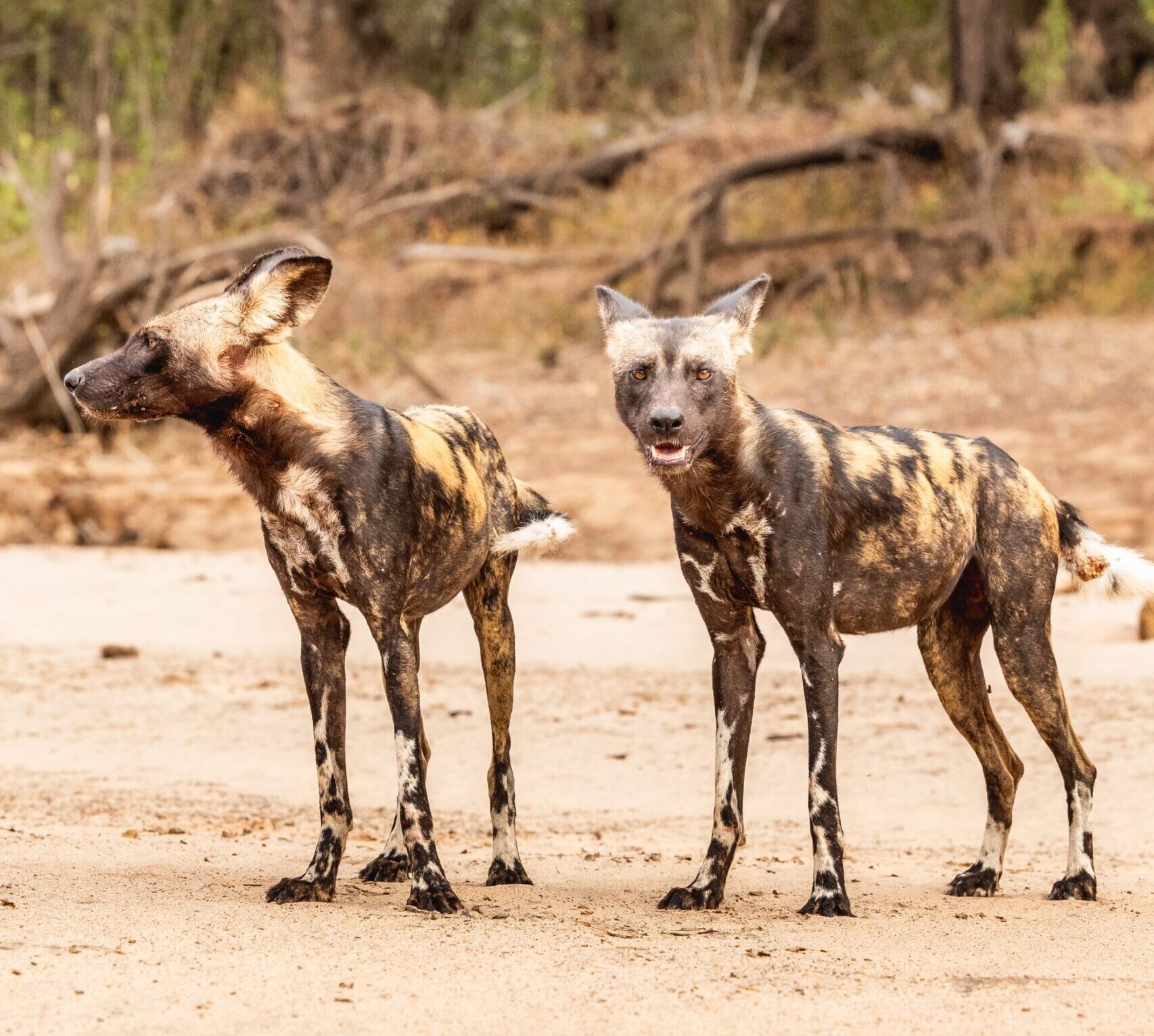
Wild dogs are highly cooperative pack hunters with exceptional success rates. Their strength lies in coordination and endurance rather than body mass. They are smaller than lions and vulnerable to displacement by hyenas and lions.
Their primary defence against kleptoparasitism is speed of consumption. Wild dogs begin feeding immediately and consume prey rapidly, often within minutes. Food is quickly distributed among pack members, reducing the window in which competitors can intervene.
Unlike leopards, wild dogs do not defend a carcass for extended periods. Their strategy prioritises rapid intake over long-term possession.
Hyenas: collective power
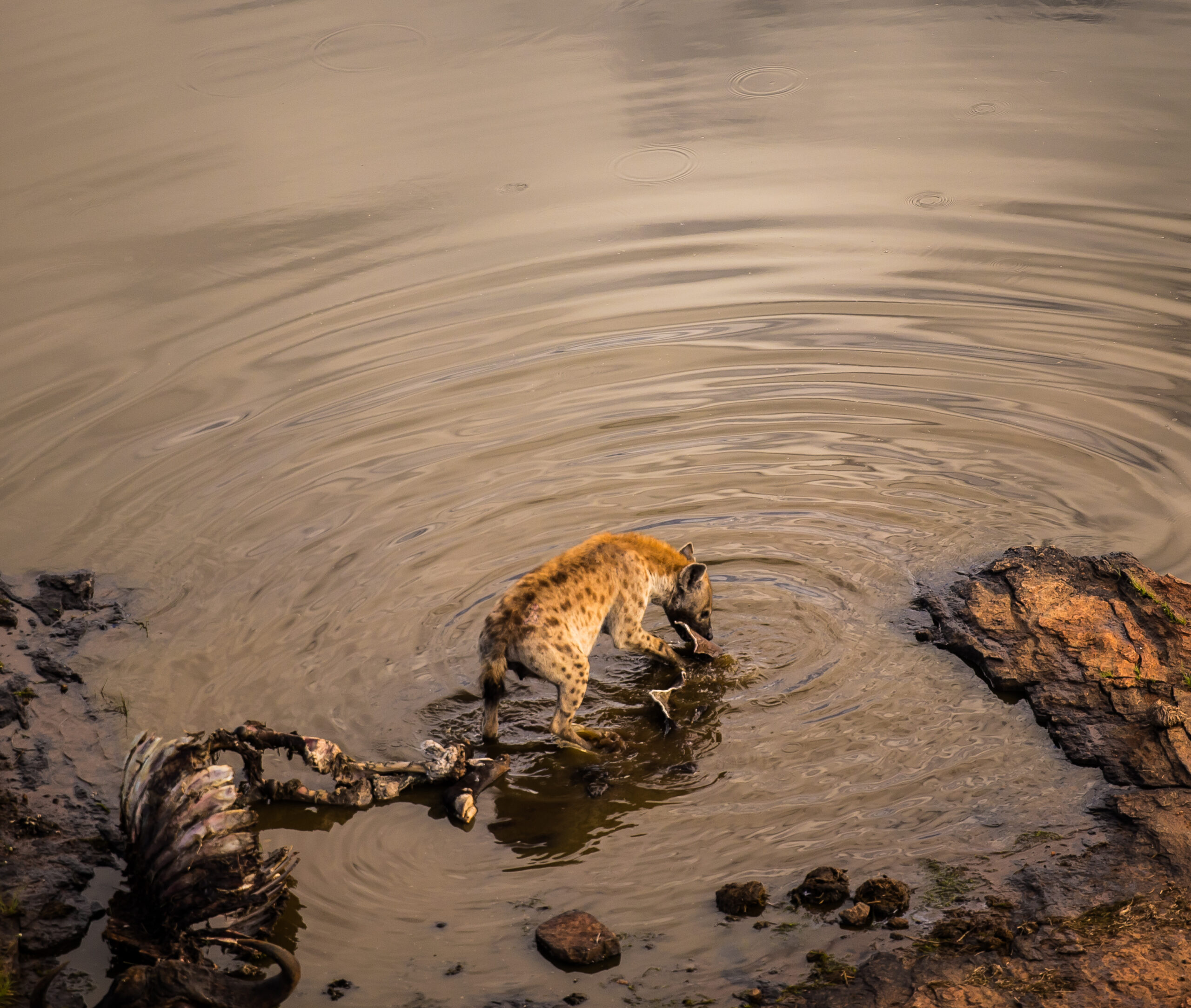
The Spotted hyena is often misunderstood as primarily a scavenger. In reality, hyenas are capable hunters and formidable competitors.
Hyenas live in clans, sometimes numbering dozens of individuals. They possess one of the strongest bite forces among mammals, thick skin, and high tolerance for injury. Crucially, they have collective support.
Hyenas frequently steal from cheetahs, leopards and wild dogs.
Against lions, the outcome depends on numbers. A large clan may displace lionesses. However, the presence of an adult male lion typically deters hyena attempts.
Because hyenas can rely on clan members, they are more willing to escalate conflict than solitary predators.
Lions: size and coalition
The Lion generally occupies the dominant position.
Lions combine size, strength, and social structure. They hunt cooperatively and defend territory collectively. Adult males, in particular, significantly shift competitive dynamics. Their mass and power often discourage challenges from hyenas.
Lions frequently steal kills from hyenas, leopards, wild dogs and cheetahs.
For lions, kleptoparasitism can be energetically efficient. Hunting is costly and carries risk; displacing another predator can provide high reward with reduced effort.
However, dominance is situational. A single lioness facing a large hyena clan may retreat. A coalition of males alters the equation dramatically.

The Lion-Hyena rivalry
Opportunists: Jackals
Smaller predators such as the Black-backed jackal operate at the margins.
Jackals do not dominate kills but exploit distraction. They dart in and out, stealing small pieces even when lions are present. Their strategy relies on speed and timing rather than strength.
Injury economics and risk
The true hierarchy is less about brute force and more about risk tolerance.
Solitary predators, such as leopards and cheetahs, cannot afford serious injury. Social predators, such as hyenas, lions, and wild dogs, have support systems that buffer risk.
This difference explains why:
Leopards avoid prolonged fights.
Hyenas escalate when they have numbers.
Wild dogs prioritise speed.
Lions dominate through mass and coalition strength.
Final thoughts
Africa’s predator hierarchy is fluid. In general terms:
Most vulnerable: cheetah
Strong but solitary: leopard
Cooperative and efficient: wild dog
Collectively dominant: hyena
Generally apex: lion, particularly with males present
But dominance is situational. Numbers, social structure, habitat, and risk calculation determine who keeps the kill.
Understanding these dynamics reveals that competition among predators is not disorder. It is a finely balanced system that shapes behaviour, survival strategies, and the structure of African ecosystems.