

The Tsavo Conservation Area is one of the largest protected ecosystems in Africa, consisting of open savanna, thorn bush, riverine forest, and semi-arid scrub. These varied habitats support a wide range of herbivores, including a diverse group of antelope species.
Antelope form a critical part of the savanna ecosystem. They convert grasses, leaves, and shrubs into biomass that supports predators such as lions, leopards, hyenas, cheetahs, and wild dogs. Different species occupy different ecological niches depending on their size, diet, and adaptations to Tsavo’s dry environment.
Below are some of the most notable antelope species found in the Tsavo ecosystem.
Common eland
Africa’s largest antelope, capable of weighing close to 900 kilograms. Eland move across wide areas searching for grazing and can survive in relatively dry environments despite their large size. They are surprisingly agile and capable of jumping over two metres high.
Fringe-eared oryx
Highly adapted to arid landscapes. Oryx can tolerate elevated body temperatures and obtain most of their moisture from plants rather than drinking water. Their long, spear-like horns are effective defensive weapons against predators.

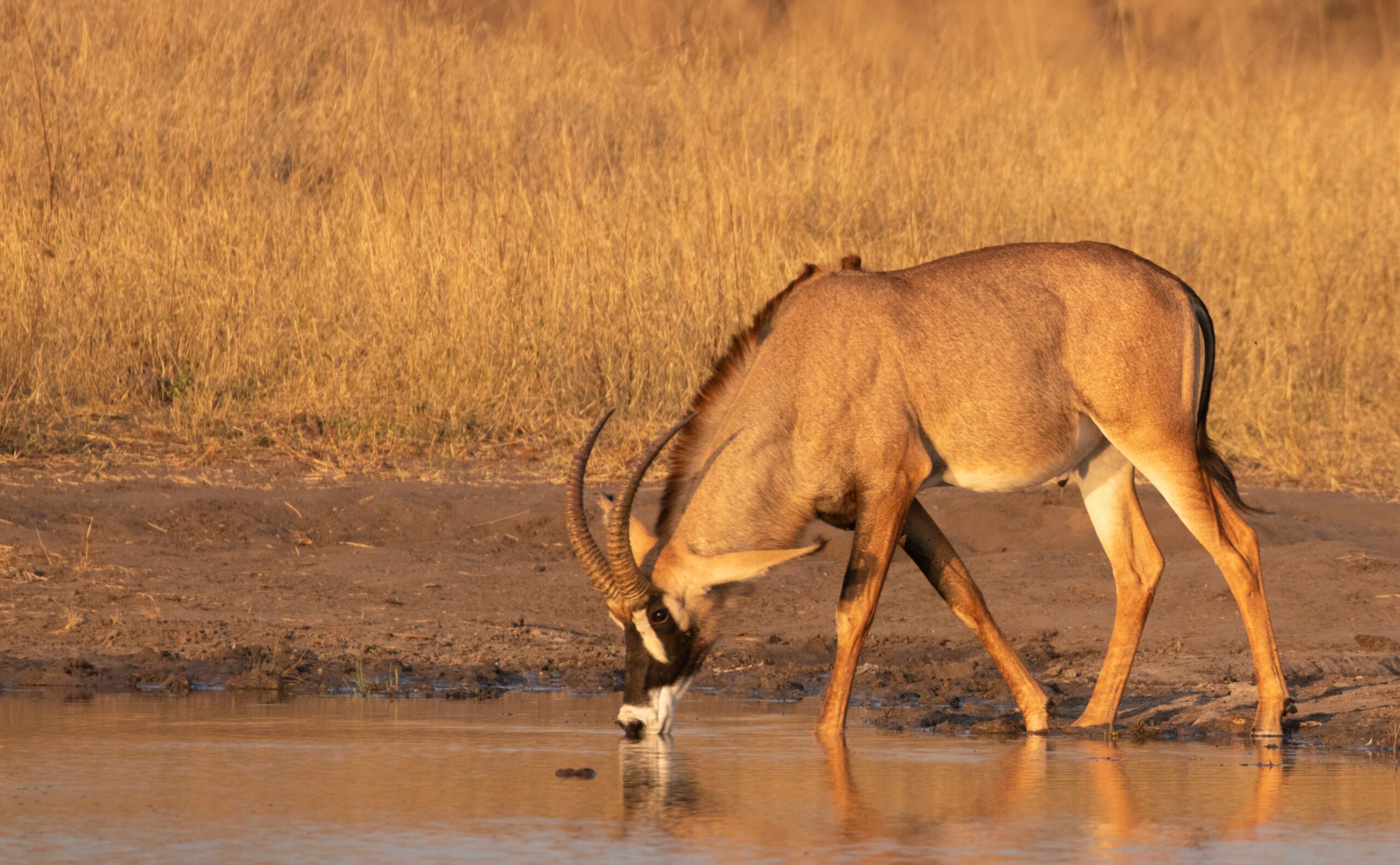
Roan antelope
A large grassland antelope occasionally recorded in parts of the Tsavo ecosystem. Roan are known for their bold facial markings and long curved horns.
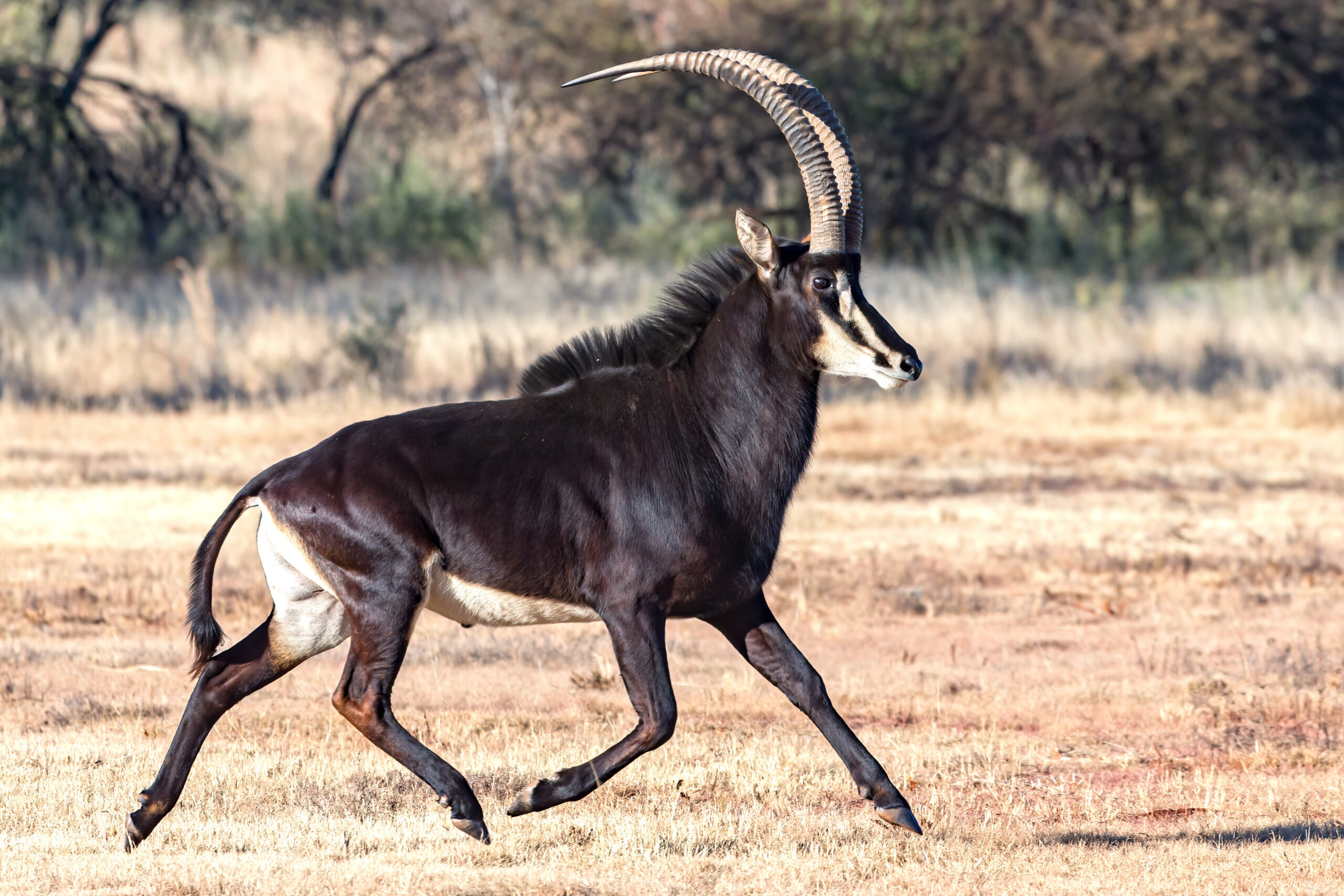
Sable antelope
Closely related to roan antelope and famous for their striking appearance, with long curved horns and a dark coat. Sable antelope in Tsavo are extremely rare and not part of a established population, with only occasional, remarkable sightings of mature males recorded in Tsavo East.
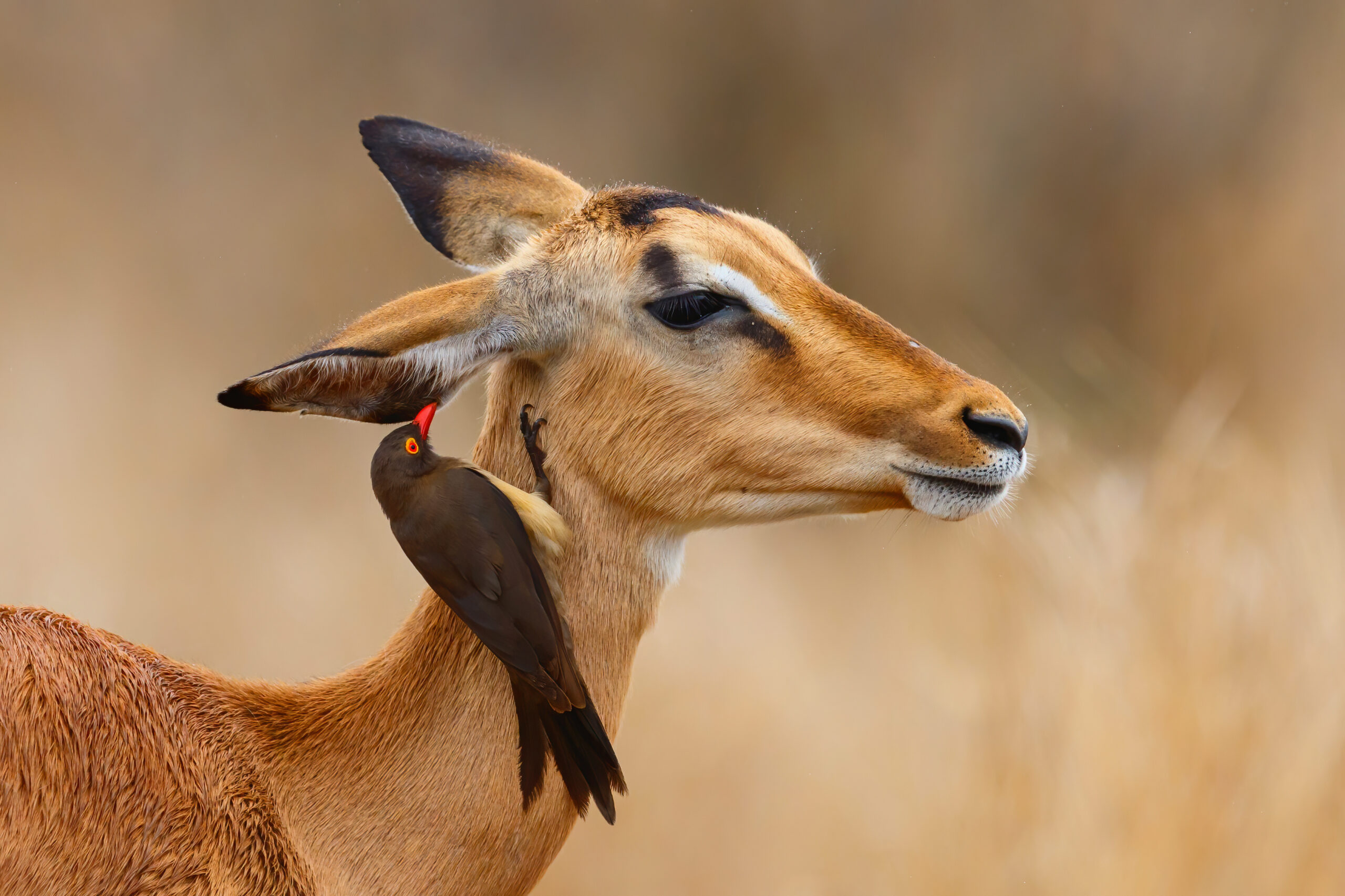
Impala
One of the most common antelope in East Africa. Impala are mixed feeders, grazing during the wet season and browsing during dry periods. They are well known for their powerful leaps, which help them escape predators.
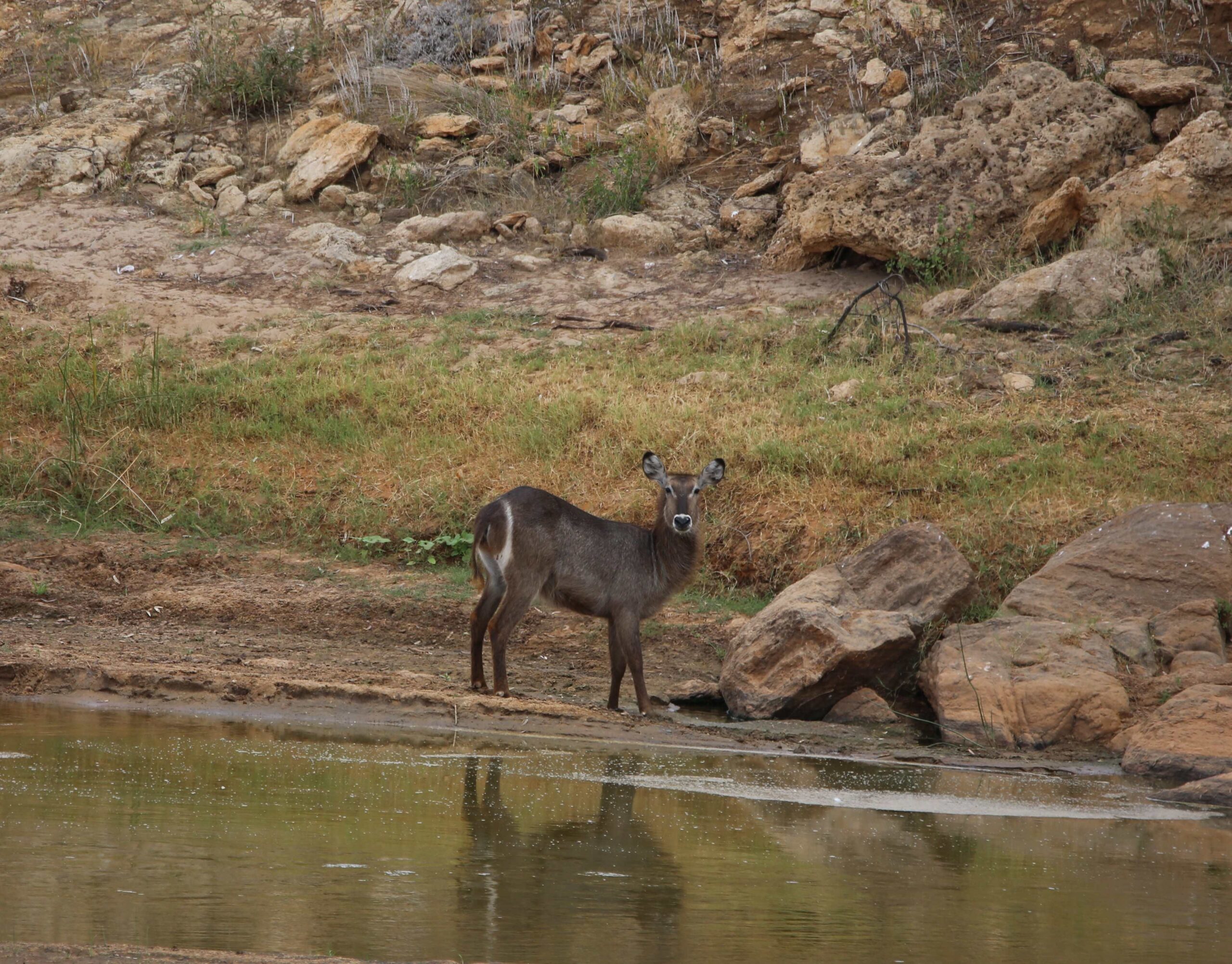
Defassa waterbuck
A large antelope typically found near permanent water sources such as rivers and wetlands. Males maintain territories close to water where grazing is reliable.
Eastern white-bearded wildebeest
The wildebeest found in Tsavo belongs to the eastern white-bearded subspecies. These large grazing antelope are typically seen in herds and move across the savanna following rainfall and the growth of fresh grass. Their grazing helps shape grassland ecosystems, and they form an important prey species for predators such as lions and hyenas.
Lesser kudu
A striking antelope with narrow white stripes and spiral horns in males. Lesser kudu inhabit dense bush and thorn thickets where their striped coats provide excellent camouflage.
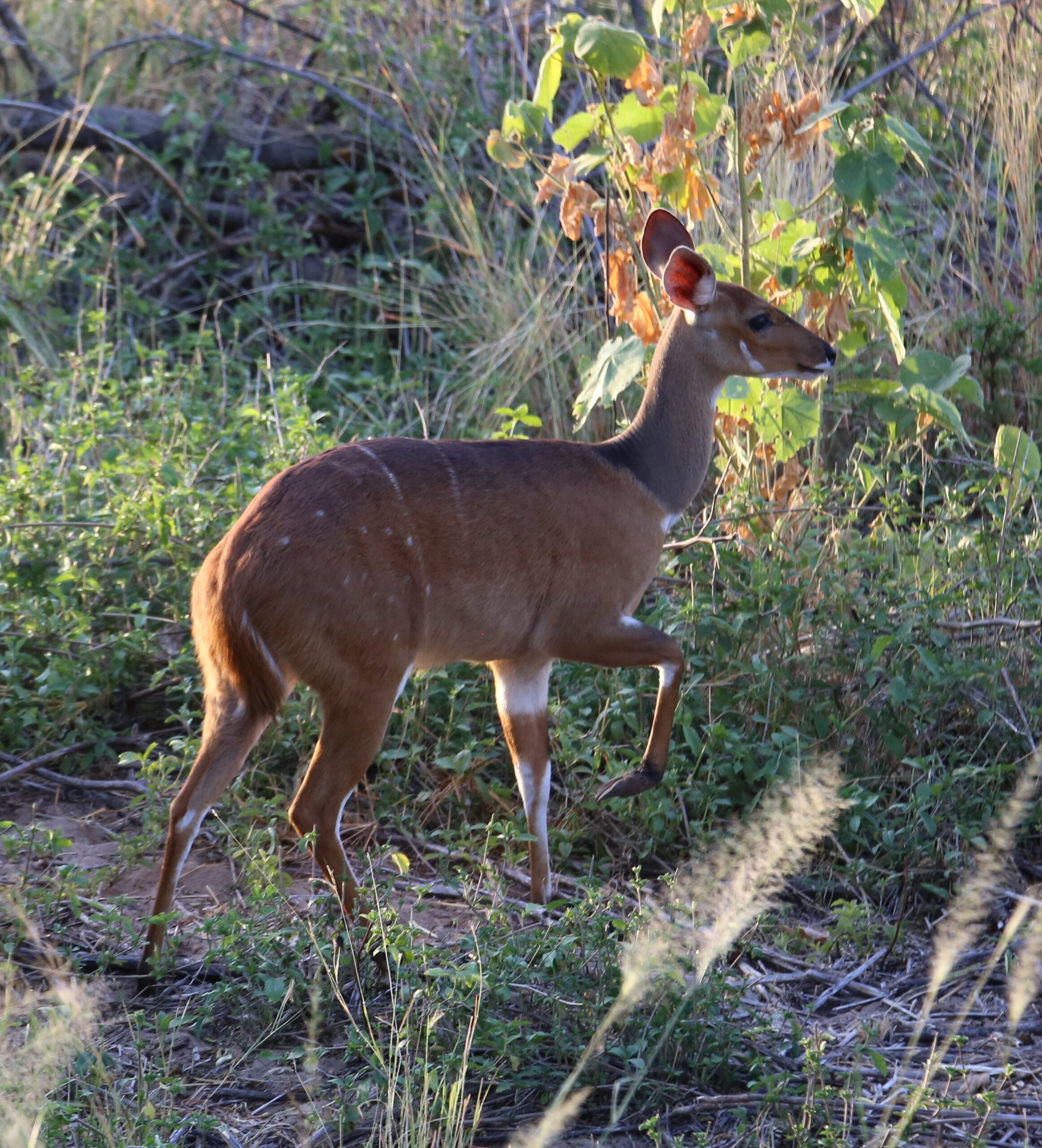
Bushbuck
A solitary antelope usually found in dense vegetation, especially along rivers. Bushbuck are shy and secretive and rarely venture far from cover.
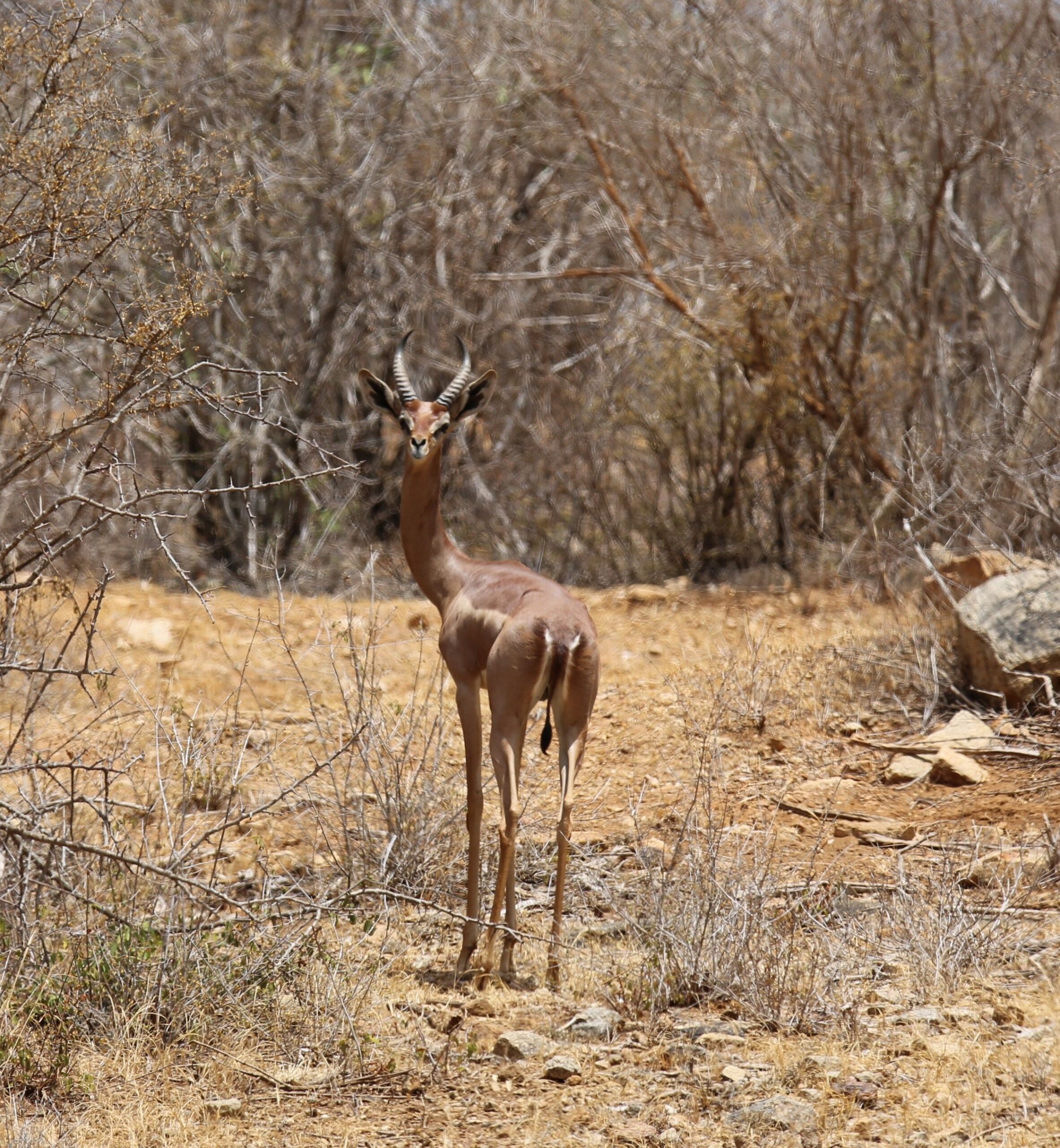
Gerenuk
One of the most unusual antelope in Africa. Gerenuk have long necks and legs and are able to stand upright on their hind legs to browse vegetation beyond the reach of most other antelope.
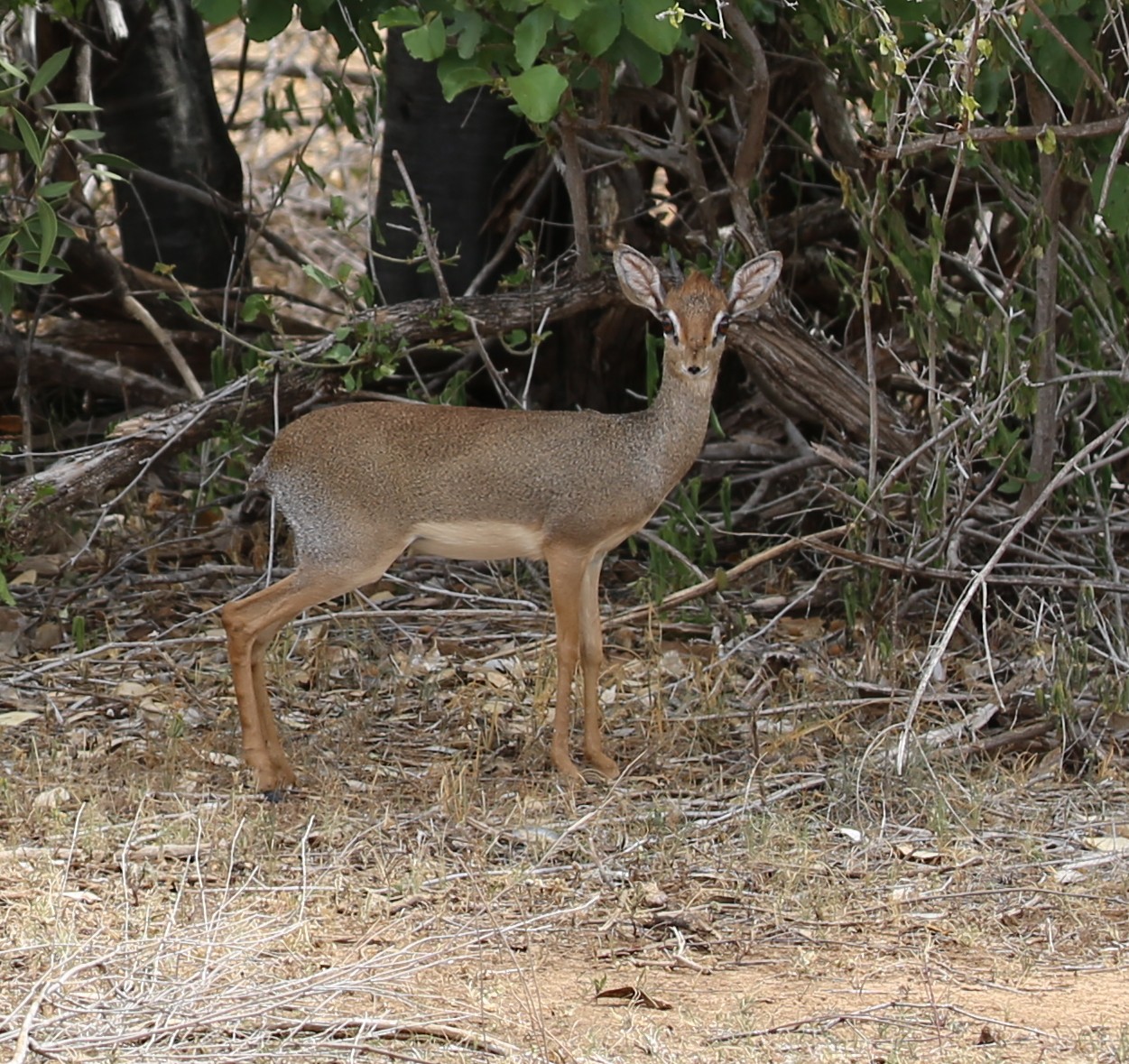
Dik-dik
Among the smallest antelope in Africa. Dik-diks live in territorial pairs and are well adapted to dry bushland. Their enlarged nasal cavity helps regulate body temperature in hot conditions.
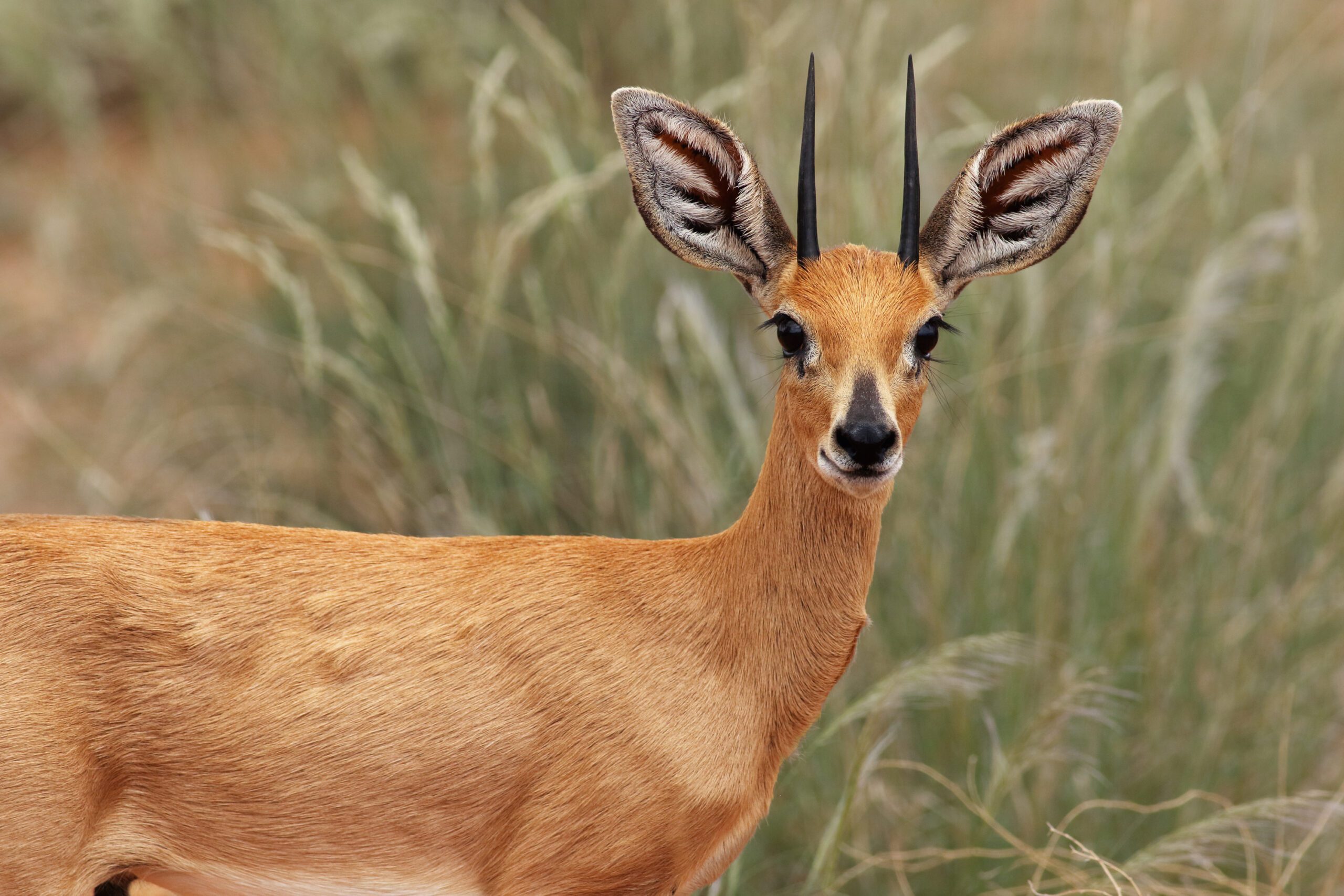
Steenbok
A small, solitary antelope commonly found in open savanna and bushland. Steenbok rely on camouflage and stillness to avoid predators.
Oribi
A small grassland antelope that prefers open areas where predators can be detected early. Oribi depend on speed and agility to escape threats.
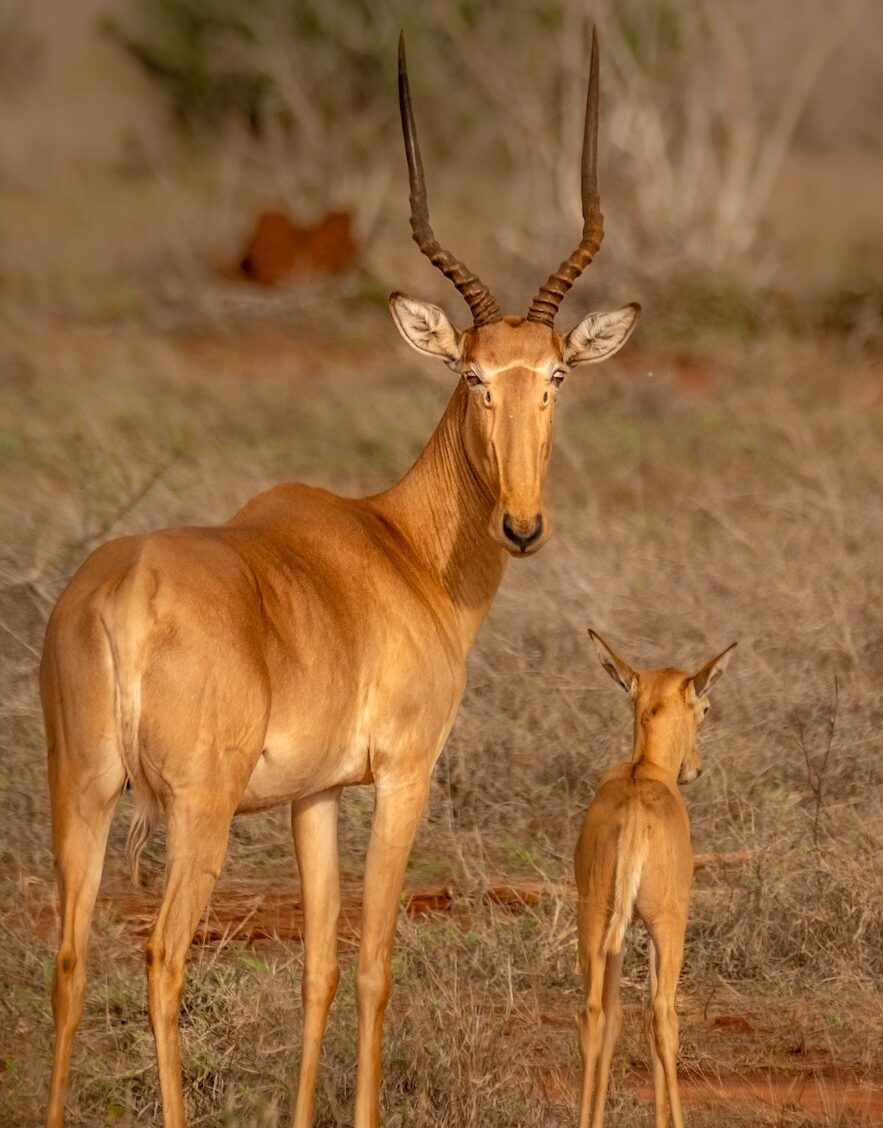
Hirola
One of the rarest antelope in the world and critically endangered. Hirola historically ranged across northeastern Kenya and Somalia. Thanks to conservation effors Hirola are making a comeback in Tsavo today.
Why antelope matter in Tsavo
Antelope form the foundation of the savanna food web. Their grazing and browsing influence vegetation patterns, while their abundance supports predators such as lions, leopards, cheetahs, hyenas, and wild dogs.
Different antelope species specialise in different food sources. Some graze grasses, others browse shrubs and trees. This diversity allows many species to coexist within the same landscape.
In a semi-arid ecosystem such as Tsavo, these animals have evolved remarkable adaptations to cope with heat, water scarcity, and predation. Their presence is a key indicator of the health and balance of the ecosystem.