

Many of the rivers that flow through Tsavo, including sections of the Galana and Athi systems, follow winding, looping paths rather than travelling in straight lines. From the air, it is easy to appreciate the scale of these meanders and how they shape the surrounding landscape.
Far from being simple features of a map, river meanders influence the distribution of water, vegetation, wildlife, and nutrients across entire ecosystems. Understanding how rivers develop these bends helps explain why river corridors are among the most important habitats in Tsavo.
Why rivers develop bends
Water does not move at the same speed across a river channel.
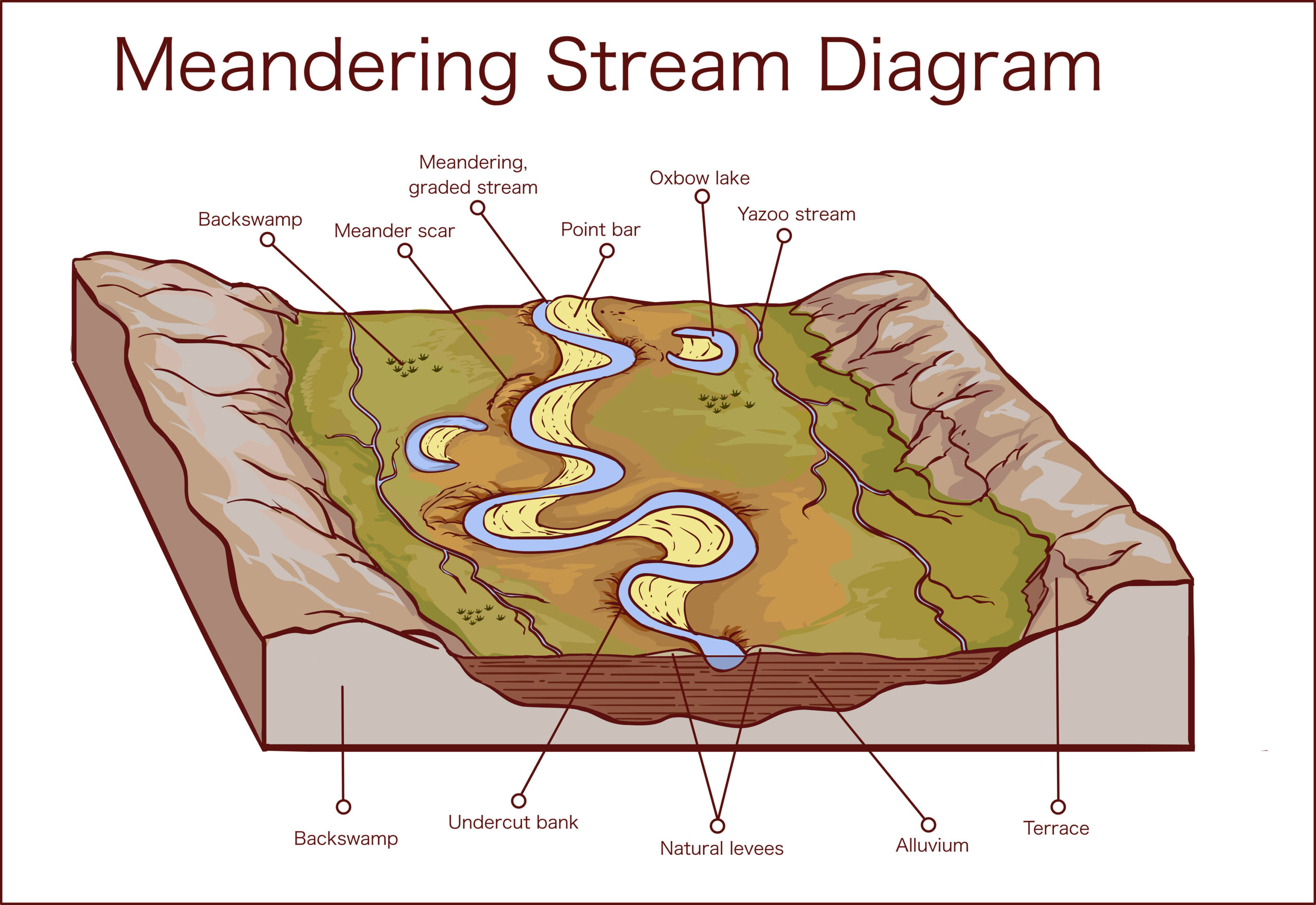
As a river begins to curve, water flows faster along the outside of the bend and slower along the inside. Faster-moving water has more energy and erodes the riverbank, while slower-moving water loses energy and deposits sand, silt, and other sediments.
Over time, this process exaggerates the bend. The outside bank is gradually eroded away, while the inside bank grows through sediment deposition.
The result is a meander: a sweeping curve that becomes more pronounced as the river continues to flow.
This process occurs continuously. Rivers are not fixed features in the landscape but dynamic systems that are constantly reshaping their channels.
Rivers are always changing
Although river channels may appear permanent, they are often surprisingly mobile.
As erosion removes material from one bank and deposition adds material to another, meanders gradually migrate across the landscape. Over decades or centuries, a river may occupy a very different position from the one it held previously.
This movement creates broad floodplains and contributes to the diversity of habitats found along river systems.
In Tsavo, where many rivers experience dramatic fluctuations between wet and dry seasons, periods of heavy rainfall can accelerate these processes. Floodwaters carry large amounts of sediment and can reshape sections of a river in a relatively short period of time.
The formation of oxbow lakes
As meanders become larger, neighbouring bends can eventually approach one another.
During a flood, the river may cut through the narrow strip of land separating the two bends, creating a shorter route for the water. The original loop becomes disconnected from the main channel, forming what is known as an oxbow lake.
Over time, oxbow lakes may persist as permanent water bodies or gradually fill with sediment and become seasonal wetlands.
Although they begin as abandoned sections of river, these habitats often become important refuges for fish, amphibians, waterbirds, insects, and other wildlife.
Why meanders create valuable wildlife habitat
River meanders create a variety of physical conditions within a relatively small area.
The deeper water often found along the outside of bends provides suitable habitat for fish, crocodiles, and hippos. Meanwhile, sandbanks and shallower areas on the inside of bends can provide resting, nesting, or crossing sites for other species.
The continual erosion and deposition associated with meanders also create a mosaic of different soil types and vegetation communities. Some areas support dense riverine forest, while others remain open sandbars or grassland.
This habitat diversity helps support a wide range of species.
Rather than being uniform corridors, river systems contain many different ecological niches shaped by the movement of water.
The importance of rivers for elephants
For elephants, rivers provide far more than drinking water.
Riverine habitats often support denser vegetation than the surrounding landscape because water remains available for longer periods. These areas can provide important forage during dry seasons when food becomes scarce elsewhere.
Elephants also use river corridors as movement routes. Many game trails converge on rivers, linking water sources, feeding areas, and other resources across the landscape.
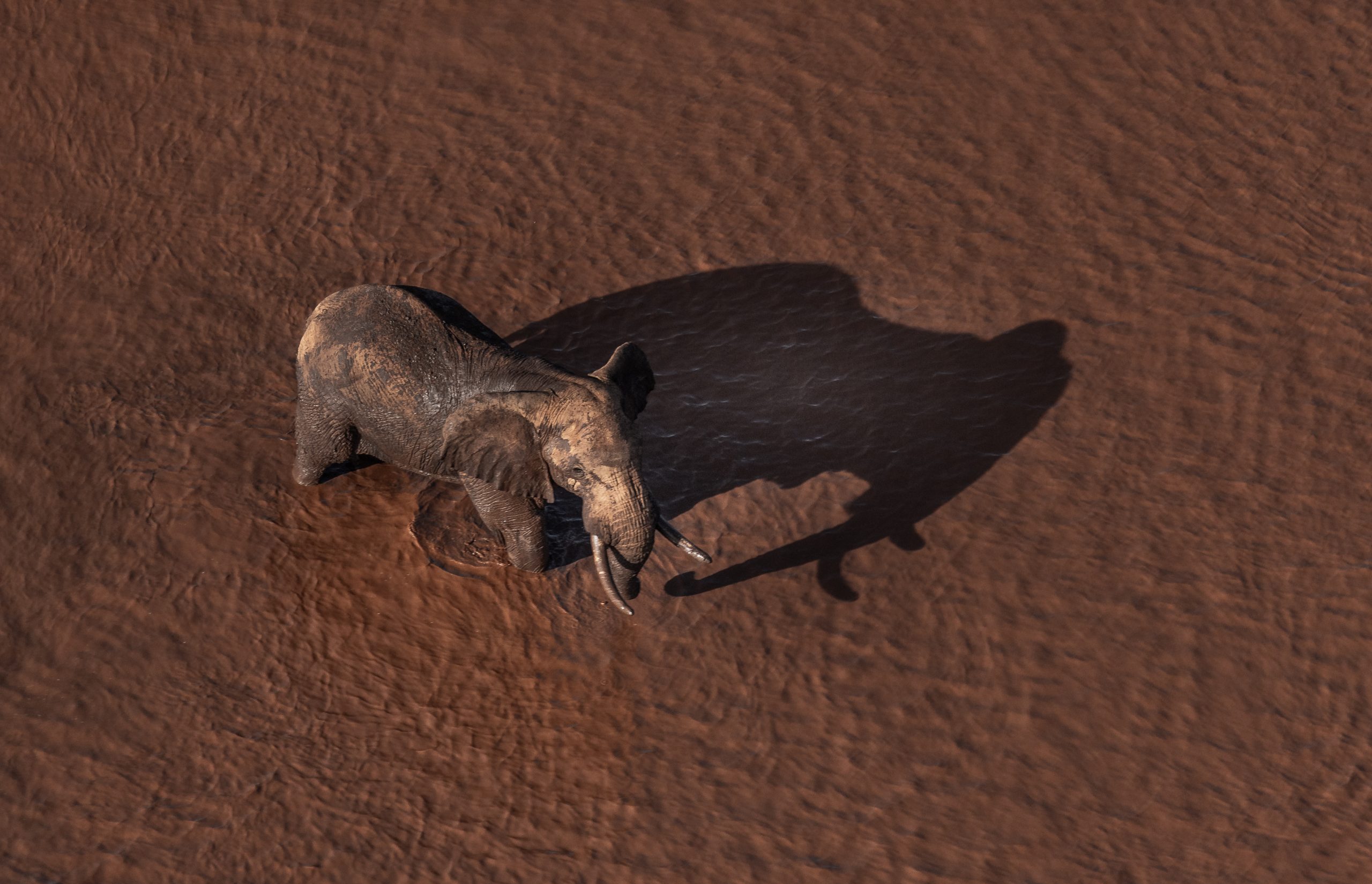
In some cases, elephants dig into sandy riverbeds to access groundwater. These excavations can create temporary water sources that are subsequently used by other species.
As a result, river systems often act as ecological corridors, concentrating wildlife activity and facilitating movement across large areas.
Floods and fertile soils
One of the most important functions of rivers is the redistribution of nutrients.
When rivers flood, they spread water, sediment, and organic material across adjacent floodplains. This process replenishes soils and helps support productive vegetation communities.
Many riverine forests owe their existence to these periodic floods.
The nutrient-rich soils found along river corridors support a variety of trees, shrubs, and grasses that would struggle to survive in surrounding drier areas. These plants, in turn, provide food and shelter for numerous species of birds, mammals, reptiles, and insects.
The productivity of many ecosystems is therefore closely linked to the natural movement of rivers.
Green corridors through a dry landscape
Much of Tsavo is characterised by semi-arid conditions, where rainfall can be highly variable and prolonged dry periods are common.
Against this backdrop, rivers create linear corridors of relatively reliable water and vegetation.
These green ribbons often stand out clearly from the air. They support higher concentrations of wildlife, particularly during dry seasons when animals become increasingly dependent on permanent water sources.
For many species, river corridors provide refuge during difficult periods and serve as important movement routes between different parts of the ecosystem.
Why river systems matter for conservation
Healthy rivers do far more than transport water.
They shape landscapes, create habitats, distribute nutrients, support vegetation, and influence the movements of wildlife. The bends, floodplains, wetlands, and forests associated with river systems contribute significantly to biodiversity.
As climate variability increases and droughts become more frequent in many parts of East Africa, functioning river systems are likely to become even more important.
Protecting rivers therefore means protecting much more than water. It means safeguarding the habitats and ecological processes that support entire ecosystems.
Final thoughts
River meanders are a visible reminder that landscapes are constantly changing.
The curves of a river are created by the interaction of flowing water, sediment, and time. As these bends migrate across the landscape, they create floodplains, wetlands, riverine forests, and habitats that support a remarkable diversity of life.
In Tsavo, rivers are among the most important ecological features in the landscape. Understanding how they work helps explain why so much wildlife depends on them and why protecting healthy river systems remains an essential part of conservation.