

The Nile crocodile is one of Africa’s oldest surviving predators. Fossils show that crocodilians have existed for over 200 million years, and while modern Nile crocodiles are not unchanged “living fossils,” their highly successful body plan has remained remarkably consistent for millions of years.
Today, they remain one of the dominant predators of Africa’s rivers and wetlands. Their success is built on an extraordinary collection of adaptations. They possess one of the strongest bite forces ever measured, can survive for months without food, communicate with their young before they hatch, and have evolved specialised feeding behaviours that often require several crocodiles working together to consume large prey.
Here are the answers to some of the most common questions about one of Africa’s most remarkable reptiles.
How big do Nile crocodiles get?
Nile crocodiles (Crocodylus niloticus) are the largest reptiles in Africa.
Adult females typically grow to around 2.5–3 metres in length, while males commonly reach between 3.5 and 5 metres. Exceptionally large males can exceed 5.5 metres and weigh close to 1,000 kilograms, although individuals of this size are now uncommon.
Like many reptiles, crocodiles continue growing throughout their lives, although growth slows considerably with age. The largest crocodiles are therefore often the oldest individuals in the population.
How powerful is a crocodile’s bite?
The Nile crocodile possesses one of the most powerful bites ever recorded in a living animal.
Scientists have measured bite forces exceeding 16,000 newtons—more than three times stronger than a lion’s bite and stronger than that of almost any other living animal.
This immense force is designed for gripping prey rather than cutting it apart. Once a crocodile has closed its jaws, escape is extremely unlikely.
Interestingly, the muscles used to open the jaws are relatively weak. Despite their tremendous closing force, a crocodile’s jaws can be held shut with surprisingly little pressure.
Why don’t crocodiles chew their food?
Unlike mammals, crocodiles cannot chew.
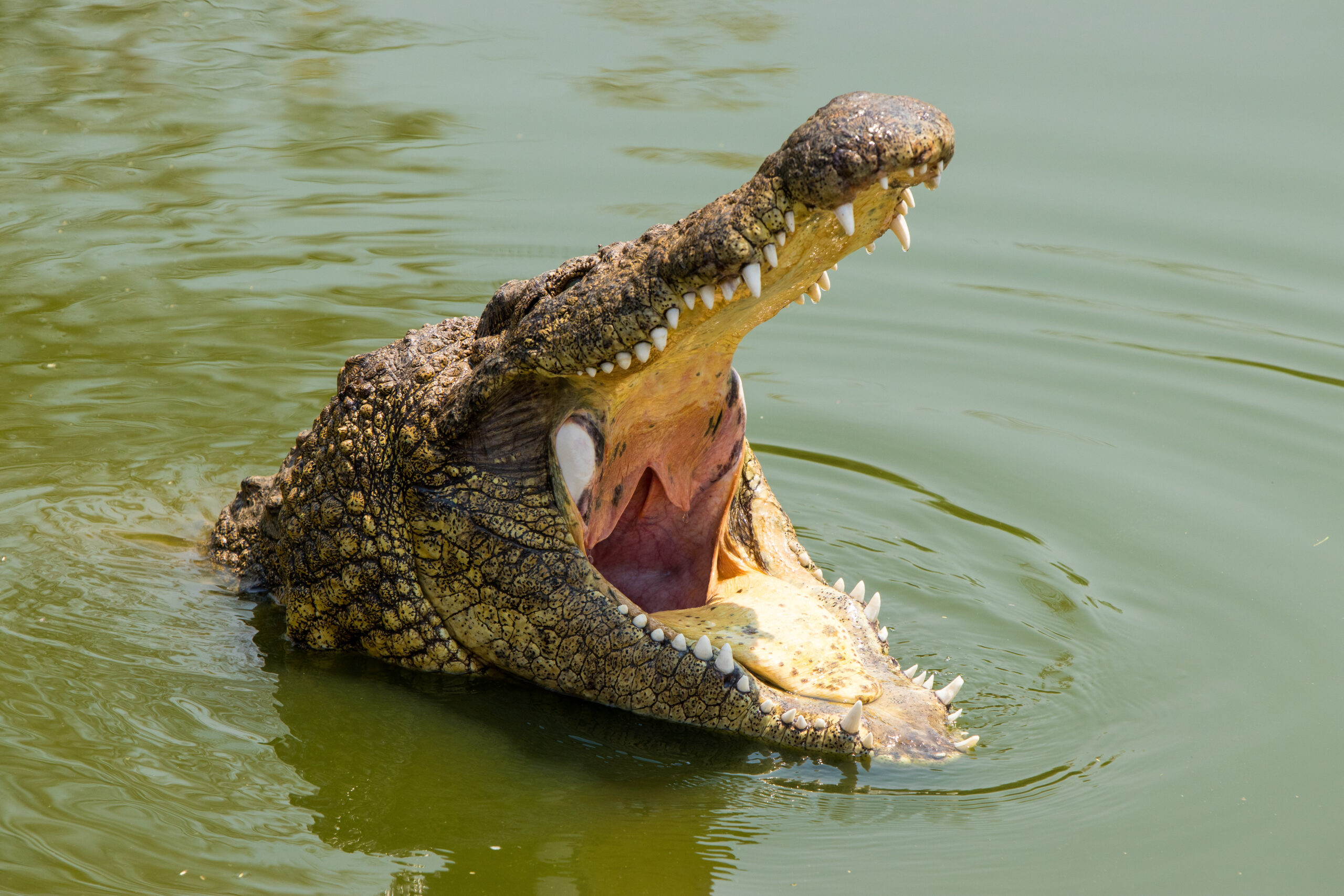
Their conical teeth are designed to grip and hold prey rather than slice through flesh. Small animals are swallowed whole, while larger prey must first be broken into manageable pieces.
One of their best-known behaviours is the death roll. By spinning rapidly while holding onto prey, a crocodile generates enough force to tear away chunks of meat or dismember animals too large to swallow whole.
Crocodiles also swallow stones, known as gastroliths, which may help stabilise the body underwater and assist with grinding food inside the stomach. Their stomach acid is among the strongest found in vertebrates and is capable of digesting bone, hooves, horns, and other tough tissues.
Why do crocodiles often feed together?
One of the Nile crocodile’s lesser-known adaptations is a behaviour known as obligate mutual feeding.
Although an individual crocodile has an extraordinarily powerful bite, it cannot slice meat from a carcass in the way that lions or hyenas can. Its teeth are designed for gripping, not cutting.
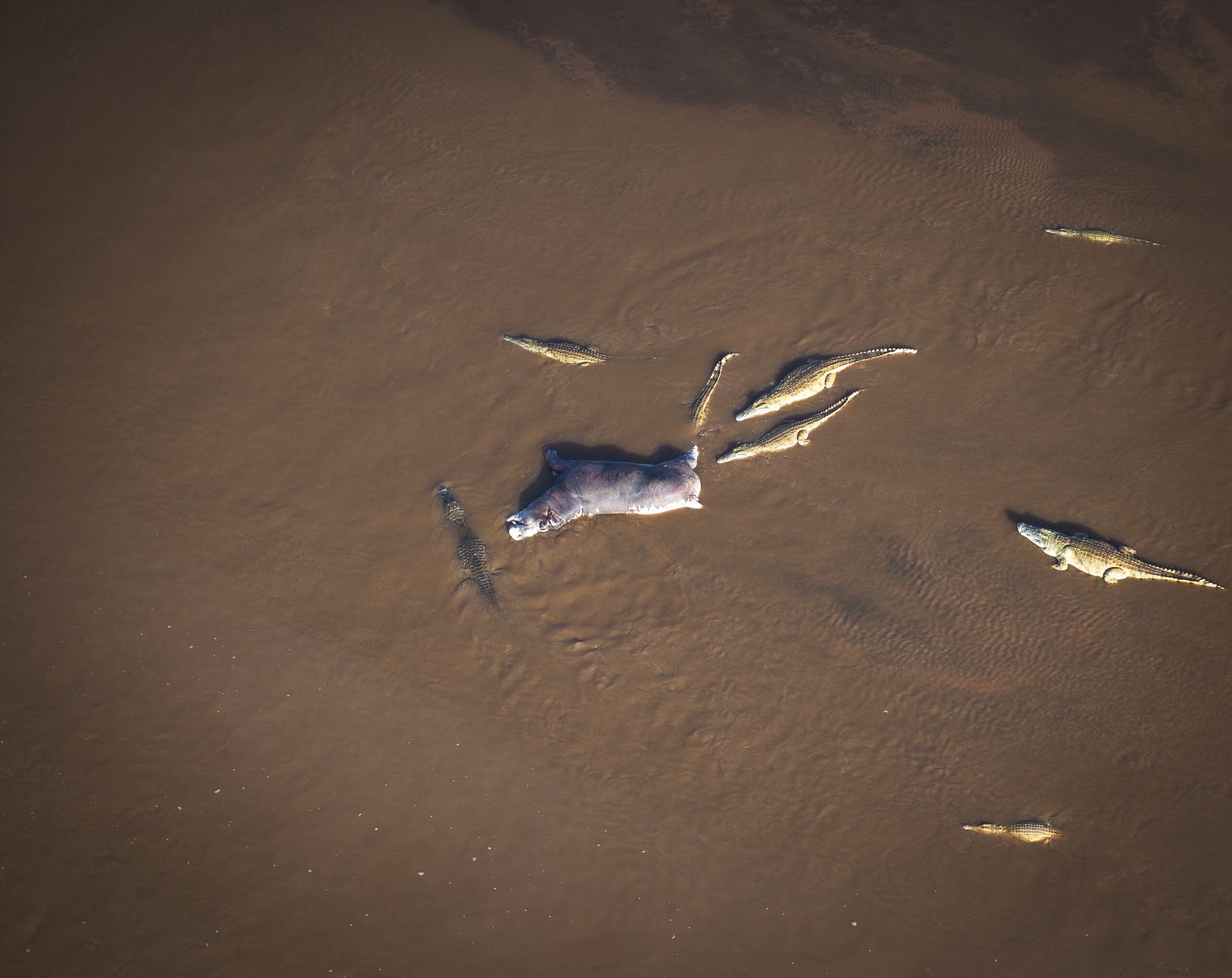
When large prey such as buffalo, zebra, or wildebeest are killed, several crocodiles often feed simultaneously. As one animal anchors the carcass, another may perform a death roll or pull in the opposite direction, allowing large pieces of flesh to tear free. Working together in this way enables them to dismantle prey that would be extremely difficult for a single crocodile to consume.
Despite this temporary cooperation, the relationship is not social in the way it is for lions or wild dogs. Each crocodile is still competing for food, but all individuals benefit from the presence of others while the carcass is being broken apart. Once manageable pieces have been separated, competition resumes.
This unusual feeding strategy allows Nile crocodiles to exploit prey far larger than they could swallow whole and is one reason they are such effective apex predators.
How long can crocodiles stay underwater?
Most crocodiles remain submerged for around 10 to 15 minutes during normal activity.
When resting, however, they can stay underwater for an hour or more.
They achieve this by slowing their heart rate and dramatically reducing oxygen consumption. Because crocodiles are ectothermic, they require far less energy than mammals of similar size, allowing them to conserve oxygen for extended periods.
Their eyes, ears, and nostrils are positioned on the top of the head, enabling them to remain almost entirely submerged while still observing their surroundings.
How fast are crocodiles?
Crocodiles are built for explosive acceleration rather than sustained speed.
In water, they propel themselves using powerful sideways movements of the tail, allowing them to launch rapidly towards prey.
On land, Nile crocodiles can reach speeds of around 15–17 km/h over very short distances. However, they fatigue quickly and cannot maintain these speeds for long.
The popular advice to “run in a zigzag” if chased by a crocodile has little scientific support. In reality, avoiding risky situations near the water’s edge is far more important than relying on escape techniques.
Why do crocodiles bask in the sun?
Like all reptiles, crocodiles are ectothermic and depend on external heat sources to regulate their body temperature.
Basking allows them to warm their bodies after cool nights, improving muscle function, digestion, and activity levels.
During the hottest parts of the day, crocodiles are often seen resting with their mouths open.
This behaviour, known as gaping, is not a sign of aggression. Instead, it helps release excess body heat in much the same way that panting cools mammals.
Do crocodiles cry?
The phrase “crocodile tears” has existed for centuries, but it does have a biological basis.
Crocodiles produce tears to lubricate and protect their eyes, while specialised glands also help regulate salt balance within the body.
During feeding, pressure generated by the jaw muscles can force tears from the eyes, probably contributing to the origin of the expression.
There is, however, no evidence that crocodiles cry because they experience remorse.
Do birds really clean crocodiles’ teeth?
One of the oldest wildlife stories tells of birds entering a crocodile’s mouth to remove scraps of meat from between its teeth.
The tale is usually associated with the Egyptian Plover and dates back to accounts written by the Greek historian Herodotus more than 2,000 years ago.
Despite its popularity, there is very little scientific evidence that this behaviour regularly occurs.
Birds certainly forage around crocodiles and may feed on insects or parasites nearby, but the famous image of crocodiles routinely receiving dental treatment remains largely unsupported by modern observations.
It serves as a useful reminder that not every wildlife story passed down through history is scientifically accurate.
Do crocodiles eat every day?
Surprisingly, no.
Crocodiles have one of the slowest metabolisms of any large predator. Because they are ectothermic, they do not need to burn large amounts of energy maintaining a constant body temperature.
Adult Nile crocodiles feed opportunistically rather than at regular intervals. After consuming a large prey item, they may not require another substantial meal for weeks or even months.
Under particularly harsh conditions, exceptionally large crocodiles have been documented surviving for more than a year without feeding by relying on stored fat reserves and dramatically reducing their metabolic rate. Researchers believe they can survive even longer in extreme circumstances, although this represents a survival strategy rather than normal behaviour.
This remarkable physiology reflects the feast-or-famine lifestyle of an ambush predator. Large prey are unpredictable, so evolution has favoured animals capable of enduring long periods between successful hunts.
Are crocodiles good parents?
Despite their fearsome appearance, crocodiles provide far more parental care than many reptiles.
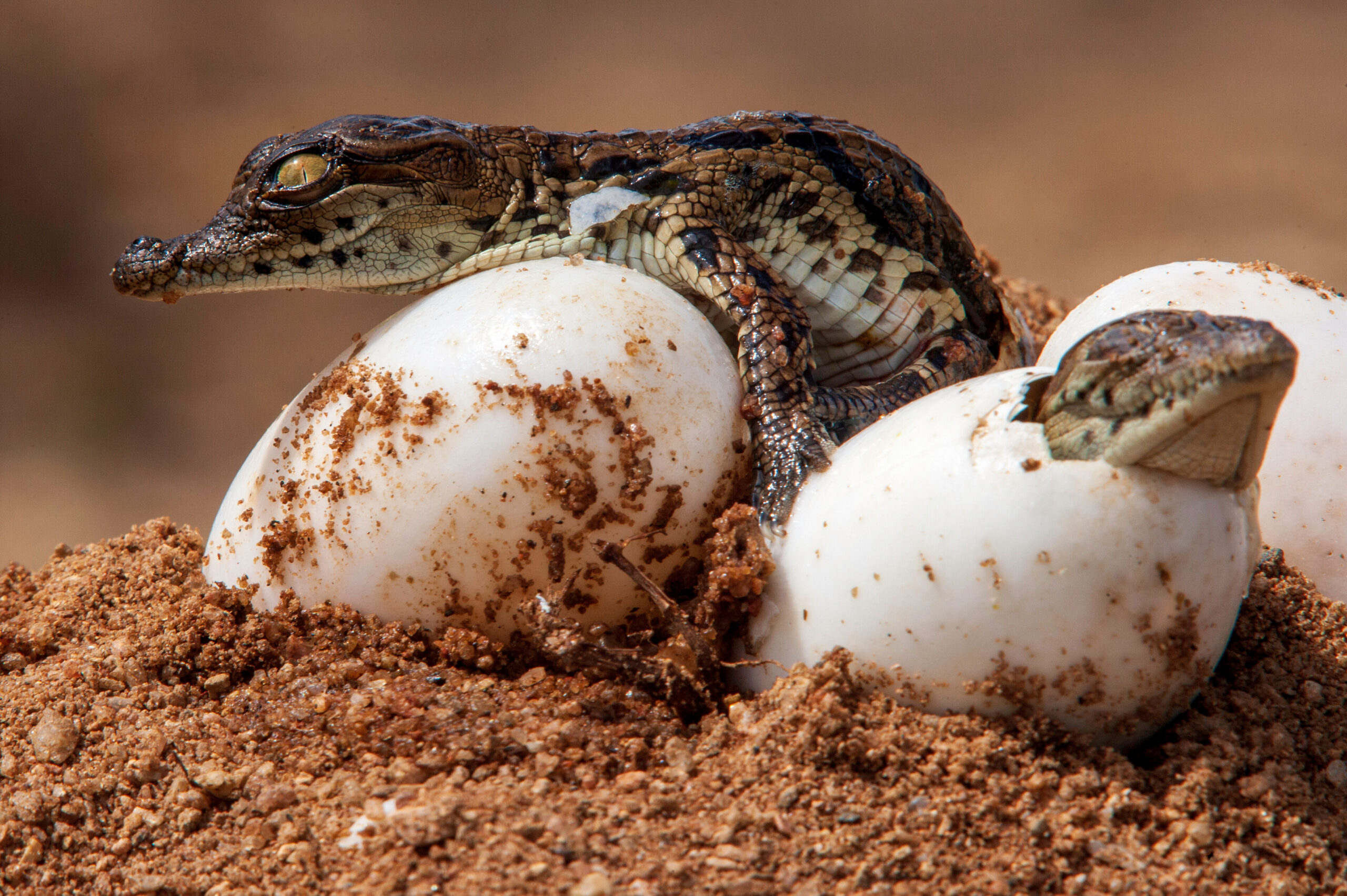
Females carefully guard their nests for around three months while the eggs develop.
As hatching approaches, the young begin calling from inside their eggs. These vocalisations signal to the mother that they are ready to emerge.
She responds by gently uncovering the nest and often carries the hatchlings to the water inside her mouth.
For several weeks afterwards, mothers frequently remain close to nursery groups, protecting the young from fish, birds, monitor lizards, and even larger crocodiles.
Why have crocodiles changed so little?
Crocodiles are often described as “living fossils,” but this description is misleading.
Modern crocodiles have continued evolving, just like every other living species. However, their overall body plan has proved exceptionally successful.
Their ancestors survived the asteroid impact that ended the age of the dinosaurs 66 million years ago, as well as major climatic changes that followed.
Their powerful jaws, efficient metabolism, sensitive pressure receptors, excellent camouflage, and highly specialised hunting strategy have allowed them to remain among the world’s most effective aquatic predators with relatively little need for fundamental change.
Sometimes, evolution does not favour a new design because the existing one already works remarkably well.
Crocodiles in Tsavo
Here, crocodiles are more than apex predators. They influence where animals drink, how wildlife uses riverbanks, and even the timing of river crossings. Their presence contributes to what ecologists call the landscape of fear, where prey species modify their behaviour to reduce the risk of predation.
Like lions on the savanna, crocodiles help shape the behaviour of countless other animals simply through their presence.
Final thoughts
The Nile crocodile is far more than an ambush predator waiting beneath the water’s surface.
It is a highly specialised reptile whose anatomy, physiology, and behaviour have been refined over millions of years. From extraordinary bite strength and remarkable fasting ability to sophisticated parental care and cooperative feeding strategies, crocodiles represent one of evolution’s most successful designs.
Understanding these adaptations helps us appreciate not only the crocodiles themselves, but also the important ecological role they continue to play in Africa’s rivers and wetlands.