

Elephants spend much of their lives feeding, encountering thousands of different plants across decades of movement through their environment. They learn where food and water can be found, how those resources change with the seasons, and which parts of different plants are worth eating.
But could some elephants possess another form of botanical knowledge: knowing what to eat when they are unwell?
A 2026 study from Mount Elgon in Kenya documented accounts of elephants selectively consuming plants that local observers believe have medicinal functions. Some were reportedly eaten only occasionally, others were associated with elephants showing signs of illness, and several were consumed in unusual ways. Most intriguingly, local observers described mother elephants apparently giving particular plant resources to their calves for health-related purposes.
The findings are fascinating, but they require careful interpretation. The study did not experimentally demonstrate that elephants understand medicine, nor did researchers directly verify the therapeutic effects of the reported behaviours. Instead, it brings together decades of observations from experienced members of the local Sabaot community and identifies specific behaviours, plants and hypotheses that can now be investigated scientifically.
Medicine in the animal kingdom
Potential self-medication has been reported in animals ranging from chimpanzees and orangutans to birds and dolphins. Animals may consume plants, soils or other materials containing compounds that could provide physiological benefits.
However, consuming something medicinal is not necessarily the same as taking medicine.
A plant can simultaneously be food and contain pharmacologically active compounds. An elephant might therefore benefit from a plant without deliberately seeking its medicinal properties.
Stronger evidence for self-medication emerges when an animal behaves differently during illness. It might seek a plant that it rarely consumes when healthy, select an unusual part of the plant, consume only a small quantity or travel specifically to find it. If the selected plant then contains compounds relevant to the animal’s condition, the case becomes more compelling.
Even then, intentionality is difficult to establish. The behaviour could be instinctive, individually learned or socially transmitted without the animal possessing anything comparable to a human understanding of medicine.
What the Mount Elgon study found
Mount Elgon provides an unusual setting in which to investigate these questions. Its forests contain considerable botanical diversity, while the area’s elephants are already well known for entering caves and consuming mineral-rich soils.
Rather than beginning with a short period of direct behavioural observation, the researchers drew upon the accumulated knowledge of people who had spent decades around the elephants.
Eight members of the Sabaot community were interviewed, including four wildlife community scouts, two guides, a retired agricultural officer and a retired Kenya Wildlife Service ranger. Every participant had spent more than 20 years within the study area interacting with or observing the local elephant population. One had accumulated 78 years of experience in the area.
The researchers asked participants about unusual feeding behaviour and resources they believed elephants used medicinally. Plants identified during the research were collected and taxonomically verified using herbarium voucher specimens.
The resulting list contained 39 potentially relevant natural resources: 35 plant species from 23 families and four types of soils, minerals or clays.
Of these 39 resources, informants identified 34, or 87%, as also having traditional human medicinal uses. Twenty-five plant species were specifically described by participants as having a medicinal function for elephants.
Importantly, these figures describe the resources reported by the study’s informants. They do not mean researchers experimentally demonstrated medicinal effects in elephants for 25 or 35 plant species.
Which observations provide the strongest evidence?
The researchers attempted to distinguish ordinary feeding from behaviour more suggestive of self-medication by classifying the reported cases into different modes.
Ten plants were classified as Mode 3. At least one participant regarded these plants as medicinal for elephants, but there was insufficient information about the elephant’s health at the time to determine whether the animal was deliberately seeking medicine or simply eating a plant that happened to contain beneficial compounds.
Seven plants were placed in a tentative Mode 4(!) category. These were reported as being consumed by sick elephants, but the informants did not identify the particular illness or symptoms associated with their use.
Eight species provided the strongest reported evidence and were classified as Mode 4: Aloe arborescens, Bersama abyssinica, Coleus barbatus, Dombeya burgessiae, Dombeya rotundifolia, Dombeya torrida subsp. torrida, Ficus natalensis and Kuloa usambarensis. These were plants that informants associated with sick or vulnerable elephants and a specified medicinal purpose, or with apparent healthcare directed towards another elephant.
Mode 4 should therefore not be read as “confirmed elephant medicine.” It means the reported behaviour met the study’s strongest classification criteria for putative therapeutic use.
It is not only what elephants eat, but how they eat it
Some of the most interesting evidence comes from the circumstances in which particular resources were reportedly used.
Informants described elephants consuming plants in unusual ways, seeking certain resources only occasionally or seasonally and targeting particular plants when apparently unwell.
One participant explained more generally that elephants seeking a particular resource might travel directly towards it even if it were around 20 kilometres away, without stopping to feed along the way. Importantly, the paper states that this example was not associated with a particular plant or specific medicinal event. It demonstrates the observers’ interpretation of how deliberately elephants can target resources, rather than evidence that an elephant travelled 20 kilometres specifically to obtain medicine.
Other observations were linked more specifically to particular plants.
Informants reported elephants using three Dombeya species to aid digestion and soften their droppings. Kuloa usambarensis was associated with elephants showing visible signs of sickness, including lethargy and reduced movement.
Again, these are reported interpretations of observed behaviour. The study did not measure the elephants’ digestive physiology before and after consuming Dombeya, nor demonstrate that Kuloa treated the cause of the observed sickness.
Those are precisely the kinds of questions future research would need to test.
Do elephant mothers provide medicine to their calves?
Perhaps the most intriguing accounts concern mothers and calves.
The study identified five cases or resources associated with what researchers classified as allocare, meaning apparent health-related behaviour directed towards another individual. Four plant species were involved in these observations: Aloe arborescens, Bersama abyssinica, Coleus barbatus and Ficus natalensis.
Female elephants were reportedly observed giving Aloe arborescens to calves in behaviour that informants interpreted as increasing their appetite.
More unusually, local observers reported that mothers combined plant material including Ficus natalensis, Coleus barbatus and Bersama abyssinica with their milk before giving it to calves. The informants described this as “a kind of immunization.”
There are important uncertainties here.
The paper does not clearly describe how the elephants physically mixed the plant material with their milk or exactly how the resulting material was administered to the calves. It does not provide a detailed behavioural sequence showing how the mother collected the plants, combined them with milk and transferred the mixture. We therefore cannot reliably describe the mechanics of the behaviour beyond what the informants reported.
Similarly, “immunization” is the observers’ interpretation. The researchers did not demonstrate that the plants stimulate the calves’ immune systems, prevent infection or function as a vaccine in any medical sense.
The authors themselves recognise that informants interpreted elephant behaviour partly through their extensive knowledge of local traditional medicine and, in some cases, concepts such as immunity and digestion. This expertise may help observers recognise unusual behaviour that a short-term researcher could easily miss, but it can also influence how that behaviour is interpreted.
The observation is therefore best treated as a particularly interesting hypothesis: mother elephants may provide certain plants to calves for a health-related purpose. Confirming that would require direct behavioural observations and investigation of the plants’ physiological effects.
How would an elephant know what to take?
If future research confirms that some of these plants have therapeutic effects, another question follows: how do elephants know to use them?
There are several possibilities.
Some behaviours could be innate. Natural selection could favour physiological responses that cause an animal experiencing a particular condition to become attracted to certain tastes, smells or chemical compounds.
Other behaviours could be individually learned. An elephant that consumes a particular plant while unwell and subsequently experiences relief might be more likely to seek it again. With elephants living for many decades, individuals have considerable time to accumulate knowledge about their environment.
Perhaps most interesting is the possibility of social learning.
Elephants live within complex social networks in which younger animals can acquire ecological information from older and more experienced individuals. This raises the possibility that knowledge about unusual plant resources could also be transmitted socially.
However, the Mount Elgon study did not test whether medicinal plant use is socially learned. The researchers specifically identify the origin of these behaviours, whether innate, individually learned, learned from mothers or other experienced elephants, or some combination of these mechanisms, as a question for future research.
It is therefore possible that different elephant populations possess different medicinal repertoires, but this remains a hypothesis rather than an established feature of elephant culture.
Humans and elephants using the same plants
One of the study’s most striking results was the overlap between plants associated with elephant health and traditional human medicine.
Of the 39 resources documented, 34 were identified by informants as having traditional human medicinal uses. All 25 plants described by informants as elephant medicines also had local ethnomedicinal uses.
Some participants suggested that people had learned about particular resources by observing elephants. One informant described knowledge passed down from previous generations that plants useful to elephants could also be useful to people.
This raises an interesting question about whether people have historically discovered medicinal plants by observing wildlife.
But the study does not establish that Sabaot medicinal knowledge originated from elephants, nor does the overlap itself prove that elephants use the plants medicinally.
There are several possible explanations. Humans and elephants might independently encounter the same biologically active plants. Observing animals could occasionally direct people towards useful species. Conversely, people’s existing knowledge of medicinal plants could make them more likely to interpret unusual elephant consumption as medicinal.
The researchers explicitly acknowledge this potential interpretive influence.
The overlap is therefore an important finding, but its cause remains unresolved.
What about Mount Elgon’s cave-mining elephants?
The consumption of soil, known as geophagy, occurs in many animals. Depending on the circumstances, soils can potentially provide minerals, while certain clays may also have gastrointestinal or toxin-binding properties.
Interestingly, the informants in this study generally did not classify Mount Elgon’s clay and soil consumption as medicinal. Instead, they attributed it primarily to obtaining minerals such as salt and iron.
This distinction is useful because it demonstrates that the study did not automatically classify every unusual substance consumed by elephants as medicine.
It also illustrates the wider difficulty of interpreting animal behaviour. Even when a substance has potential medicinal properties, determining why an animal consumes it requires considerably more evidence.

How could scientists test whether elephants really use medicine?
The Mount Elgon study provides hypotheses rather than final answers.
One important next step is pharmacological analysis. Candidate plants can be tested to identify active compounds and determine whether they possess properties relevant to the conditions with which observers associate them.
The researchers’ literature review already found previously documented pharmacological properties among several frequently reported plants. That makes them interesting candidates, but laboratory evidence that a plant has antimicrobial or anti-inflammatory activity does not demonstrate that it successfully treats illness in a wild elephant.
Long-term behavioural monitoring would provide another crucial piece of evidence.
Researchers could follow individually identified elephants and compare their diets while healthy, injured and sick. If a particular plant is rarely eaten normally but repeatedly sought by different elephants experiencing the same condition, the evidence for targeted medication would become much stronger.
Health outcomes would then need to be considered alongside feeding behaviour.
Researchers could also investigate whether particular behaviours occur within specific family groups, whether calves acquire them from their mothers and whether neighbouring elephant populations use different plants for similar conditions.
These are not minor details. They are what would allow researchers to distinguish between a plant that happens to be medicinal and an elephant actually using it as medicine.
Could Tsavo’s elephants be doing something similar?
Mount Elgon and Tsavo are very different ecosystems.
Mount Elgon is mountainous, comparatively wet and botanically diverse. Much of Tsavo consists of semi-arid savanna, bushland and woodland. The plants available to elephants are consequently very different.
The Mount Elgon study provides no evidence that Tsavo elephants use the same plants or display the same medicinal behaviours.
What it does provide is a reason to pay closer attention to unusual feeding behaviour.
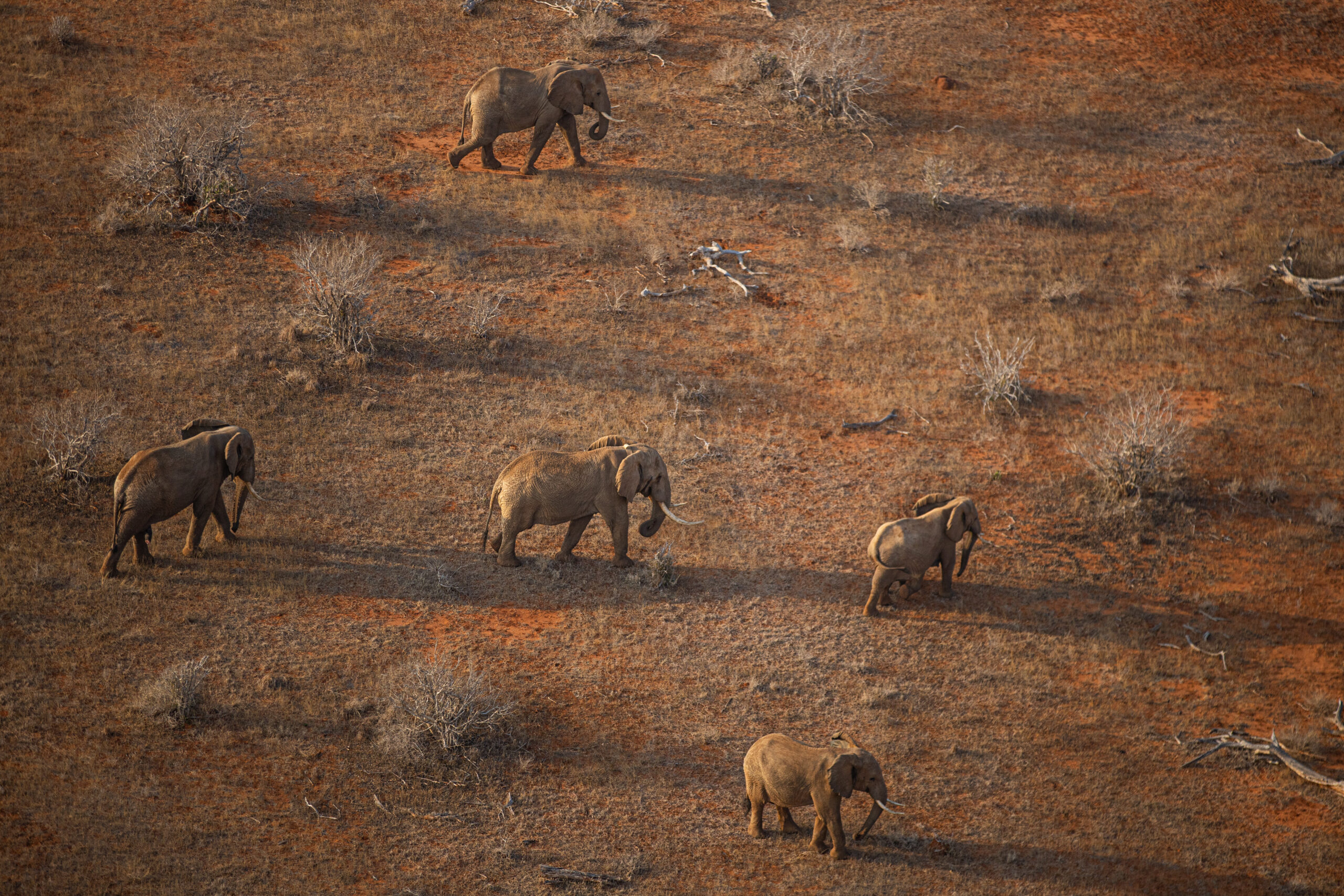
Long-term monitoring in Tsavo could potentially identify occasions when a known elephant behaves differently from normal: an injured individual selecting an unusual plant, a sick elephant consuming a particular bark or root, or a mother interacting with a plant and calf in an unusual way.
Such observations would not themselves demonstrate medicine. But when repeated observations are combined with botanical identification, individual health histories and pharmacological analysis, they could generate testable hypotheses.
This is one of the strengths of long-term field monitoring. Understanding what is unusual first requires knowing what is normal.
Protecting elephants may also mean protecting ecological knowledge
The emerging study of animal medicine raises a broader conservation question.
We usually think about elephant habitat in terms of food, water, space and connectivity. But functioning ecosystems contain relationships that are far more difficult to see.
A plant that contributes very little to an elephant’s everyday diet could potentially become important under particular circumstances. If future research also demonstrates that some medicinal behaviours are socially transmitted, maintaining elephant populations could preserve accumulated ecological knowledge alongside genetic diversity.
At present, neither the importance of medicinal plants to elephant population health nor the cultural transmission of medicinal knowledge has been demonstrated in African elephants. Both remain important research questions.