How 960 vaccinations near Tsavo protected 577 families and one of Africa’s most endangered carnivores.
A dog sleeps in the doorway of a home in Kamungi. He guards the goats, watches through the night and is part of the family. Yet, like many dogs in the villages bordering Tsavo, he had not been vaccinated against rabies for over a year.
A house-to-house survey across 12 villages revealed 577 households living alongside an invisible but deadly risk. Rabies is almost always fatal once symptoms appear, yet it is entirely preventable through vaccination. Nearly every human rabies death begins with an infected dog bite, making prevention essential for both people and wildlife.
This landscape is also home to Africa’s endangered painted wolf. Living in close-knit family packs, these animals are highly vulnerable to diseases such as rabies. One infected domestic dog can spread the virus through an entire pack, wiping it out within weeks. Protecting village dogs therefore protects wildlife too.
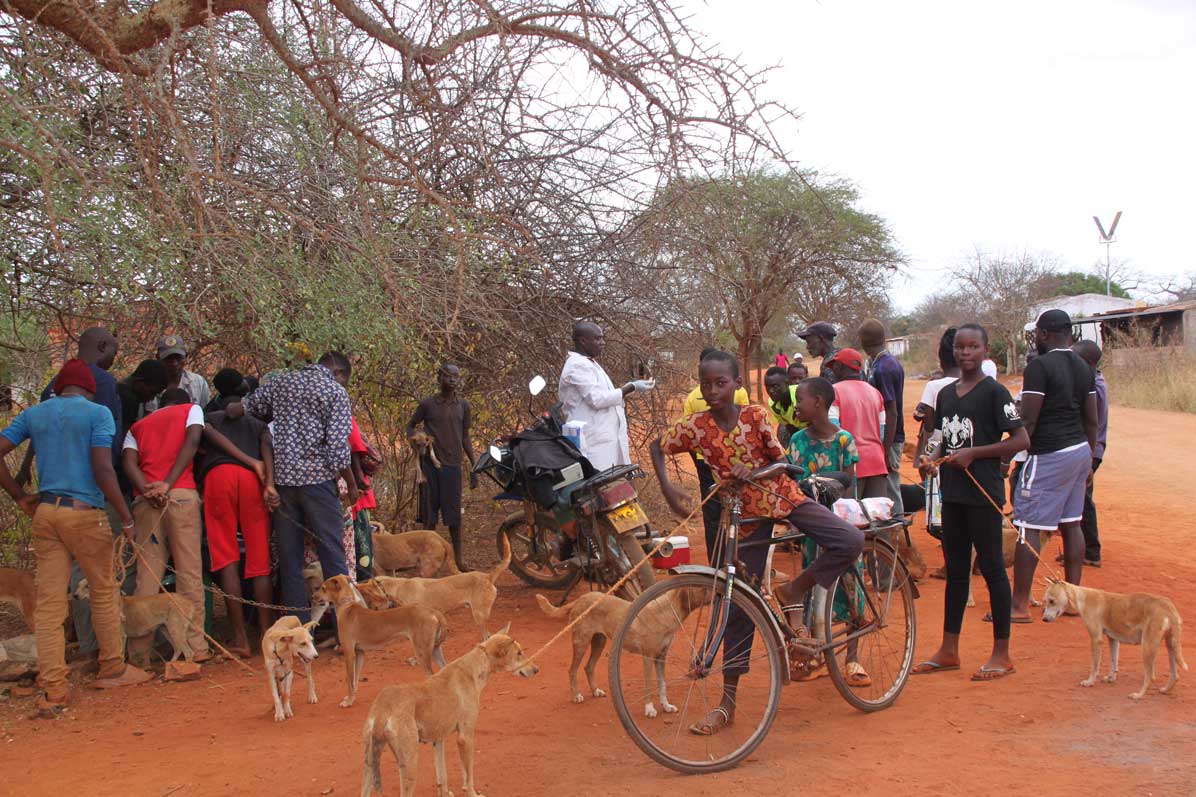
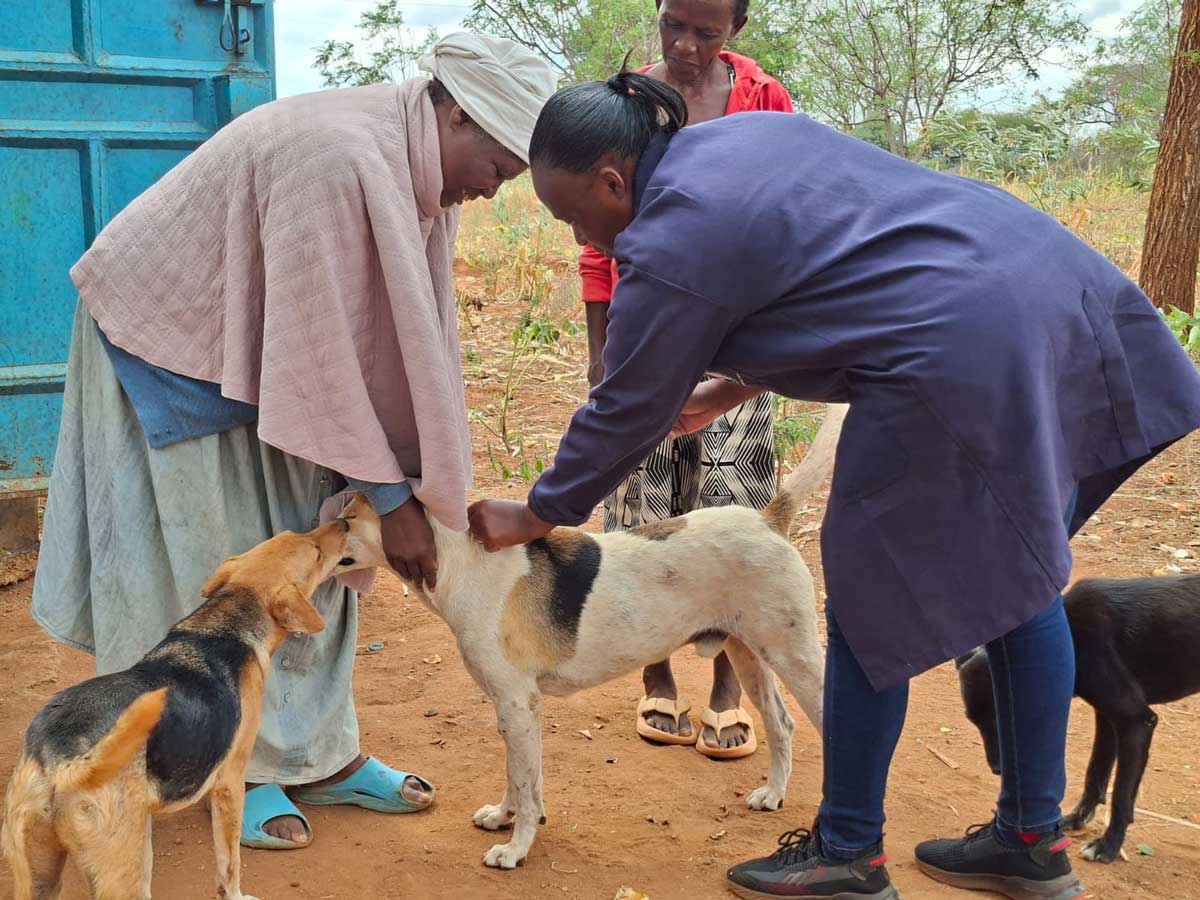
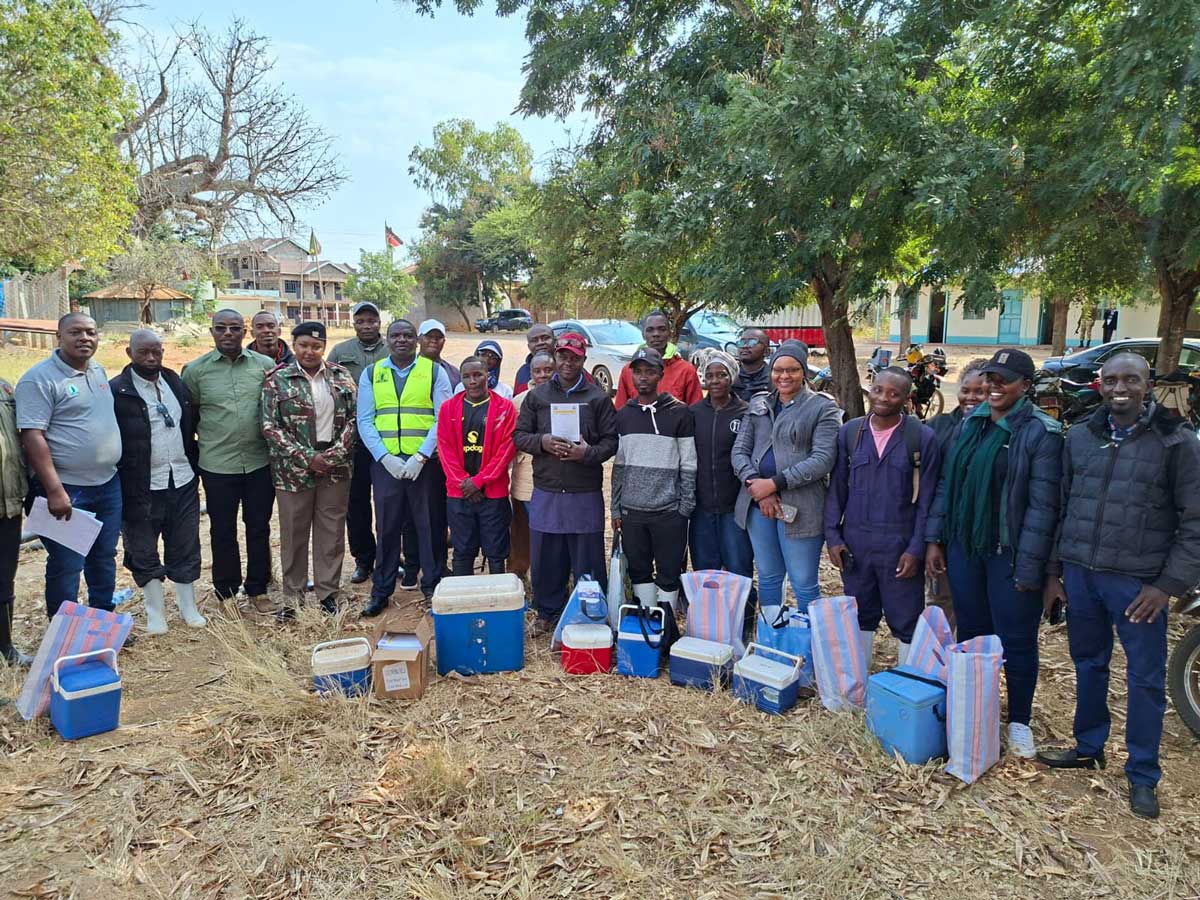
To reduce this shared risk, Tsavo Trust, in partnership with the Makueni County Government Veterinary Services, conducted a free two-day rabies vaccination campaign. With support from the Painted Wolf Foundation and funding from the Painted Dog Fund, awareness was spread through schools, churches, radio and posters.
The campaign vaccinated 960 animals, reaching 96% of the target: 856 dogs, 40 cats and 64 donkeys. This marked a significant increase from 594 animals vaccinated during the previous campaign. A vaccine refrigerator provided by Tsavo Trust ensured every dose remained effective throughout the exercise.
Healthy dogs mean healthier families and healthier wildlife. Disease does not recognise the boundary between villages and protected areas, making community health and conservation inseparable.
Rabies cannot be eliminated in a single campaign. Sustained annual vaccinations, public awareness and responsible dog ownership are essential to achieving long-term herd immunity.
This campaign left 577 families safer and reduced the risk facing painted wolves along the Tsavo boundary. It demonstrates that conservation succeeds when people, domestic animals and wildlife are protected together.