

African wild dogs are among Africa’s most social mammals. Unlike most large predators, almost every aspect of their lives depends on cooperation. Packs hunt together, raise pups collectively, defend kills, care for injured members, and work together to establish new territories. This extraordinary level of cooperation has made them one of Africa’s most successful hunters. However, it has also made them especially vulnerable. When pack numbers fall below a critical size, the social system begins to break down, reducing hunting success, pup survival, and ultimately the chances of the pack surviving.
A pack is more than a group
African wild dogs live in close-knit packs that typically contain between six and twenty adults, although larger packs occasionally occur. Unlike many other social mammals, only one dominant pair usually breeds. The remaining adults rarely reproduce themselves. Instead, they devote much of their energy to helping raise the dominant pair’s offspring.
This system is known as cooperative breeding.
At first glance, this may seem counterintuitive. Why would healthy adults give up the opportunity to have their own young?
The answer, like usual, lies in evolution. Brothers, sisters and other close relatives share many of the same genes. By helping close relatives survive and reproduce, individuals still increase the chances that their shared genes are passed on to the next generation. Biologists refer to this as inclusive fitness, and it helps explain why cooperation can be such a successful evolutionary strategy.
African wild dog dispersal usually occurs in single-sex groups rather than as lone individuals. Both males and females may leave their natal packs, although females appear more likely to disperse more than once, including after leaving packs they helped found. New packs are typically formed when unrelated dispersal groups meet, helping reduce inbreeding and maintain genetic exchange across the wider population.
Every member has a role
Life within a wild dog pack is remarkably cooperative.
Rather than competing constantly for dominance, pack members work together to perform the many tasks needed for the family to survive. Some individuals hunt, others remain behind to guard young pups, and all adults help feed the next generation.
Even greeting ceremonies reflect this cooperation. Before setting off to hunt, packs gather in energetic social rallies involving vocalisations, tail wagging, face licking and excited movements. These interactions reinforce social bonds and help coordinate the group’s activities before they leave the den.
Conflict within packs is surprisingly rare. Compared with many social carnivores, African wild dogs show remarkably little aggression towards one another. Their success depends less on competition within the pack than on cooperation between its members.
Hunting for the family
African wild dogs are among the most successful hunters in Africa, often achieving hunting success rates of 70 to 90 percent.
Their success comes not from exceptional speed alone, but from teamwork.
A long-term study in Tanzania’s Selous Game Reserve analysed 905 hunts and 404 successful kills. Researchers found that larger packs hunted more successfully, caught larger prey and were more likely to make multiple kills. They also travelled shorter distances during each chase, reducing the amount of energy spent catching prey.
Interestingly, researchers found that individual food intake did not simply increase, or decrease, with pack size. In medium-sized packs, each dog sometimes received slightly less food than individuals in very small or very large packs. However, once the energy spent hunting was taken into account, cooperation clearly provided an advantage. Working together reduced the cost of catching prey, making group hunting energetically more efficient.
Most importantly, hunting is not simply about feeding the adults.
After eating, wild dogs return to the den and regurgitate partially digested meat for pups and any adults that remained behind as babysitters. Young pups often receive priority over adults, an unusual behaviour among large carnivores.
Raising the largest litters in Africa
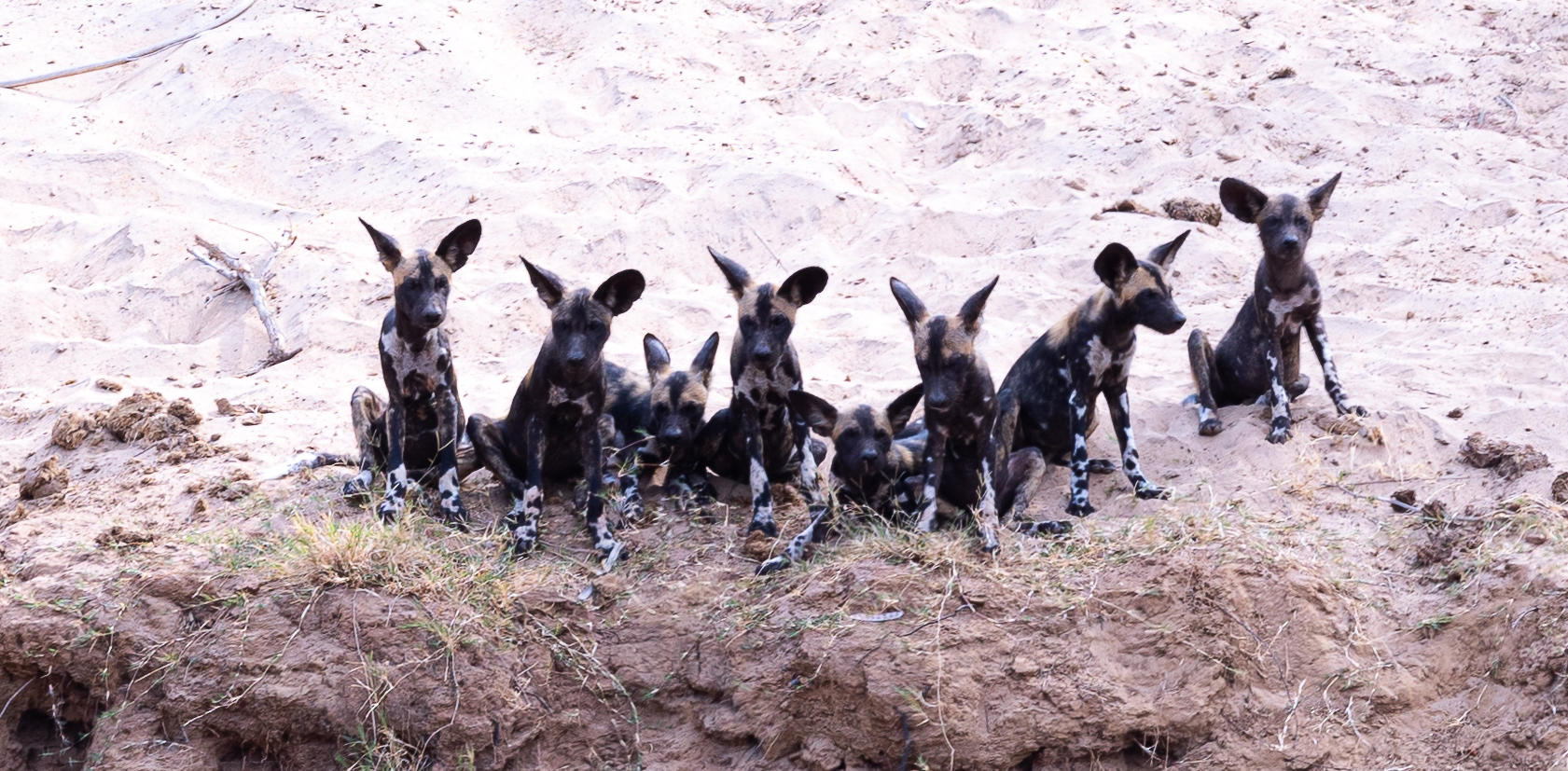
African wild dogs produce the largest litters of any African carnivore. Females commonly give birth to between 10 and 16 pups.
Raising such a large family would be impossible for two parents alone.
When pups are very young, one or more adults often remain at the den while the rest of the pack hunts. These babysitters protect the pups from predators, provide warmth and companionship, and ensure they remain safe until the hunters return.
As the pups grow, every adult contributes to feeding them through regurgitation. This continues well after the pups leave the den and begin travelling with the pack.
Studies have consistently shown that larger packs produce more surviving pups than smaller ones. More adults mean more hunters bringing food, more babysitters guarding the den and more individuals available to defend kills from lions and spotted hyenas.
The helpers are not simply useful. They are essential.
Why helpers matter
African wild dogs are described as obligate cooperative breeders, meaning successful reproduction depends upon assistance from other pack members.
Unlike many predators, a breeding pair often struggles to raise pups without helpers.
Research has shown strong positive relationships between pack size, pup production and pup survival. As pack size increases, hunting becomes more efficient, food delivery improves and more pups survive to adulthood.
This dependence on cooperation has shaped almost every aspect of wild dog biology.
When cooperation becomes a weakness
The same social system that makes African wild dogs so successful can also make them unusually vulnerable.
Ecologists describe this using a concept known as the Allee effect.
In many species, population growth slows as numbers become very large because individuals compete for limited resources. The Allee effect describes the opposite situation. When populations become too small, survival and reproduction begin to decline because there are too few individuals for the population to function effectively.
African wild dogs provide one of the clearest examples of this phenomenon.
If disease, snaring, road collisions or attacks by lions remove several adults from a pack, the consequences extend far beyond the loss of those individuals.
Fewer adults mean fewer hunters, fewer babysitters, less food for pups and poorer defence of kills. As fewer pups survive, the pack becomes even smaller, making hunting and reproduction less successful the following year.
This creates a positive feedback loop. Declining pack size leads to lower survival, which leads to further declines in pack size.
Mathematical models suggest that this process can also occur at the population level. When too few packs remain across a landscape, dispersing males and females become less likely to find unrelated partners with which to establish new packs. This further reduces population growth and increases the risk of local extinction.
Habitat fragmentation, fencing and increasing human pressure all make this process even more severe by preventing dispersing animals from finding one another.
Caring beyond reproduction
Cooperation in African wild dogs extends well beyond raising pups.
Pack members regularly care for injured, elderly and sick individuals. Adults returning from a hunt often regurgitate food for pack members that were unable to participate, ensuring they continue to receive nourishment while recovering.
Older individuals also contribute valuable experience. Knowledge of hunting grounds, den sites and movement routes can benefit the entire pack.
Rather than abandoning weaker members, wild dogs often continue supporting them, demonstrating that cooperation remains important throughout life.
Why this matters for conservation
African wild dogs can travel more than 50 kilometres in a single day and occupy territories covering up to 1,500 square kilometres.
These enormous ranges allow them to follow migrating prey, avoid dominant predators such as lions and locate suitable denning sites.
They also mean that healthy populations depend on connected landscapes.
Protecting African wild dogs is therefore about much more than preserving individual animals. Conservation must also protect movement corridors that allow dispersing groups to meet, establish new packs and maintain genetic diversity.
For species whose survival depends so heavily on cooperation, maintaining healthy family groups is every bit as important as maintaining healthy populations.
Final thoughts
African wild dogs demonstrate that evolution does not always favour the strongest individual. Sometimes it favours the strongest family.
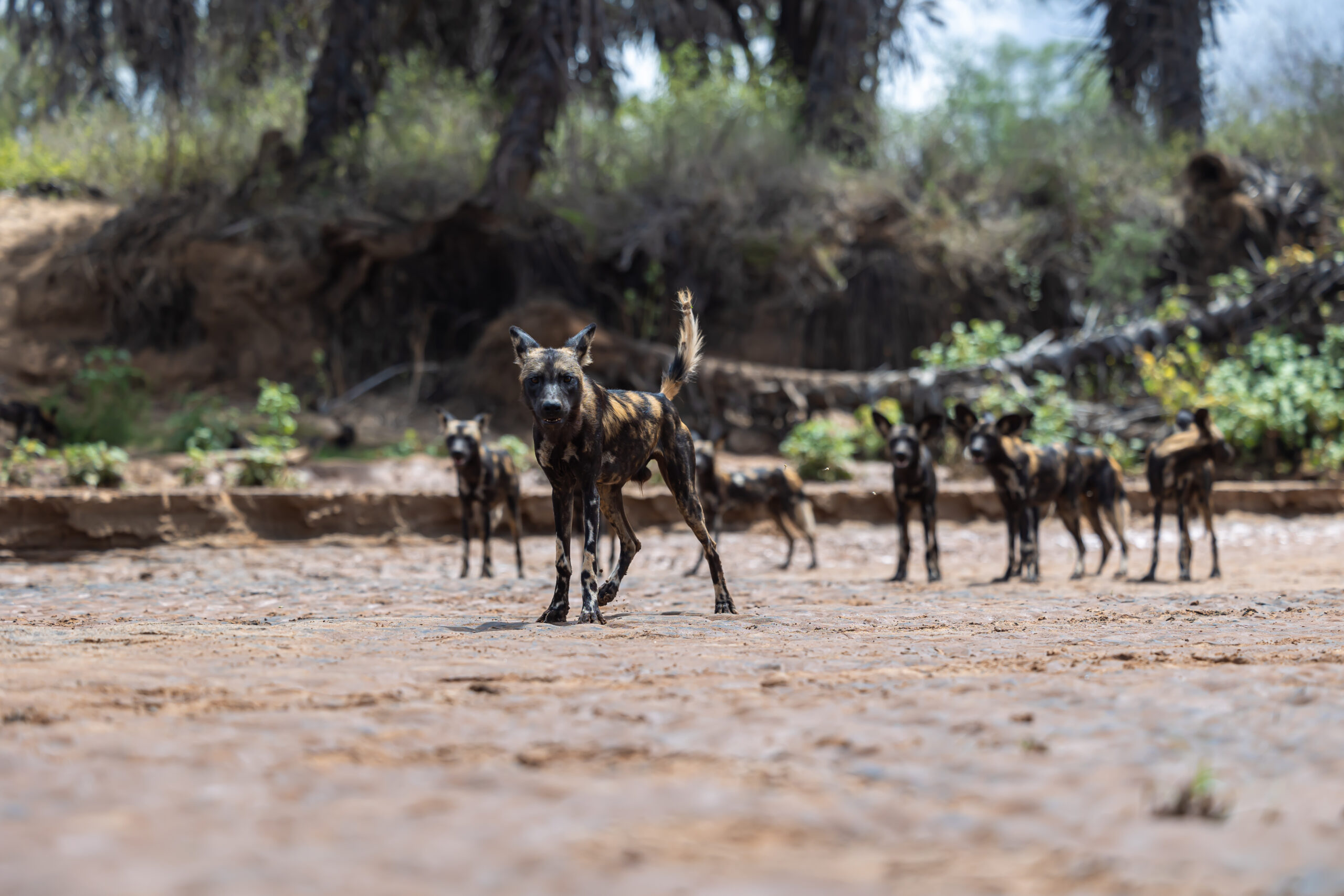
Their extraordinary cooperation has produced one of the most efficient predators on Earth. Every hunt, every litter and every successful pack depends upon individuals working together.
Yet this same dependence on cooperation also makes them especially vulnerable. When packs become too small, the very behaviours that once made them successful begin to break down.
Understanding African wild dogs means understanding that conservation is not simply about saving individuals. It is about protecting the families, social systems and connected landscapes that allow one of Africa’s most remarkable carnivores to thrive.