

Across Tsavo and the wider African savanna, animals and plants form complex relationships that can benefit both parties, help one species at no cost to another, or allow one species to exploit another entirely. Some of these partnerships have evolved over millions of years and are so successful that neither species could easily survive in the same way without the other. Others are more like biological scams, where one species manipulates another for its own benefit.
To truly understand an ecosystem, we must look beyond individual species and consider the relationships that connect them. These hidden partnerships, opportunistic arrangements, and evolutionary deceptions are often just as important as the animals themselves.
The Acacia tree’s tiny bodyguards
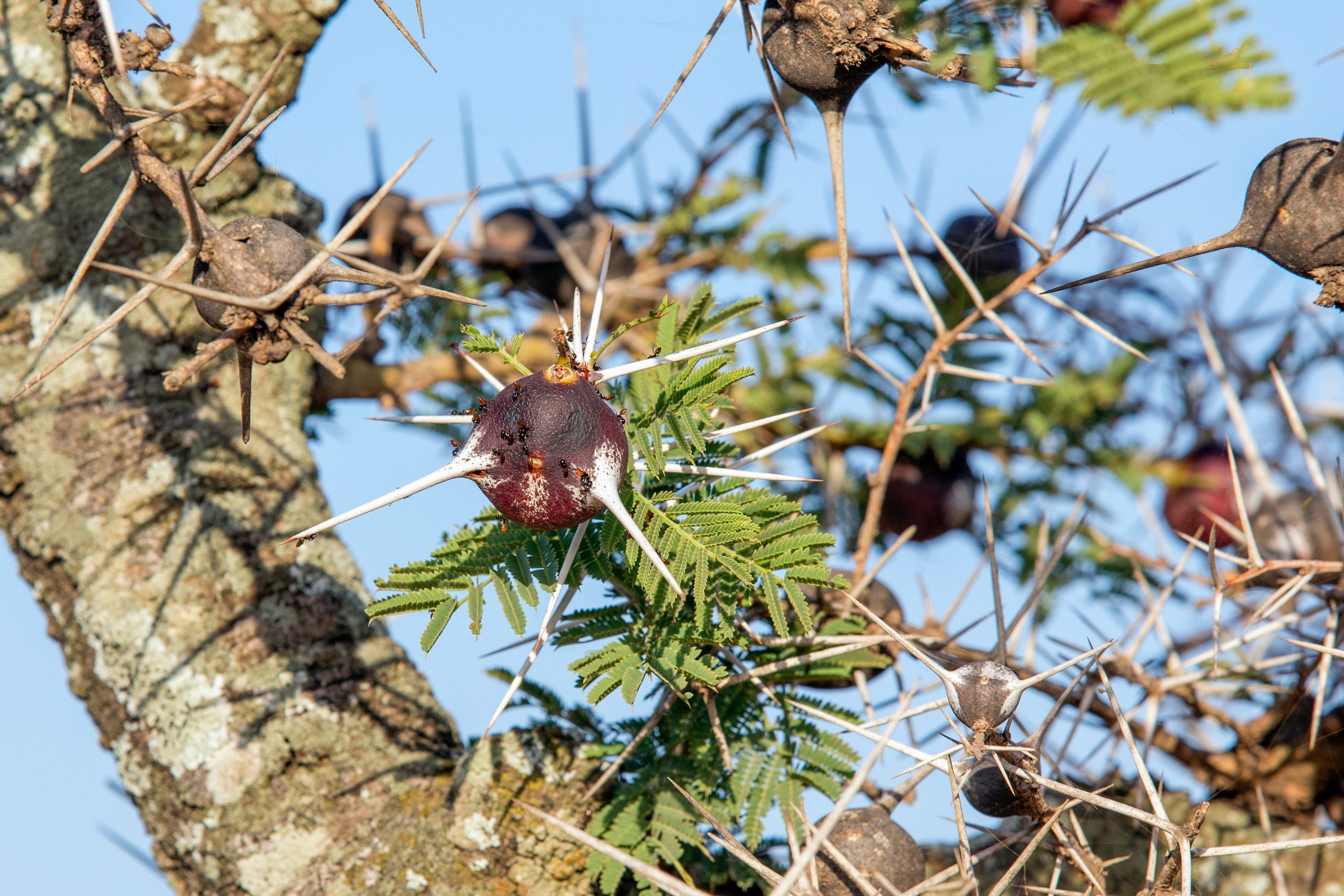
Across East Africa, several species of acacia have evolved remarkable partnerships with aggressive ants. One of the best-known examples involves the whistling thorn acacia (Vachellia drepanolobium), a tree common across many East African savannas.
The tree provides both food and accommodation. Hollow swollen thorns act as ready-made homes for ant colonies, while specialised nectar-producing structures supply a reliable food source.
In return, the ants act as bodyguards.
When a browsing giraffe, antelope, or elephant begins feeding on the tree, thousands of ants swarm from the thorns and aggressively attack the intruder. For smaller herbivores, the experience can be extremely unpleasant. Even elephants, despite their immense size, often avoid heavily defended trees.
Research in East Africa has shown that elephants can distinguish between acacias occupied by different ant species and preferentially avoid those protected by the most aggressive defenders. For a tree, having a colony of dedicated defenders can dramatically reduce browsing damage and increase survival.
The relationship is a textbook example of mutualism: both species benefit. The tree provides food and shelter, while the ants provide protection.
It is a reminder that in nature, size is not always everything. Sometimes a colony of tiny insects can successfully defend a tree against an animal weighing several tonnes.
The birds that hire security guards
Some birds choose to build their nests beside one of the least welcoming neighbours imaginable: wasps.
Across Africa, social wasps defend their colonies aggressively. Any animal that ventures too close risks a painful encounter with dozens or even hundreds of stinging insects.
For most wildlife, this is something to avoid.
For some birds, it is an opportunity.
Researchers have documented several species of weaver birds and other small birds deliberately building nests near active wasp colonies The logic is simple. Predators such as snakes, monkeys, and monitor lizards often avoid approaching wasp nests because of the risk of being attacked.
By placing their nests nearby, birds gain a protective buffer against many potential nest raiders.
Unlike the relationship between ants and acacias, the wasps receive little obvious benefit. Equally, they appear to suffer little harm.
The birds gain protection. The wasps continue their lives largely unaffected.
This type of interaction is known as commensalism, where one species benefits while the other experiences neither significant benefit nor cost.
It is a clever example of how animals can exploit existing features of their environment without needing to evolve entirely new defences of their own.
Nature’s imposters
Not every ecological relationship is cooperative.
Some are built on deception.
While most birds invest considerable time and energy into building nests, incubating eggs, and raising chicks, some have evolved a very different strategy. Instead of caring for their own young, they lay their eggs in the nests of other species and leave the hosts to do the work.
These birds are known as brood parasites.
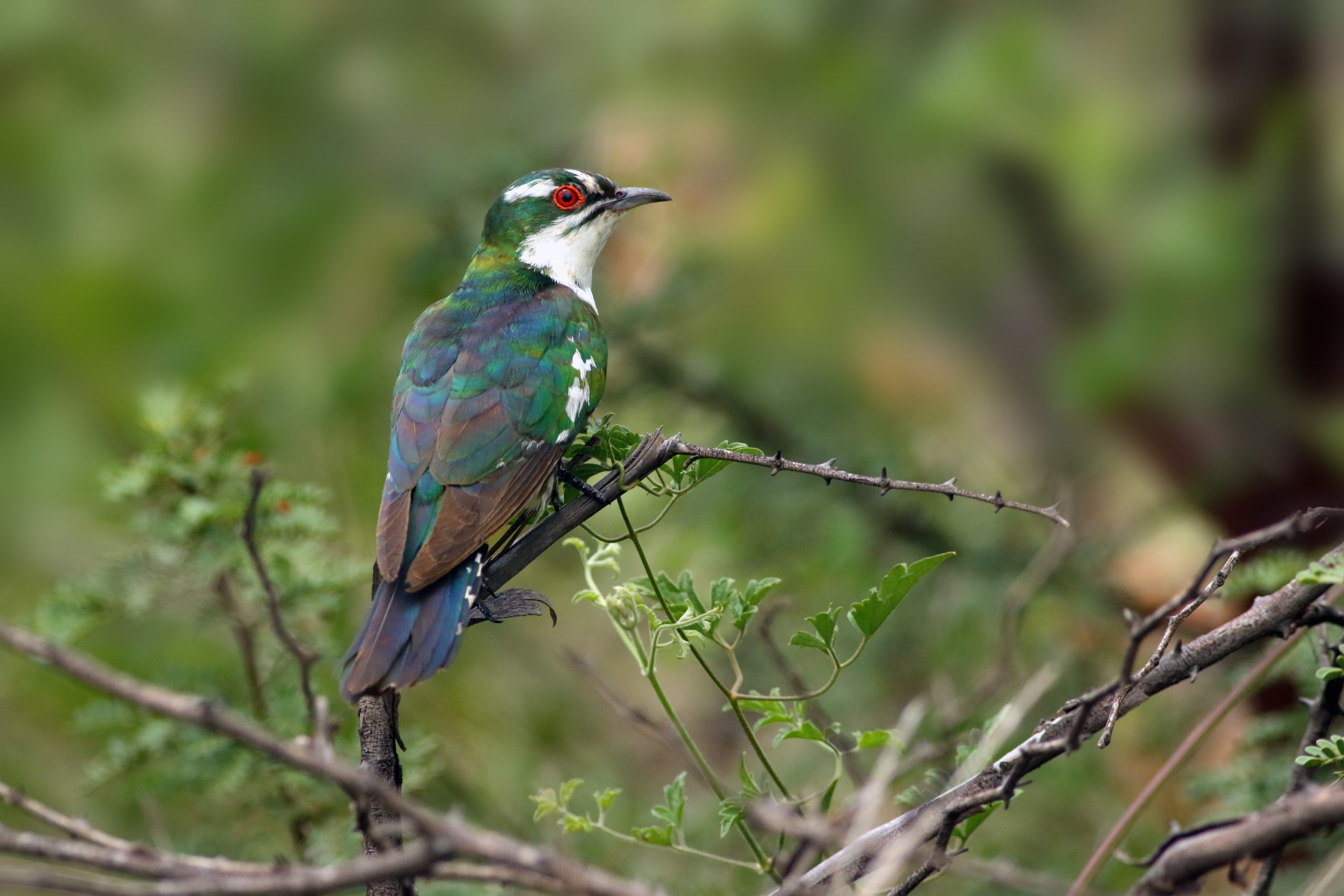
Across Africa, cuckoos such as the Diederik Cuckoo and Great Spotted Cuckoo avoid the costs of parental care by exploiting the nesting efforts of other birds. The unsuspecting hosts incubate the eggs and later feed the chicks, often at considerable cost to their own reproductive success.
Once hatched, the young cuckoo gains a significant advantage. Diederik chicks typically hatch earlier than the host’s own young and often remove other eggs or nestlings from the nest. The result is that the foster parents devote all their attention and food to raising a single cuckoo chick, while their own breeding attempt fails.
Hosts, however, are not passive victims. Many birds have evolved the ability to recognise and reject foreign eggs. Some abandon nests they suspect have been parasitised, while others aggressively mob adult cuckoos when they appear nearby.
This ongoing battle between parasite and host has driven one of nature’s most remarkable evolutionary arms races, with each adaptation by the cuckoo selecting for better defences in the host, and vice versa.
Evolution never stands still
The relationships we see today are not static. They are the product of millions of years of evolutionary change.
As acacia trees evolved better ways of attracting ant defenders, herbivores evolved new browsing strategies. As birds learned to nest near wasps, predators adapted their hunting techniques. As cuckoos improved their egg mimicry, host species became better at recognising imposters.
Each adaptation creates new selective pressures that drive further change.
Evolution is often described as a race, but in reality it is more like an endless negotiation between species. Every advantage gained by one organism creates incentives for others to respond.
The result is a constantly shifting network of interactions that shapes ecosystems over evolutionary timescales.
Why these relationships matter
When people think about biodiversity, they usually think about species.
Conservation discussions often focus on the number of elephants, lions, rhinos, or giraffes in a landscape. Yet ecosystems are not simply collections of species. They are networks of interactions.
The disappearance of a particular ant species could affect the survival of acacia trees. The loss of wasp colonies could increase nest predation rates for birds. Changes in host populations could influence brood parasites and vice versa.
The consequences can extend far beyond a single species.
This idea has become increasingly important in conservation science. Recent studies have highlighted how the loss of one species can trigger declines in others that depend upon it, a phenomenon known as co-extinction.
Protecting biodiversity therefore means protecting not only species, but also the relationships that connect them.
For organisations such as Tsavo Trust, understanding these ecological interactions is essential. Effective conservation requires more than protecting individual animals. It requires safeguarding the complex web of processes and relationships that allow ecosystems to function.