

Elephants are built for movement. Across Africa, they travel between water, food, breeding areas, mineral-rich soils, shade, refuge, and seasonal habitats. In dry landscapes such as Tsavo, these movements are shaped by rainfall, memory, resource availability, family knowledge, risk, and survival.
A new continent-wide genomic study shows that this movement matters not only for daily survival, but for genetics. By analysing 232 high-coverage elephant genomes from 17 African countries, researchers found that gene flow has played a central role in the evolution and long-term health of African elephants. Put simply, elephants need to move, meet, breed, and mix across landscapes. When they can, genetic diversity is maintained. When they cannot, populations become isolated, and the effects can be seen in their DNA.
For Kenya, and especially for landscapes such as Tsavo, this reinforces a core conservation principle: protecting elephants is not only about protecting parks. It is about protecting the routes between them.
A continent-wide look at elephant genetics
The study, published in Nature Communications, is one of the most detailed genomic analyses of African elephants to date. It treated African savanna elephants and African forest elephants as distinct species and examined patterns of diversity, inbreeding, ancestry, and connectivity across the continent.
One major finding was the deep genetic divergence between the two species. Forest elephants showed higher heterozygosity, a measure of genetic diversity, and historically larger effective population sizes. Savanna elephants showed greater signs of inbreeding and genetic load. The study also detected trace forest elephant ancestry across many savanna elephant populations, suggesting that historical gene flow between the two species occurred several times after their evolutionary lineages diverged.
This shows that elephant evolution has not been a simple story of isolated populations. It has been shaped by movement, mixing, separation, and reconnection over vast timescales.
Within each species, long-distance gene flow helped maintain low levels of genetic differentiation across large areas, particularly in eastern and southern Africa. In other words, elephants have historically moved enough to keep populations genetically connected over great distances.
What happens when elephants become isolated?
The study also shows what happens when connectivity is lost.
In isolated or bottlenecked populations, researchers found reduced genetic diversity, increased inbreeding, and evidence of genetic drift. These effects were especially visible in populations at the edges of the savanna elephant range, including Ethiopia, Eritrea, and Namibia.
In Ethiopia and Eritrea, elephant populations were once connected to the wider savanna elephant range, but severe declines and isolation left them genetically distinct. The study found that elephants in Eritrea are now isolated by more than 400 kilometres from the nearest population, a separation reflected in their low genetic diversity.
The researchers also examined runs of homozygosity, or ROH. These are long stretches of DNA where both copies are identical, often indicating recent inbreeding or long-term small population size. In west-central African savanna elephants, ROH patterns suggested constant long-term inbreeding. In Ethiopia and Eritrea, larger ROH categories suggested more recent inbreeding. In Namibia, smaller ROH patterns indicated more historical effects of isolation.
The message is clear: when elephant populations are cut off from one another, their genomes begin to show the consequences.
This is especially important because elephants are long-lived animals. The samples used in the study largely reflect the genetic status of African elephants in the 1990s. Since then, habitat fragmentation, human population growth, land conversion, infrastructure development, and human-elephant conflict have intensified in many regions. The genetic consequences of the last three decades may therefore not yet be fully visible in the data.
Gene flow: why movement keeps populations healthy
Gene flow is the movement of genes between populations. In elephants, this usually happens when individuals, particularly dispersing bulls, move between areas and breed with elephants from other groups.
This process helps maintain genetic diversity, reduces the likelihood of close relatives breeding, and allows beneficial genetic variation to spread through a wider population.
The study found that most genetic variation in savanna elephants exists within populations rather than between them, reflecting a long history of movement and mixing. Even where regional structure exists, overall differentiation between savanna elephant populations was often low.
But elephants can only maintain this pattern if the landscape still allows them to move. Fences, farms, settlements, roads, railways, conflict hotspots, and expanding infrastructure can all restrict movement. Over time, these barriers can turn once-connected populations into isolated pockets.
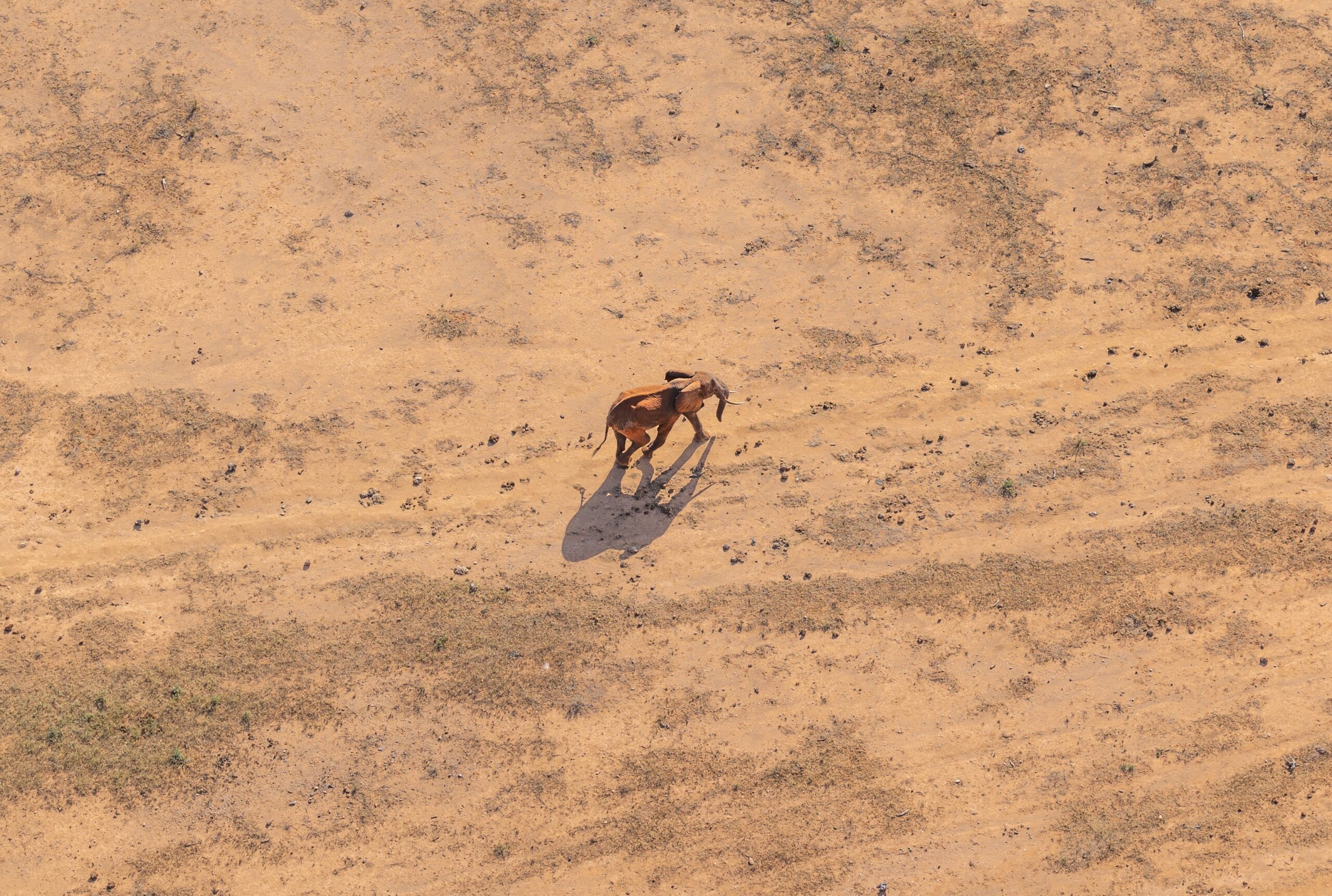
The study highlights habitat loss and fragmentation as major threats to genetic connectivity. Even though elephants can sometimes alter their behaviour to move through human-dominated landscapes, they tend to avoid areas of high human population density. As human populations grow, maintaining safe corridors while reducing conflict will become increasingly challenging.
Connected landscapes work
One of the most encouraging findings is that connected landscapes still work.
In northern Botswana and Zimbabwe, elephants showed very little genetic differentiation, with some of the lowest FST values recorded in the study. FST measures genetic differentiation between populations; low values indicate high connectivity. In this region, the low differentiation suggests that elephants remain highly connected across a large landscape.
The researchers point to the importance of the Kavango–Zambezi Transfrontier Conservation Area, known as KAZA, one of the largest terrestrial conservation landscapes in the world. In this area, connectivity between protected areas appears to help maintain genetic diversity and limit inbreeding.
The study also notes that where connectivity between protected areas is relatively preserved, including in Kenya/Tanzania, KAZA, and Gabon/northern Congo, genetic diversity is maintained and inbreeding remains limited.
This is a powerful conclusion. Corridors are not just theoretical conservation tools. They have measurable genetic value.
What this means for Kenya
Kenya sits at the heart of one of Africa’s most important elephant landscapes.
Its elephant populations are spread across major ecosystems including Tsavo, Amboseli, the Chyulu Hills, Laikipia, Samburu, Meru, the Maasai Mara, and cross-border landscapes linking into Tanzania. These populations are not isolated units. Historically, they have been connected through seasonal movement routes, dispersal corridors, and shared rangelands.
The new genomic research strengthens the case for protecting these links.
In Kenya, elephant conservation cannot be measured only by the number of elephants inside national parks. It must also consider whether those elephants can still move between ecosystems. A population may appear stable in the short term, but if it becomes genetically isolated, its long-term resilience can decline.
This is particularly important in southern Kenya, where Tsavo, the Chyulu Hills, Amboseli, and northern Tanzania form part of a wider elephant landscape. Movement between these areas allows genetic exchange between populations and helps maintain the diversity needed for long-term survival.
Tsavo: a stronghold that still depends on connectivity
Tsavo is one of Africa’s great elephant strongholds, but its long-term future depends on remaining connected to surrounding landscapes. The Tsavo Conservation Area is vast and varied, with bushland, grassland, lava flows, river systems, seasonal water points, and dryland habitats that elephants use differently throughout the year. This scale allows elephants to move in response to rainfall, drought, food availability, water distribution, and social needs.
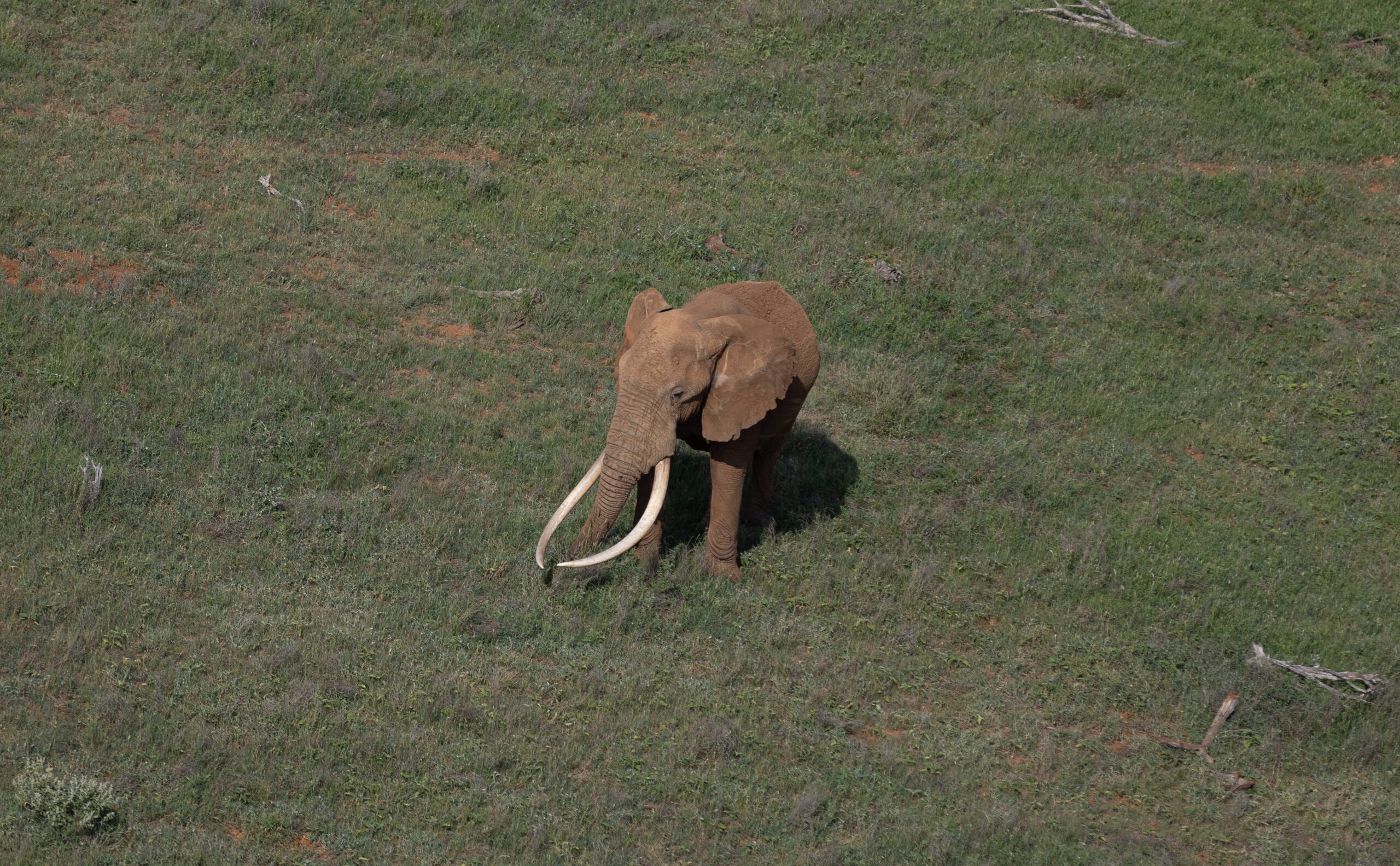
Tsavo is also globally important for its remaining Super Tuskers. These elephants represent rare genetic potential, age, survival, and continuity. They are not a separate type of elephant, but individuals expressing traits that have been heavily reduced across much of Africa. In Tsavo, enough individuals survived for these traits to remain within the population, and continued protection allows elephants to live long enough to realise that potential.
This makes connectivity essential. Corridors linking Tsavo to surrounding ecosystems help maintain movement, dispersal, and genetic exchange. They also allow elephants to respond to environmental stress, especially during droughts when they may move beyond protected areas in search of water and forage.
One of the most important regional connections is the wider corridor linking the Chyulu Hills, Amboseli, and onward into Tanzania. This landscape connects Kenyan elephant populations with the broader cross-border ecosystem, allowing elephants to remain part of a larger, more genetically mixed population rather than becoming separated into smaller, isolated groups.
From a genetic perspective, this is crucial. When bulls move between populations and breed, they carry genetic variation with them, helping reduce inbreeding, maintain diversity, and strengthen long-term resilience. The new genomic research gives scientific weight to what field conservation has long shown: protecting corridors protects the future of elephant populations.
Corridors are not empty spaces
It is easy to think of corridors as narrow strips of land between protected areas. In reality, they are living landscapes.
They may include community land, conservancies, ranches, farms, seasonal grazing areas, dry riverbeds, hills, woodland, and areas used by both people and wildlife. In places like Tsavo and the wider southern Kenya landscape, these areas are often essential for both conservation and livelihoods.
This means corridor protection cannot rely only on fences or enforcement. It must involve communities, landowners, government agencies, conservation organisations, and long-term planning.
In Tsavo, this is especially important because wildlife and people share a changing dryland environment. During droughts, elephants may move further in search of water and food, increasing the risk of human-elephant conflict. If movement routes are blocked, conflict can intensify, and elephants may be forced into more dangerous areas.
Protecting corridors therefore means protecting movement while also reducing conflict. It requires land-use planning, habitat protection, community engagement, early warning systems, conflict mitigation, and support for livelihoods that are compatible with conservation.
Tsavo Trust’s role in a connected future
Tsavo Trust’s work is rooted in the understanding that elephants need both protection and space.
Through aerial monitoring, ground operations, individual elephant identification, collaboration with the Kenya Wildlife Service, and support for community-based conservation, Tsavo Trust helps safeguard elephants across one of Kenya’s most important landscapes.
This work is especially important for Tsavo’s Super Tuskers and emerging tuskers, but it also contributes to the wider health of the elephant population. Protecting individual elephants matters. Protecting the landscape they move through matters too.
The new genomic research reinforces the importance of this landscape-level approach. It shows that the future of elephants depends not only on preventing poaching or reducing immediate threats, but on maintaining the movement systems that allow populations to remain genetically healthy.
For Tsavo, this means continuing to protect core habitats while also supporting the wider corridors and community landscapes that connect elephants to neighbouring ecosystems.