

Across Tsavo, faint paths can often be seen cutting through grassland, bush, dry riverbeds, and woodland. Some are narrow tracks used by dik-diks, mongooses, hares, or other small animals. Others are broad, well-worn routes created by elephants, buffalo, giraffes, and other large mammals moving repeatedly through the same areas.
What are game trails?
Game trails are naturally formed pathways created by repeated animal movement. As animals use the same routes again and again, vegetation is flattened or cleared, soil becomes compacted, and visible paths begin to form.
They may also be called animal paths, wildlife trails, elephant paths, buffalo trails, or herd paths. Like human footpaths, they often develop along the easiest, safest, or most useful route.
A game trail is not just a track left by one animal. It is a repeated route through the landscape, often used by many individuals and sometimes by many different species.
Why do animals use the same paths?
Game trails often form because animals repeatedly move between the places that matter most for survival. These routes may lead to waterholes, rivers, seasonal pans, grazing areas, browsing zones, shade, salt licks, resting sites, and safe crossing points.
In Tsavo, some trails may also lead to termite mounds or exposed mineral-rich soils where animals engage in geophagy, the eating of soil. This behaviour can help animals access minerals such as sodium, calcium, or other nutrients that may be limited in their normal diet. Over time, repeated visits to these important resource points create visible pathways through the landscape.
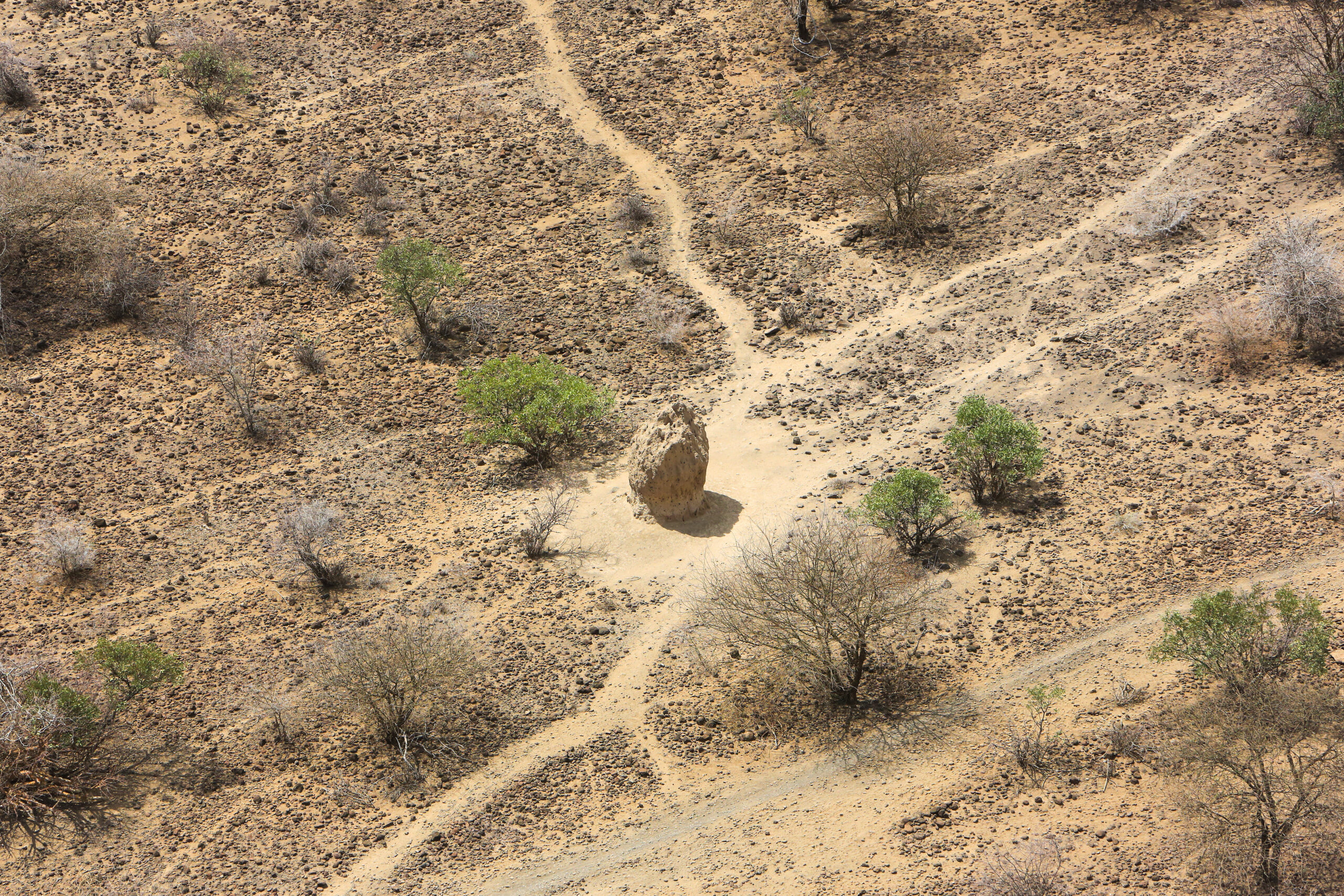
Using an existing trail can also save energy. Moving through thick grass, thorn bush, or uneven ground requires effort. A path that has already been opened by repeated use provides an easier route, especially for animals travelling long distances or moving in groups.
Terrain also matters. Animals often follow gentle slopes, dry riverbeds, ridgelines, natural gaps in vegetation, or established crossing points. These routes may reduce effort and lower the risk of injury.
Familiarity is another important factor. Known routes reduce uncertainty. If a path has previously led to water, food, or safety, animals may return to it again and again. In social species, younger animals may learn these routes by following older individuals.
Game trails form because they solve practical problems: where to go, how to get there, and how to move efficiently through a complex landscape.

Which animals use game trails in Tsavo?
Many species in Tsavo use game trails, although the size and shape of the path often depends on the animals using it.
Elephants create some of the most obvious trails. Their size and strength allow them to push through dense vegetation, opening routes that other animals may later use. Elephant trails often connect water sources, browsing areas, shade, and seasonal movement routes.
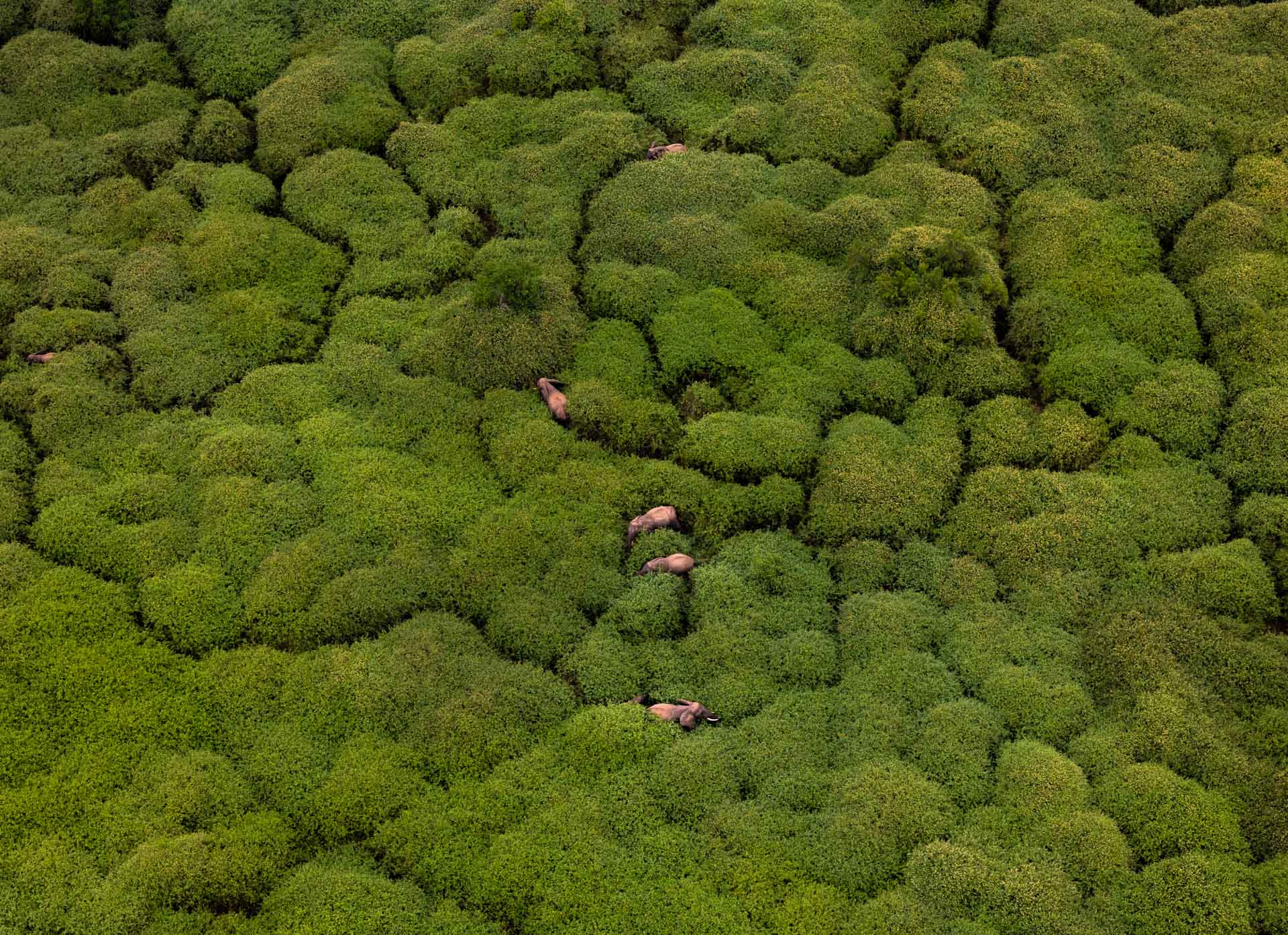
Giraffes may use paths through open woodland and browsing areas, especially where trails provide easier movement through thorny vegetation. Their routes may be less deeply worn than elephant or buffalo paths, but they still contribute to repeated movement networks.
Antelope use narrower trails. Species such as dik-dik,impala, lesser kudu, and bushbuck may move through grassland, bush, and thickets along small paths that balance access to food with cover and visibility.
Predators also use game trails. Lions, leopards, hyenas, and wild dogs may travel along existing routes because they provide easier movement through the landscape. Predators may also monitor trails where prey regularly passes, turning these pathways into important hunting routes.
Smaller mammals such as mongooses, hares, porcupines, and warthogs may use their own smaller paths or sections of larger trails created by bigger animals.
A trail created by one species can therefore become part of a wider movement network used by many others.
Water, minerals, and dryland movement
In semi-arid landscapes such as Tsavo, water is one of the strongest drivers of animal movement. During dry periods, trails leading to rivers, pans, dams, and seasonal water points become especially important.
Animals may travel repeatedly between feeding areas and water sources, often using the same routes because they are familiar, efficient, and reliable. As the dry season progresses, these routes can become more heavily used and more clearly defined.
Protecting access to these resources means protecting the routes animals use to reach them.

Rhinos, scent, and communication along game trails
For black rhinos, game trails are not only routes through the landscape, but also important communication lines. Rhinos rely heavily on olfactory communication, using scent to understand who else is moving through their home range.
Along feeding tracks, near water, and close to other important resources, rhinos may use dung middens as scent-marking sites. These middens act almost like information centres, carrying details about the age, sex, reproductive condition, and territorial status of the rhinos that use them.
Dominant bulls may defecate in the centre of a midden, trample the dung, and spread their scent as they continue along their patrol routes, while females and younger males may leave scent on the edges. In this way, a trail becomes more than a path. It becomes a scented map of territory, identity, and social information, allowing rhinos to communicate without needing to meet directly.
How researchers study game trails
Scientists and conservation teams can study trails through field tracking, spoor and dung surveys, camera traps, GPS collars, drone imagery, satellite imagery, and remote sensing.
Camera traps placed along trails often record high levels of wildlife activity because animals are naturally funneled through these routes. GPS collar data can show whether individuals repeatedly use the same pathways between important resources. Remote sensing can help identify trail networks across larger areas, especially where direct observation is difficult.
This makes game trails valuable for understanding habitat use, movement corridors, seasonal patterns, and areas of high wildlife activity.
They are simple features in the landscape, but they can provide important conservation information.

Final thoughts
Game trails may appear simple, but they are deeply informative.
They reveal repeated choices, shared routes, and ecological connections. They connect water, food, shade, minerals, safety, memory, and survival.
In Tsavo, these trails are part of the hidden structure of the ecosystem. They show that landscapes are not empty spaces between wildlife sightings. They are living networks of movement, shaped by the needs and decisions of countless animals over time.
By reading these pathways, we gain a clearer understanding of what wildlife needs to survive — and why protecting movement is central to conservation.