

In ecosystems such as Tsavo, animals operate within environments where risk is a constant factor. Predation, competition, and environmental pressures all influence how animals move, feed, and survive. A Warthog approaching a water source, for example, will often pause, scan, and adjust its behaviour before drinking, reflecting an ongoing assessment of danger.
This raises an important question: do animals experience fear in the same way humans do?
From a scientific perspective, fear is best understood not simply as an emotion, but as a functional biological state. It links the detection of threat to coordinated behavioural, physiological, and cognitive responses that increase the likelihood of survival.
Fear as a functional system
Fear operates as an internal system that connects external stimuli with adaptive responses. When a potential threat is detected, neural pathways rapidly process this information and initiate changes in behaviour and physiology.
These responses may include increased vigilance, movement away from danger, or temporary immobility. Importantly, fear does not require conscious awareness. Animals do not need to reflect on danger in order to respond to it effectively.
This makes fear measurable across species. Rather than relying on subjective experience, scientists study observable changes in behaviour, hormone levels, and neural activity.
An evolutionarily conserved mechanism
Fear systems are highly conserved across evolution. Similar structures and processes are found in mammals, birds, reptiles, and even some invertebrates.
Although the complexity of these systems varies, the underlying framework remains consistent: detection of a threat, processing of that information, and execution of an appropriate response.
This continuity suggests that fear is a fundamental component of survival, rather than a uniquely human experience.
The “landscape of fear”
Animals do not respond to threats randomly. Instead, they navigate what ecologists describe as a “landscape of fear,” where different areas carry different levels of perceived risk.
For example, open habitats may allow better visibility but expose animals to detection, while dense vegetation provides cover but increases the likelihood of ambush.
Water sources illustrate this trade-off clearly. While essential for survival, they are also high-risk areas. Predators such as the Nile crocodile exploit these predictable points of access. As a result, animals often approach cautiously, drink quickly, and remain highly alert.
Fear, in this context, shapes spatial behaviour and habitat use.
Fear as a dynamic process
Fear is not a single event but an ongoing process. It involves continuous cycles of detection, evaluation, response, and reassessment.
Animals constantly update their understanding of risk based on new information. A grazing individual may repeatedly interrupt feeding to scan its surroundings, while groups adjust their spacing and positioning in response to perceived threats.
This dynamic system allows animals to respond flexibly to changing conditions rather than relying on fixed behaviours.
Influence on decision-making
Fear plays a central role in decision-making. Animals must constantly balance the benefits of accessing resources with the risks associated with doing so.
For instance, herbivores require water and nutritious forage, but these resources are often located in areas where predators are most active. As a result, animals may avoid optimal feeding areas or alter their activity patterns to reduce risk.
These trade-offs demonstrate that fear does not eliminate risk, but instead shapes how it is managed.
Physiology of fear
The physiological response to fear involves multiple systems within the body.
Hormones such as adrenaline and cortisol are released during perceived threats, increasing alertness, mobilising energy, and enhancing reaction speed. These responses are essential for short-term survival.
However, prolonged exposure to stress can have negative effects. Chronic elevation of stress hormones may reduce reproductive success, weaken immune function, and lower overall body condition.
This highlights the importance of balance within the fear system.
Neural basis of fear
Fear is processed through distributed networks in the brain rather than a single “fear centre.”
The amygdala plays a key role in detecting and learning about threats. The hypothalamus and brainstem initiate physiological responses, while higher brain regions, particularly in more cognitively advanced species, help regulate behaviour based on past experience.
This integration allows fear to incorporate perception, memory, and decision-making into a coordinated response.
Elephants: memory, learning, and risk assessment
Elephants provide a particularly strong example of how fear interacts with cognition.
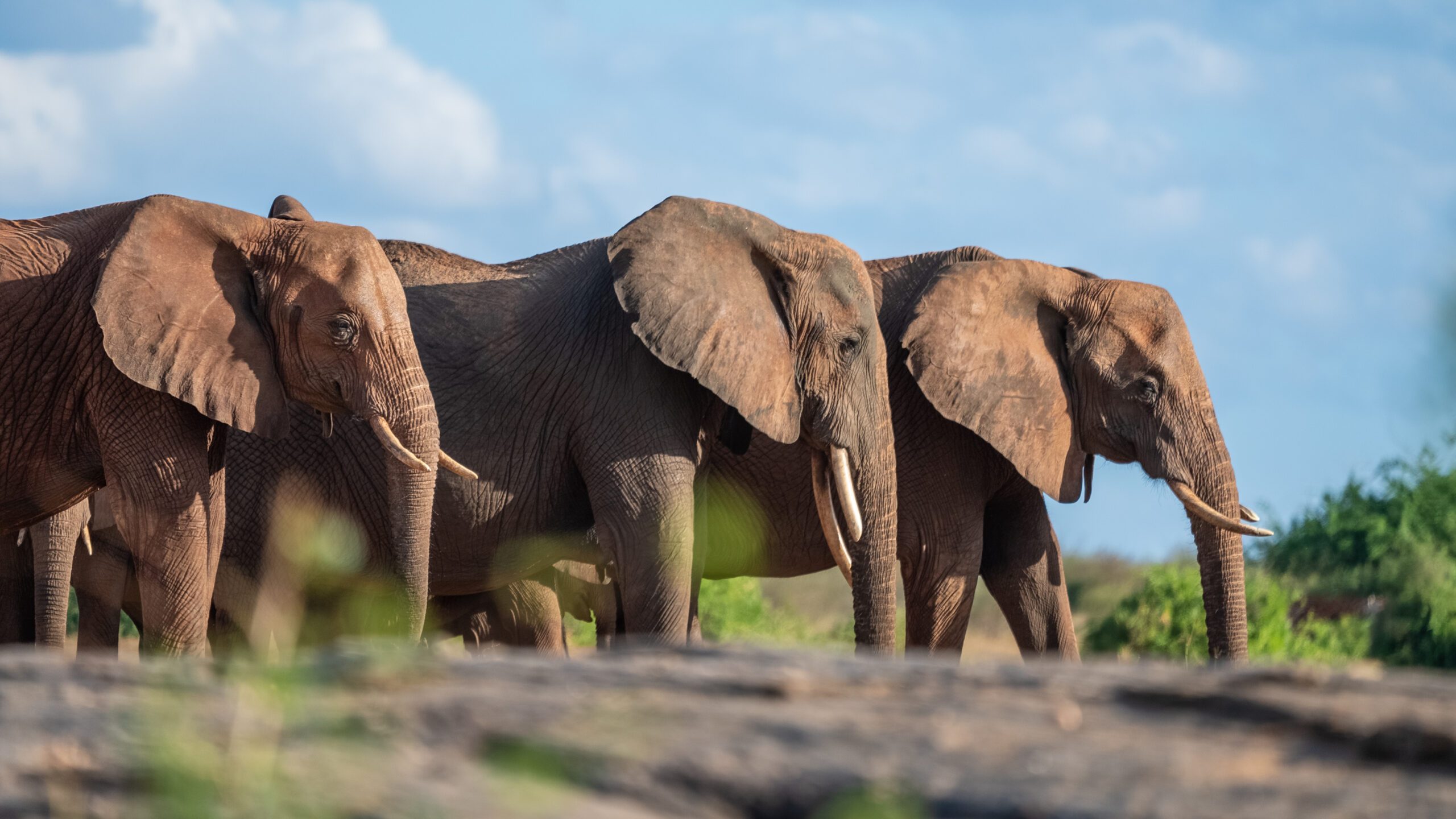
As highly intelligent and social animals, elephants rely on long-term memory to navigate risk. Matriarchs retain knowledge of water sources, migration routes, and areas associated with danger.
In Tsavo, elephants frequently adjust their movement patterns to reduce risk. It is common for herds to move through human-inhabited areas at night while avoiding these same areas during the day. This behaviour reflects not just immediate fear, but anticipation and risk assessment based on experience.
Fear in elephants is therefore closely linked to memory, social learning, and environmental awareness.
Types of fear
Fear is not a single uniform state. It can vary depending on context.
Immediate fear occurs in response to direct threats, triggering rapid behavioural responses. Anticipatory states, similar to anxiety, occur when animals expect potential danger. More extreme responses may arise when threats are imminent.
These variations allow animals to respond appropriately across a range of situations.
Learning and social transmission
Fear can be both innate and learned.
Many species are born with predispositions to recognise certain threats, such as predators. However, experience also plays a critical role. Animals learn to associate specific locations, sounds, or conditions with danger.
In social species, fear can be transmitted through group behaviour. Individuals respond to alarm signals, movement patterns, and the reactions of others, allowing information about risk to spread rapidly.
Fear across the predator–prey system
Fear is not limited to prey species. Predators also experience and respond to risk.
A Lion must consider the danger of injury when targeting large prey. A Leopard avoids confrontation whenever possible due to its solitary nature. A Spotted hyena adjusts behaviour based on group size and competition.
This demonstrates that fear operates across all levels of the ecosystem, influencing both hunting and avoidance strategies.

Fear as an ecological force
Beyond individual behaviour, fear has broader ecological effects.
By influencing where animals feed, rest, and move, fear shapes patterns of vegetation use, predator-prey interactions, and habitat structure. Areas perceived as risky may experience reduced grazing pressure, allowing vegetation to recover.
In this way, fear contributes to the organisation and balance of ecosystems.
Final thoughts
Animals do experience fear, but not necessarily in the same way humans do.
Rather than a prolonged emotional state, fear in the wild is a dynamic, adaptive system that continuously links perception to action. It allows animals to navigate complex environments where risk is ever-present but rarely overwhelming.
Understanding fear in this way provides a clearer view of how wildlife interacts with its environment.
In ecosystems such as Tsavo, fear is not simply a response to danger. It is a fundamental process that shapes behaviour, decision-making, and survival.