

In the Tsavo landscape, conservation and community livelihoods are deeply connected. Long-term protection of wildlife depends not only on safeguarding habitats, but on ensuring that neighbouring communities have sustainable, reliable sources of income.
The Sesame Project in Kamungi Conservancy is one such initiative. Designed to support both people and the environment, it demonstrates how climate-smart agriculture can reduce pressure on natural ecosystems while improving livelihoods.
A community-driven conservation solution
Launched in 2024, the Sesame Project was developed in response to a growing challenge. Communities living alongside protected areas have traditionally relied on livestock and crops such as maize. However, increasing climate variability has made these systems less reliable, while activities such as charcoal burning have placed additional strain on the environment.
The project introduces sesame as an alternative. It is a crop well suited to semi-arid environments like Kamungi and offers a pathway towards more sustainable income generation.
Today, approximately 146 households are actively participating, with the initiative continuing to expand as more farmers see its benefits.
Why sesame? A crop suited to Tsavo
Sesame was selected for its strong compatibility with the Tsavo environment.
It requires relatively low rainfall, matures quickly within 90 to 120 days, and performs reliably in dry conditions. Compared to traditional crops such as maize, it demands fewer inputs and is less vulnerable to drought.
Importantly, sesame is also less attractive to wildlife. This reduces crop losses and helps minimise human–wildlife conflict, a persistent challenge in areas bordering protected landscapes.
In addition, sesame has a high market value, with strong demand both locally and internationally, making it a viable and profitable option for farmers.
Implementation on the ground
The project is delivered through organised farmer groups within the conservancy, supported by Tsavo Trust’s extension services.
Farmers receive:
- Training on land preparation, planting, pest management, and harvesting
- Continuous field support and monitoring
- Certified sesame seeds
- Guidance on post-harvest handling and storage
As with any new initiative, challenges have emerged. Early barriers included limited awareness of sesame farming, pest pressures, and post-harvest losses due to poor drying and storage.
These have been addressed through regular training, field demonstrations, and improved handling techniques, allowing farmers to steadily improve yields and quality.
Livelihood impact: building resilience
One of the project’s most immediate outcomes is improved household income.
Under low rainfall conditions, farmers can achieve yields of approximately 150 to 300 kilograms per acre. At an estimated market price of KES 85 per kilogram, this translates to earnings of between KES 12,750 and 25,500 per acre.
This is often more reliable than traditional crops in the region, particularly under increasingly unpredictable rainfall patterns.
The project also supports farmers beyond production by facilitating market access and encouraging collective selling, helping secure better prices and reduce individual risk.
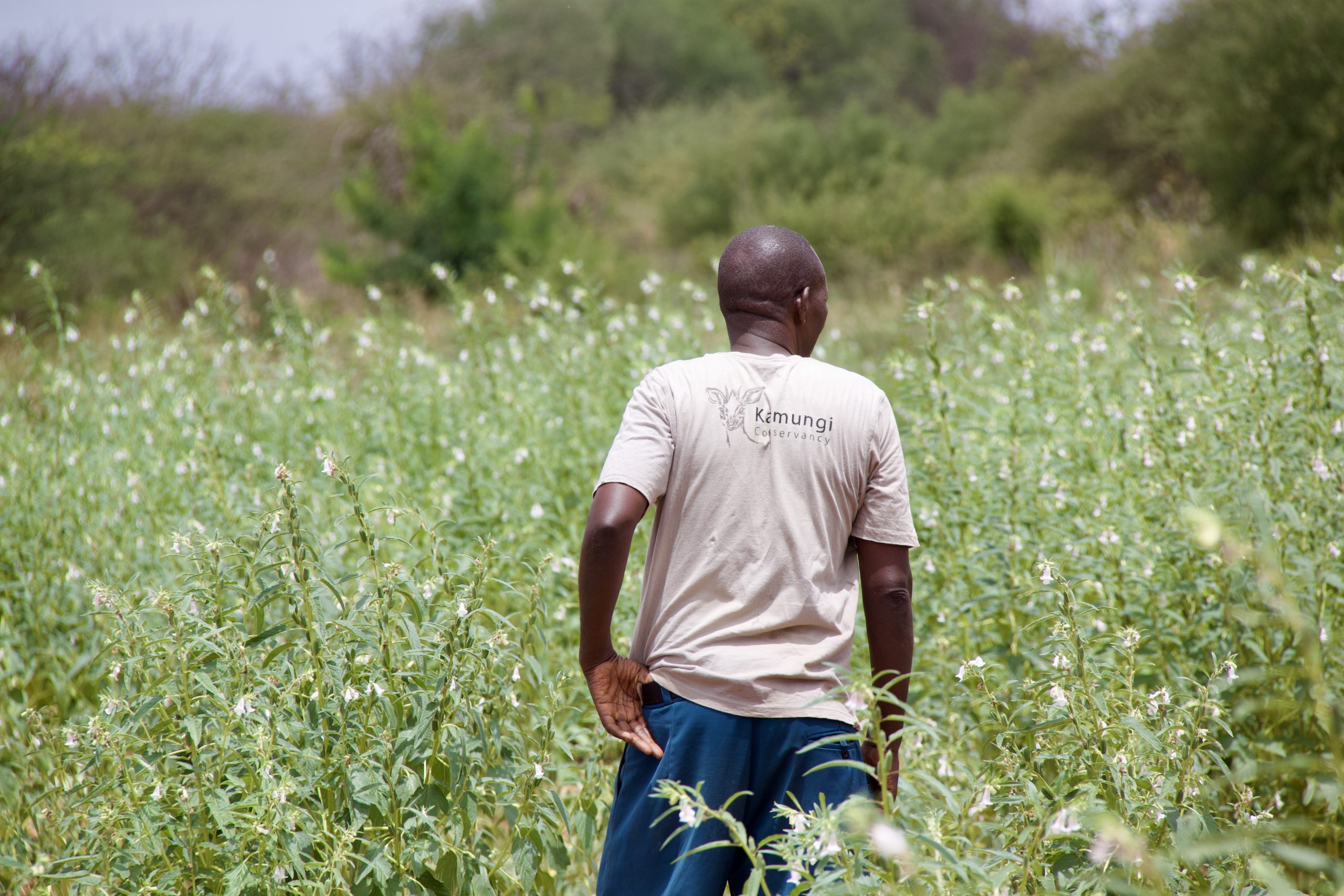
Conservation impact: reducing pressure on the landscape
The Sesame Project is not only an agricultural initiative. It is a conservation strategy.
By providing alternative income sources, it reduces reliance on environmentally damaging activities such as charcoal production and unsustainable land use. It also helps ease pressure on grazing systems, limiting overgrazing in already fragile landscapes.
Reduced crop damage due to wildlife further lowers conflict between communities and animals, supporting coexistence across the Tsavo ecosystem.
At its core, the project strengthens the link between conservation and livelihoods, ensuring that protecting the environment also benefits the people who depend on it.
Growth, challenges, and future potential
The Sesame Project began as a pilot, but its trajectory is clear. With 146 farmers currently involved, there is strong potential for expansion both in participation and cultivated acreage.
Early results have been encouraging. Farmers have adopted sesame quickly once its benefits became visible, and participation continues to grow.
Over the next five to ten years, success will be measured by:
- A stable and profitable sesame value chain
- Reduced environmental degradation
- Improved household income and food security
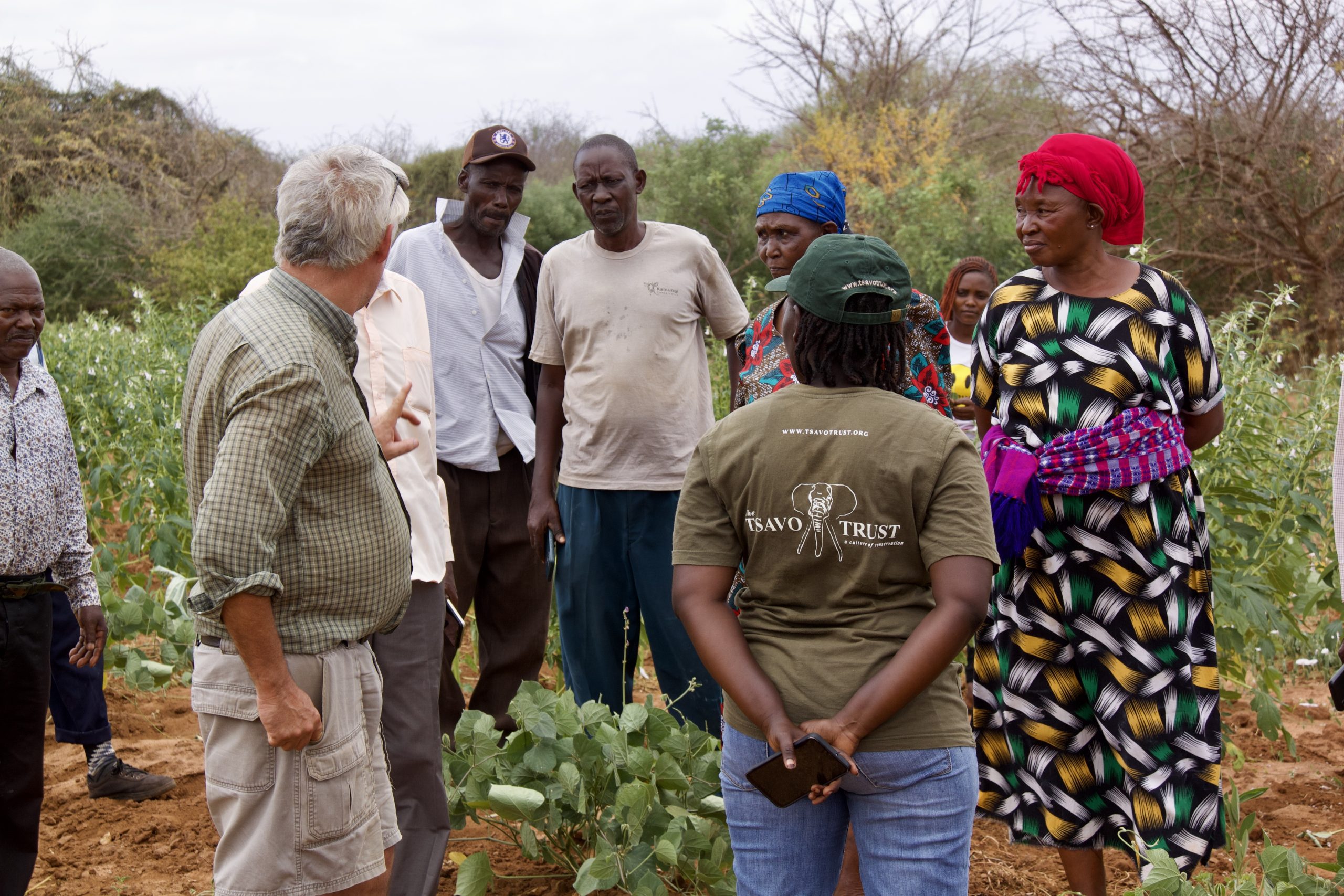
A human story behind the data
Behind the numbers are real changes in people’s lives.
One farmer in Kamungi described how, before joining the project, their livelihood depended on livestock and maize, both increasingly unreliable due to climate change. After adopting sesame farming, they now earn a more stable income and can support their family without degrading the environment.
This reflects a broader shift. As farmers see tangible results, confidence grows, and with it, long-term sustainability.
Final thoughts: conservation through livelihoods
The Sesame Project highlights a fundamental principle of conservation in Tsavo. Protecting wildlife is not only about enforcement and protection. It is about creating systems where people and nature can thrive together.
By aligning economic opportunity with environmental sustainability, the project reduces pressure on natural resources while strengthening community resilience.
In landscapes like Tsavo, this balance is essential. And initiatives like the Sesame Project are a clear example of how it can be achieved.