

In Africa’s savannas, predators do not hunt at random. Every hunt is shaped by a balance of energy, risk, competition, and opportunity. From the smallest insect-hunting carnivores to the largest apex predators, each species occupies a specific niche that determines what it hunts and how it survives.
Understanding how predators choose their prey reveals not only how they hunt, but how entire ecosystems remain balanced.
The balance of energy and risk
At its core, prey selection is about efficiency. Hunting requires energy, and for predators, injury can be fatal. A broken limb or deep wound can mean starvation.
As a result, predators do not simply target the biggest or most available prey. They target the most profitable prey, animals that offer the highest energy return for the lowest risk.
This is why even powerful predators often select:
- young
- old
- injured
- isolated individuals
This behaviour is not random. It is a calculated strategy shaped by survival.
Niche differentiation: sharing the same landscape
The African savanna supports a remarkable number of predators living side by side. Lions, leopards, cheetahs, hyenas, and wild dogs often share the same ecosystem, yet direct competition is limited.
This is made possible through niche differentiation. Each predator specialises in a different prey size, habitat, or hunting strategy.
Lions tend to focus on large ungulates such as zebra and buffalo. Cheetahs specialise in medium-sized, fast prey such as gazelles. Leopards occupy a middle ground, taking a wide range of prey from small mammals to medium antelope. Wild dogs focus heavily on medium-sized herd animals, while hyenas operate as both skilled hunters and opportunistic scavengers.
By targeting different prey types, these predators reduce competition and coexist within the same landscape.
Large predators: power and cooperation
Larger predators have the advantage of strength and, in some cases, cooperation.
Lions are the clearest example. Hunting in prides allows them to take down large prey such as buffalo, zebra, and wildebeest. However, they do not rely exclusively on large animals. Warthogs, while smaller, form an important part of their diet. They are robust and well-defended, making them difficult prey for predators like cheetahs, but their relatively low evasion speed makes them more vulnerable to lions, particularly in ambush situations.
This flexibility allows lions to exploit a wider range of prey while still prioritising energy-efficient hunts. Even so, they rarely target the strongest individuals. Instead, they select vulnerable animals, reducing the risk of injury while maximising energy gain.
Spotted hyenas also operate at this level when hunting cooperatively. Although often misunderstood as scavengers, hyenas are highly effective hunters capable of taking down medium to large prey. Their strength lies in endurance and numbers, allowing them to wear down prey over distance.

Medium predators: precision and flexibility
Predators such as leopards and wild dogs occupy a different niche.
Leopards are highly adaptable and opportunistic. They hunt alone and rely on stealth, targeting prey that can be subdued quickly and carried away from competitors. Their diet is one of the most varied of any predator, ranging from small mammals to medium-sized antelope.
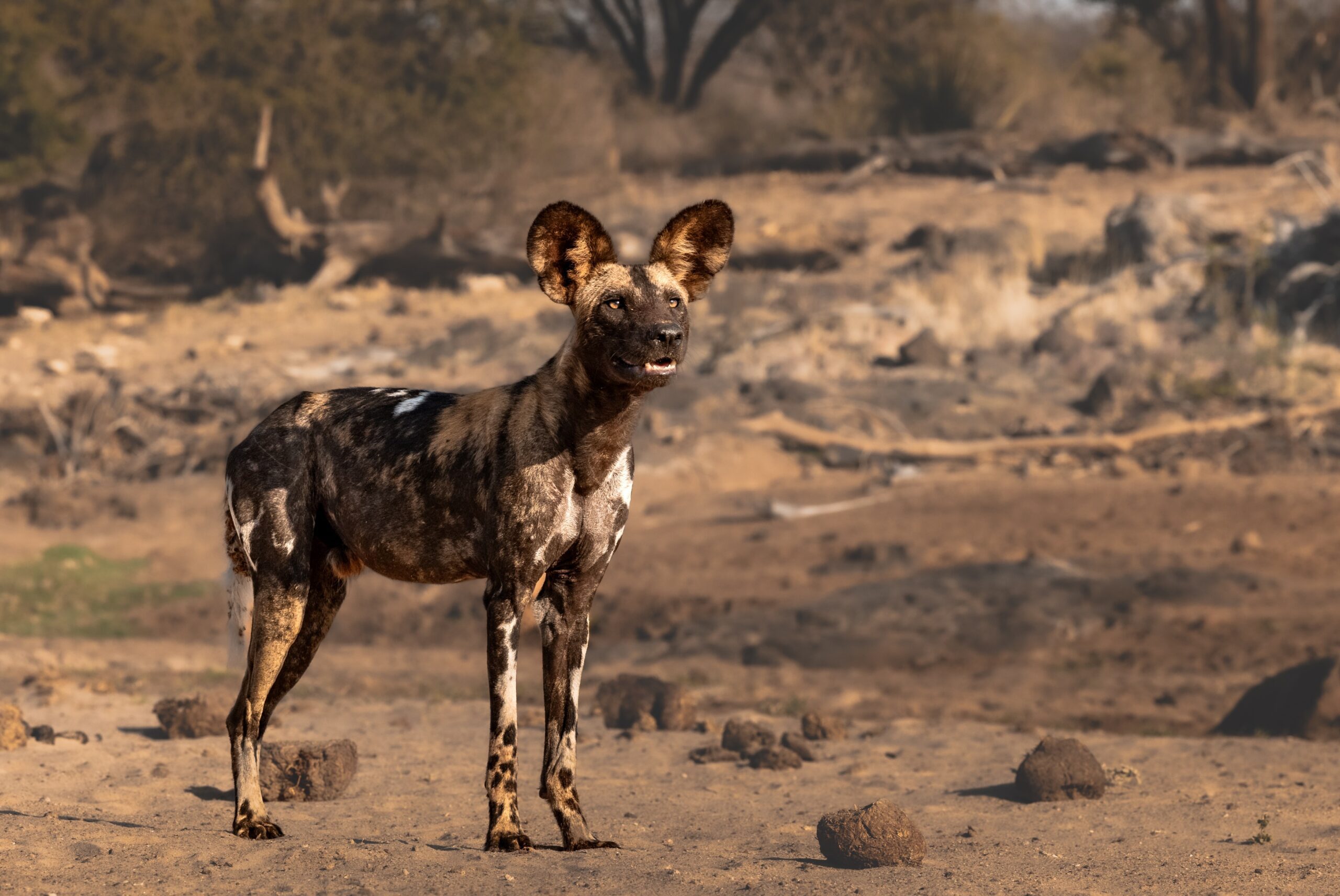
Wild dogs, in contrast, rely on cooperation and endurance. They specialise in medium-sized prey such as impala, using coordinated pack hunting to achieve remarkably high success rates. Once a kill is made, they consume it rapidly to avoid losing it to larger predators.
Small predators: efficiency over power
Smaller predators follow a different strategy entirely.
Species such as servals and jackals focus on small prey, including rodents, birds, and insects. These hunts carry far less risk and have high success rates, but the energy return per kill is lower.
Servals, for example, rely heavily on hearing to detect prey hidden in grass before executing precise vertical pounces. Their success rate is among the highest of any African predator.
Jackals are highly opportunistic, combining hunting with scavenging. Their flexibility allows them to survive in a wide range of conditions.

Specialists and generalists
Predators can broadly be divided into specialists and generalists.
Specialists, such as cheetahs, focus on a narrow range of prey. Cheetahs are built for speed and typically target medium-sized antelope like gazelles. This makes them highly efficient within their niche, but also vulnerable if prey availability declines.
Generalists, such as leopards and hyenas, have a far broader diet. They can switch between prey types depending on availability, giving them a significant advantage in changing environments.
This distinction plays a key role in how predators respond to environmental pressures such as drought or competition.
The role of habitat
Habitat is a critical factor in prey selection.
Cheetahs prefer open plains where they can use speed to their advantage. Leopards favour dense bush and riverine areas where they can rely on stealth. Lions operate across a range of habitats but often hunt in areas that allow for ambush.
Prey choice is therefore not only about the predator, but also about where the hunt takes place.
Opportunistic hunters and scavengers
Few predators rely solely on hunting. Many will scavenge when the opportunity arises.
Hyenas are a prime example. While they are highly capable hunters, they will readily scavenge carcasses when available, conserving energy. Jackals and vultures also play important roles in this system, ensuring that little goes to waste.
This opportunistic behaviour is not a sign of weakness. It is an efficient survival strategy.
Competition and kleptoparasitism
Predators do not operate in isolation. Competition shapes their behaviour at every stage.
Cheetahs, for example, frequently lose kills to lions and hyenas. To compensate, they hunt during the day and prioritise speed. Leopards drag their kills into trees to avoid theft. Wild dogs consume their prey quickly before larger predators arrive.
This behaviour, known as kleptoparasitism, is a defining feature of predator interactions in the savanna.
What the data shows
Scientific studies show that predators are selective, but not rigid. Rather than targeting a single species, they focus on prey within an optimal size and risk range.
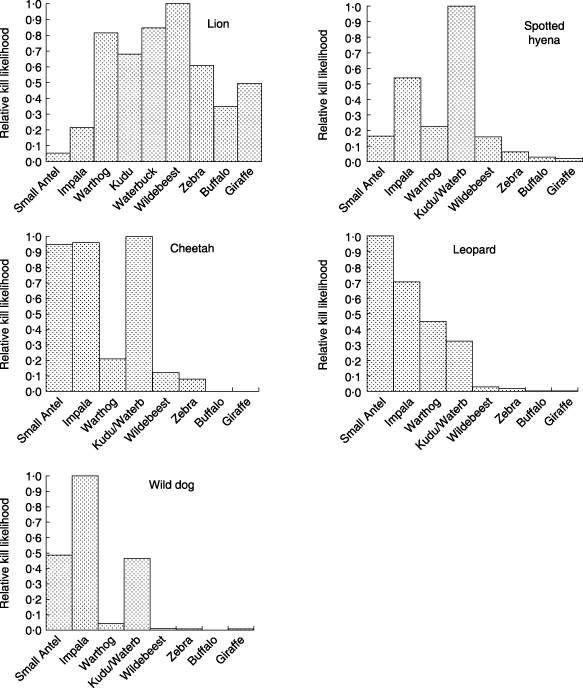
The data highlights clear patterns. Cheetah concentrate heavily on smaller to medium-sized antelope such as impala, with very little overlap into larger prey. Leopard show a broader spread, taking everything from small antelope to mid-sized species, reflecting their adaptability as solitary hunters.
Lion diets span a much wider range, from medium-sized prey like wildebeest and zebra to larger animals. This reflects a key trade-off: larger prey carries greater risk, but delivers far greater reward, often feeding an entire pride from a single successful hunt.
Spotted hyena show a strong focus on medium-sized ungulates, but with flexibility depending on group size and competition. African wild dog concentrate most heavily on medium-sized, fast-moving antelope such as impala, relying on endurance hunting rather than strength.
Diet composition varies across ecosystems, but the underlying pattern remains consistent: each predator operates within a preferred prey range shaped by body size, hunting strategy, and risk tolerance.
Why this matters in Tsavo
The Tsavo Conservation Area supports a diverse predator guild, each species occupying a distinct ecological role.
This diversity is not accidental. It is the result of finely balanced interactions between predators, prey, habitat, and competition.
Understanding how predators choose their prey helps inform conservation strategies, ensuring that both predator and prey populations remain healthy and sustainable.
Final thoughts
Predators do not hunt randomly. Every decision is shaped by energy, risk, and opportunity.
From the precision of a serval hunting rodents to the coordinated power of a lion pride taking down large prey, each strategy reflects a different solution to the same challenge: survival.
Together, these strategies form a complex system that allows multiple predators to coexist, maintaining the balance of Africa’s savannas.