

Across Africa’s savannas, scavenger birds play a vital role in maintaining healthy ecosystems. By consuming carcasses and organic waste, they help prevent the spread of disease, recycle nutrients, and support the functioning of predator–prey systems.
Tsavo, with its vast and varied habitats, is home to one of East Africa’s richest communities of avian scavengers. From the iconic vultures circling high above the plains to the lesser-known storks and eagles that opportunistically feed on carrion, these birds are essential components of the Tsavo Conservation Area.
This article explores the scavenger birds confirmed in Tsavo, their distinct behaviours, and the ecological roles they play.
What makes a bird a scavenger?
A scavenger is any bird that feeds on carrion. Some species are obligate scavengers, relying almost entirely on dead animals, while others are facultative scavengers that hunt but will readily consume carcasses when available.
Key adaptations seen in scavenger birds include:
Exceptional eyesight for detecting carcasses over long distances
Strong, hooked bills for tearing flesh
Soaring ability to cover vast areas efficiently
Highly acidic stomachs capable of neutralising pathogens
Vultures are Africa’s most specialised scavengers, while many eagles, storks, and corvids scavenge opportunistically.
The vultures of Tsavo: Africa’s most specialized scavengers
White-backed Vulture (Gyps africanus)
One of Africa’s most abundant vultures but declining rapidly across the continent. Often among the first to arrive at carcasses. Highly gregarious and capable of consuming large amounts of carrion within minutes.
Rüppell’s Vulture (Gyps rueppelli)
The highest-flying bird in the world, recorded at over 11,000 metres. A proficient soaring species and an essential contributor to rapid carcass detection and disposal.
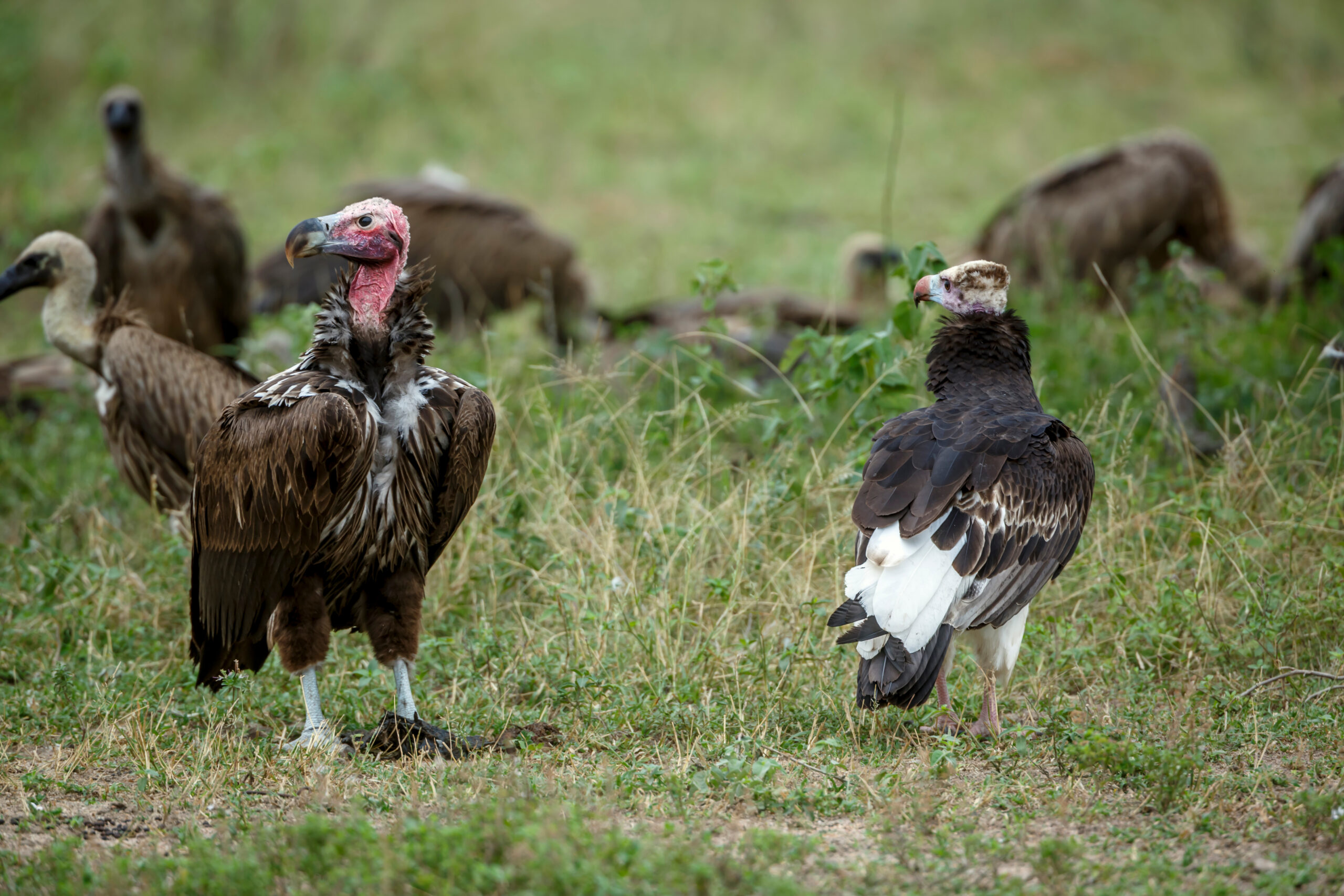
Lappet-faced Vulture (Torgos tracheliotos)
The largest vulture in Tsavo. Dominant at carcasses due to its size and powerful bill, which can tear into tough hide and open carcasses that smaller vultures cannot.
Hooded Vulture (Necrosyrtes monachus)
A smaller and highly threatened species. Often found around human habitation and livestock areas, feeding on scraps and small carcasses.
White-headed Vulture (Trigonoceps occipitalis)
Contextual note:
Vultures are among the most threatened groups of birds globally, primarily due to poisoning, habitat loss, and declines in large mammal populations. Tsavo remains a key refuge where several species still thrive.
Tsavo’s lesser-known scavengers
Beyond vultures, many other birds contribute to Tsavo’s clean-up network. These species may hunt regularly but also scavenge carcasses or steal kills whenever the opportunity arises.
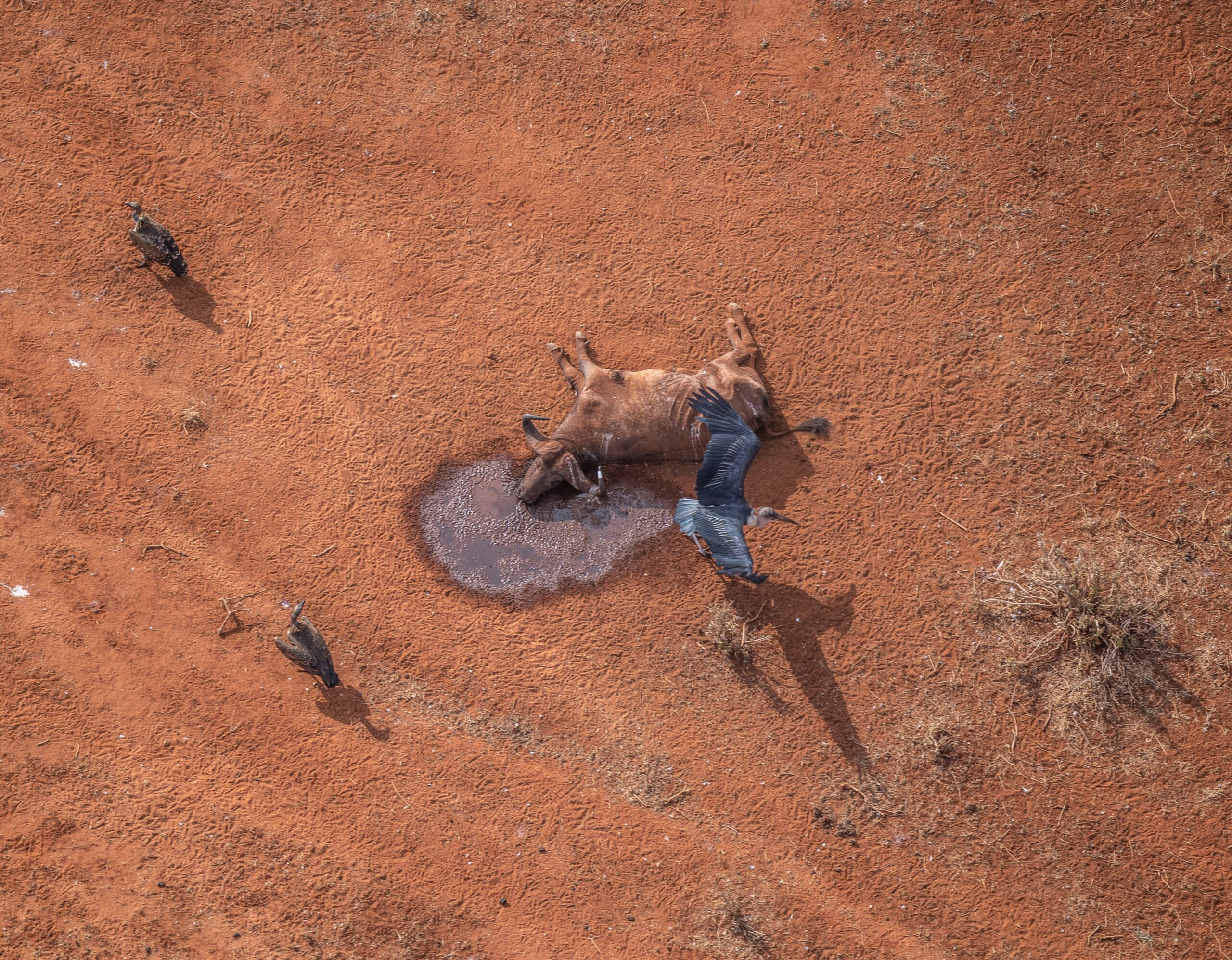
Marabou Stork (Leptoptilos crumeniferus)
A large, bald-headed stork commonly seen at carcasses. Because Marabou lack the hooked, tearing bill of vultures, they often wait for vultures to open a carcass and then steal pieces of meat once exposed.
Tawny Eagle (Aquila rapax)
A versatile predator and one of the most habitual scavenging eagles in Tsavo, often feeding at fresh carcasses in the dry season. Tawny Eagles are also known to scavenge from human sources such as rubbish pits or livestock dumps, and in some regions scavenged carcasses make up a significant portion of their diet.
Steppe Eagle (Aquila nipalensis)
A migratory visitor strongly drawn to carrion. Steppe Eagles regularly feed alongside vultures at large carcasses. They have also been observed using the distraction created by other scavengers to ambush ground squirrels nearby, showing notable opportunism.
African Fish Eagle (Haliaeetus vocifer)
Famous for hunting fish but quick to scavenge carcasses near water or steal prey from other birds. Their diet is more opportunistic than their iconic image suggests.
Bateleur Eagle (Terathopius ecaudatus)
One of Tsavo’s most recognisable raptors. Its constant low-level soaring helps it locate kills extremely fast, making it among the first to reach carcasses. Bateleurs often selectively feed on the most nutritious parts such as the eyes before larger scavengers arrive.
Crows, Ravens, and Starlings
Highly opportunistic and intelligent scavengers often found feeding on roadkill, scraps around ranger posts, and predator leftovers. Their adaptability allows them to exploit a wide range of food sources.
How scavenger birds support Tsavo’s ecosystems
Scavenger birds deliver ecological services that are essential to Tsavo’s health:
Disease control
By rapidly consuming carcasses, they minimise the spread of diseases such as anthrax and botulism.Nutrient recycling
Scavengers break down and redistribute nutrients, supporting plant growth and soil health.Predator–scavenger dynamics
Carcasses influence lion, hyena, and jackal activity. Scavenger birds play a key role in how these interactions unfold.Ecosystem indicators
Healthy scavenger populations often reflect intact ecosystems with stable herbivore numbers.
Threats facing scavenger birds in Tsavo and beyond
Although Tsavo remains a stronghold, scavenger birds face several challenges:
Poisoning from contaminated carcasses
Habitat loss and degradation
Declines in wild ungulate populations
Collision risks with power lines and infrastructure
Climate variability affecting breeding success
These pressures highlight the importance of maintaining Tsavo as a safe refuge for scavenging species.
Scavenger birds are essential to Tsavo’s ecological balance. From the mighty Lappet-faced Vulture to the low-soaring Bateleur, each species contributes to the rapid removal of carcasses, nutrient cycling, and disease control across the landscape. While some are threatened elsewhere in Africa, Tsavo remains one of the continent’s most important refuges for these specialised and often overlooked birds.
Understanding and valuing these species is crucial to safeguarding the health of the Tsavo ecosystem. By protecting scavenger birds, we also protect the broader wildlife community that depends on a functioning, resilient landscape.