

On 8 December 2025, the conservation world lost one of its greatest champions. Dr. Iain Douglas-Hamilton, who passed away in Nairobi at the age of 83, was not only one of the most influential elephant scientists of the last century—he was also a pioneer whose efforts changed the trajectory of elephant conservation across Africa.
For more than six decades, Iain dedicated his life to understanding elephants, defending them from threats, and inspiring a global movement to protect them. His work shaped the way researchers, governments, and conservationists think about elephant behaviour, population dynamics, and the forces driving their decline. Today, healthy elephant populations still roam Africa’s landscapes because he fought for them.
A pioneering scientist from the very beginning
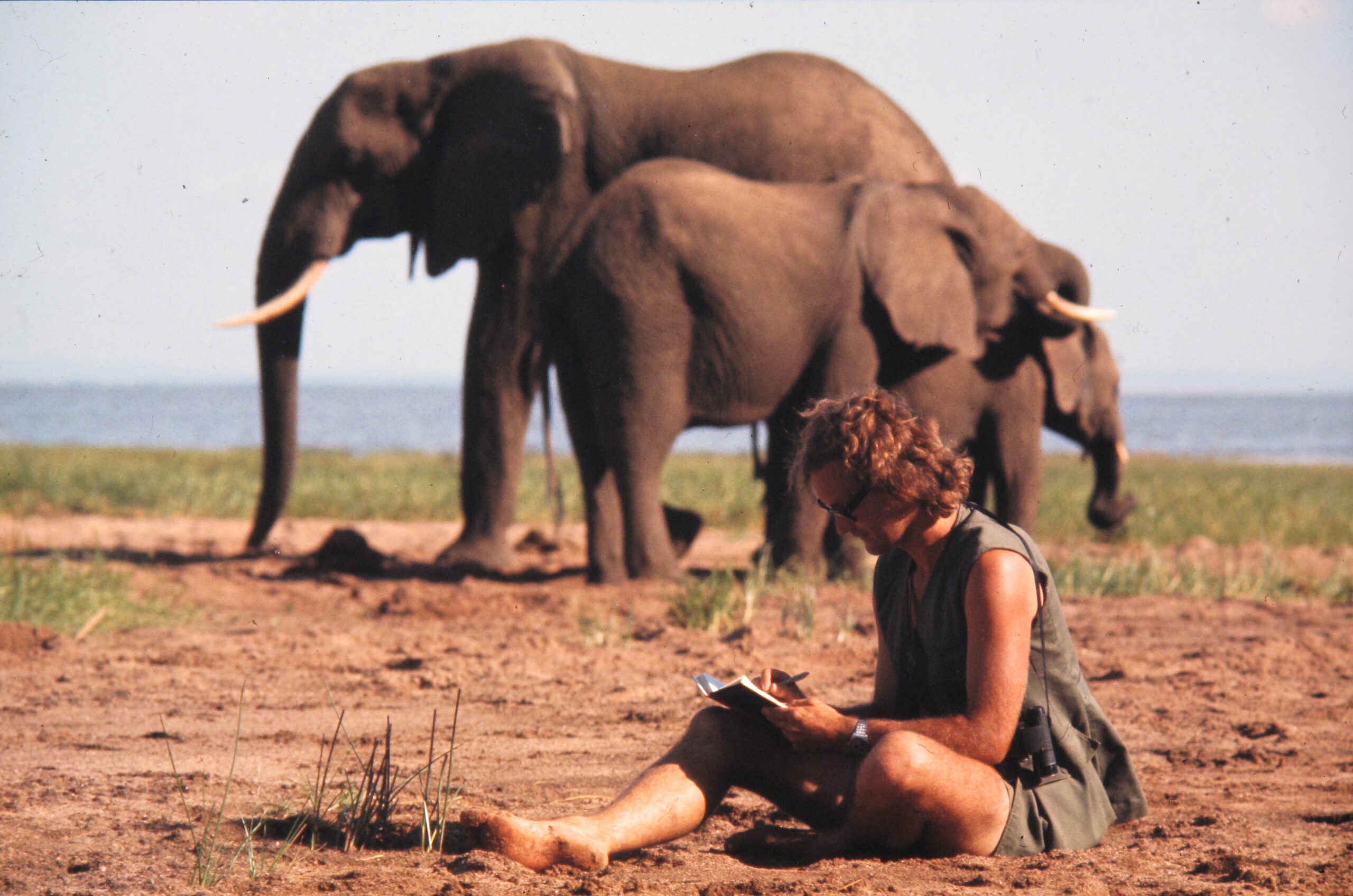
Iain’s journey began astonishingly early. At just 23 years old, he completed the first scientific study of the social behaviour of wild elephants. His groundbreaking work revealed, for the first time, the complexity of elephant family life—matriarchs guiding herds, males passing through musth cycles, and calves learning from the generations before them.
Over the following years, he pioneered the use of radio tracking, and later GPS collars, to map elephant movements. These technologies, now commonplace in conservation, demonstrated how elephants migrate, how they respond to human pressures, and how poaching reshapes their landscapes.
His research became foundational to modern elephant science and helped create the evidence-based approach that many conservation organisations, including Tsavo Trust, rely on today.
Founding Save the Elephants
In 1993, Iain founded Save the Elephants (STE)—an organisation that would become one of the most respected elephant conservation institutions in Africa. STE focused on three core principles that defined Iain’s philosophy:
• Science first – rigorous, long-term data to understand how elephants live.
• Protection through knowledge – tracking elephants to pre-empt threats.
• Coexistence with communities – conservation grounded in respect for local people.
From Samburu to Tsavo, the methods he pioneered—particularly GPS collaring—changed how conservationists monitor elephant movements and respond to emerging threats.
Confronting the poaching crisis
When a devastating wave of ivory poaching swept across Africa between 2010 and 2012, killing an estimated 100,000 elephants, Iain once again stepped forward as a leader.
He testified before the U.S. Senate Committee on Foreign Relations in 2012, presenting scientific evidence on poaching trends and illegal ivory trafficking. His calm, authoritative testimony helped galvanise international action.
Iain’s science and advocacy played an instrumental role in the global movement to clamp down on ivory trade—including the landmark closure of China’s domestic ivory market in 2018.
The Elephant Crisis Fund
In 2013, recognising the need for rapid, flexible conservation support, Iain co-founded the Elephant Crisis Fund (ECF) with the Wildlife Conservation Network.
The impact has been extraordinary. By 2025, the ECF had:
• Supported 120 partners
• Across 44 countries
• Distributing over USD $40 million
• Funding 500+ conservation projects
The Fund initially focused on stopping poaching and trafficking but later grew to support human–elephant coexistence, securing landscapes where both people and wildlife can thrive.
This model—fast, collaborative, and science-led—became one of the most effective forces in the global fight for elephants.
A collaborator, leader, and mentor
Throughout his career, Iain published 122 scientific papers, mentored countless conservationists, and forged partnerships across Africa. His work helped shape understanding of:
• Elephant family structure and matriarchal leadership
• Musth and male reproductive strategies
• Movement ecology and migration
• The social disruption caused by poaching
• The link between human pressure and elephant well-being
Many of today’s leading elephant biologists and conservationists trace their careers back to his influence, guidance, or direct mentorship.
A family committed to conservation
Iain’s life was deeply intertwined with that of his wife, Oria, with whom he shared not only a family but a conservation mission. Their daughters, Saba and Dudu, grew up immersed in wildlife and have each charted their own paths in conservation and broadcast storytelling, continuing the family’s long-standing connection to the natural world.
As the family mourns his loss, they have kindly requested privacy during this difficult time.
Global recognition
Tributes following his passing came from around the world. Among them was a message from Prince William, who praised Iain as “a man who dedicated his life to conservation and whose life’s work leaves a lasting impact on our appreciation for, and understanding of, elephants.”
A legacy carried forward
Iain Douglas-Hamilton’s legacy is visible wherever elephants still roam safely. His work influenced not only global policy but also the everyday conservation practices carried out on the ground in places like Tsavo.
At Tsavo Trust, we share his belief in the power of science, long-term monitoring, and the need to protect elephants as families—not individuals. His insights into elephant society echo through our Big Tusker Project, aerial patrols, and commitment to safeguarding the last of Kenya’s great bulls.
Final words
Iain Douglas-Hamilton changed the world’s understanding of elephants and helped steer them away from the brink of catastrophe. His contributions—scientific, political, and personal—will continue to shape conservation for generations.
His legacy is one of courage, clarity, and profound dedication. It is now up to all of us who care about Africa’s elephants to carry that legacy forward.