

Giraffes are among Africa’s most recognisable animals and have been the subject of scientific research for decades. Yet despite this familiarity, significant gaps remain in our understanding of their ecology, physiology, genetics and population dynamics.
The review found that research has expanded considerably, particularly since the early 2000s. However, this work has not been evenly distributed between giraffe species, geographical regions or areas of scientific study.
For conservation, these differences matter. Effective management depends not only on knowing how many giraffes remain, but on understanding how populations reproduce, move between landscapes, maintain genetic connectivity and respond to environmental change.
Not all giraffes have been studied equally
One of the most important developments in modern giraffe research has been the recognition of substantial genetic differentiation between giraffe populations.
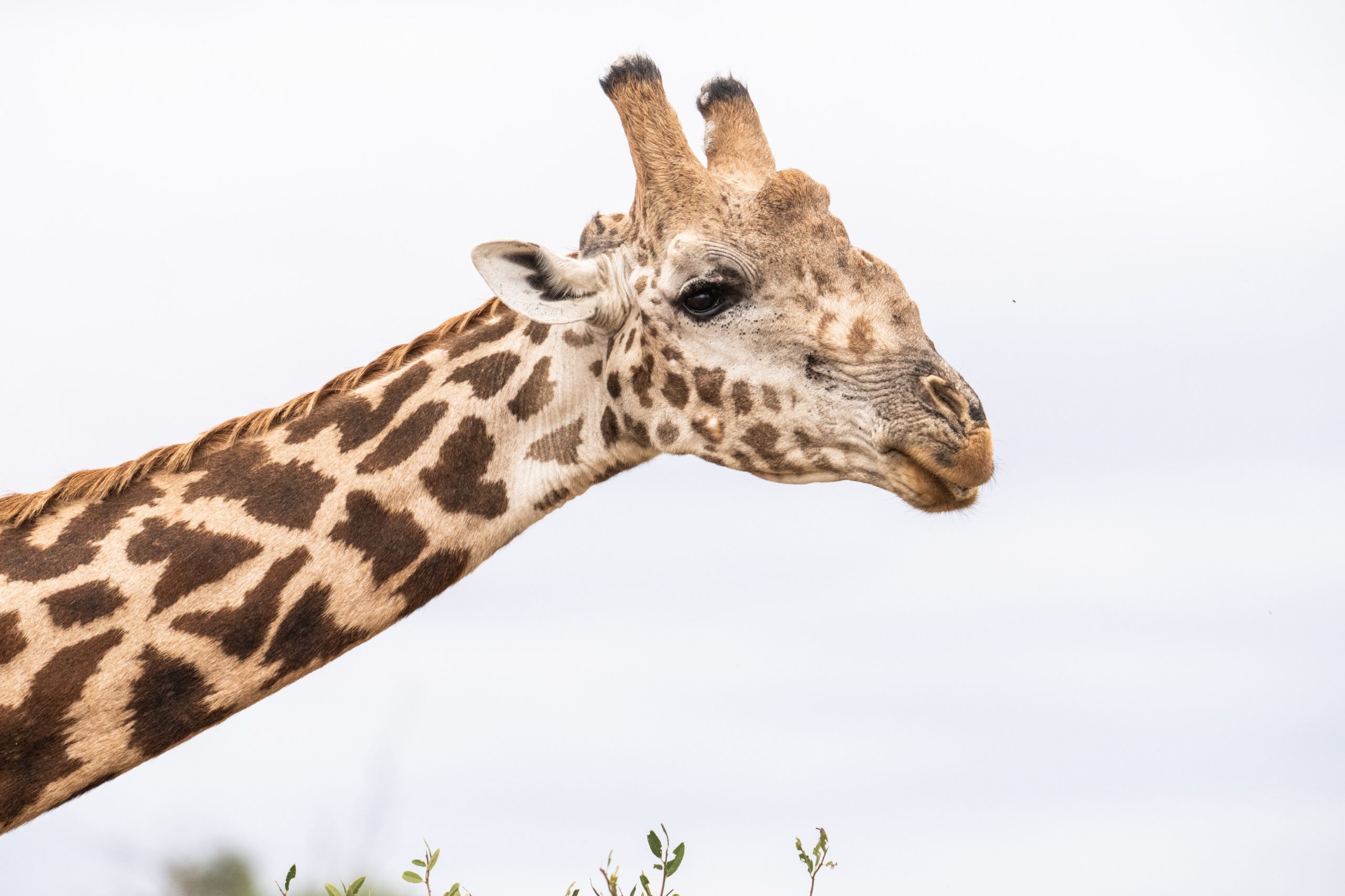
Current taxonomic research increasingly supports the recognition of four species: the northern giraffe, southern giraffe, reticulated giraffe and Masai giraffe. This classification has important implications for conservation because populations with distinct evolutionary histories cannot necessarily be managed as interchangeable components of a single widespread species.
The Mammalia review found considerable differences in research effort between these groups.
Among studies of wild populations, more than 200 focused on southern giraffes and more than 150 on Masai giraffes. In comparison, fewer than 50 examined northern giraffes and fewer than 40 focused on reticulated giraffes.
These differences mean that the scientific evidence available to guide conservation is substantially stronger for some giraffe populations than for others.
The imbalance also exists geographically. Research has historically been concentrated in countries and protected areas with established scientific infrastructure and long-running research programmes, leaving other populations comparatively poorly documented.
Kenya is an important centre of giraffe research
Kenya has made a major contribution to our understanding of giraffe ecology.
The review identified more than 150 studies involving wild giraffes in Kenya, placing the country alongside South Africa as one of the principal centres of giraffe research globally.
This is particularly significant because Kenya contains several giraffe populations occupying markedly different environments.
However, national research totals can obscure important differences in knowledge between individual ecosystems. Ecological findings from one population cannot automatically be applied to another, particularly where rainfall, vegetation, predation, land use and human pressures differ substantially.
This is relevant to Tsavo, where Masai giraffes occupy a large, semi-arid and highly seasonal ecosystem. Understanding how giraffes function within this environment requires long-term information from the population itself.
What have scientists actually studied?
The review also identified substantial differences in the subjects scientists have investigated.
Behaviour, population ecology, feeding ecology and habitat use have received considerable attention. These fields have significantly changed our understanding of giraffe biology.
Research into giraffe social organisation, for example, has demonstrated that giraffe society is considerably more structured than historically assumed. Giraffes exhibit fission-fusion social dynamics, in which groups regularly divide and reform, while individuals can maintain persistent social associations over much longer periods.
Long-term studies have also identified stable female relationships, associations linked to reproduction and nursery groups involving females with dependent young.
Research into feeding ecology has similarly demonstrated considerable selectivity in giraffe browsing, with diet influenced by plant species, nutritional quality, season and vegetation structure.
However, the review found substantially less research into several fields that are increasingly important for conservation, including physiology, genetics and long-term demography.

Genetics and population connectivity
Genetic research is becoming increasingly important to giraffe conservation.
Habitat fragmentation can restrict movement between populations and consequently reduce gene flow. Over time, reduced connectivity can contribute to loss of genetic diversity and increasing genetic differentiation between populations.
Genetic studies can therefore provide information that conventional population surveys cannot. They can identify population structure, measure relatedness and determine whether apparently separate populations continue to exchange genes.
This is particularly relevant where giraffes occur across protected-area boundaries and surrounding community or privately managed land.
Maintaining connectivity is not simply a question of preserving physical space. From a population perspective, connectivity must be sufficient to allow dispersal and gene flow between breeding populations.
The relative lack of genetic research identified by the review therefore represents an important conservation knowledge gap.
How giraffes respond to environmental stress
Physiology is another comparatively understudied field highlighted by the review.
Giraffes possess several remarkable physiological adaptations associated with their unusual body size and shape, particularly their cardiovascular system. However, conservation physiology extends beyond understanding how blood reaches the brain.
There remains a need to better understand how giraffes respond physiologically to heat, drought, nutritional stress and changing resource availability.
These questions are particularly relevant in semi-arid ecosystems.
Rainfall influences vegetation growth, leaf quality and the availability of preferred browse. Prolonged drought can therefore affect giraffes not simply through water availability, but through changes in the quantity and nutritional quality of their food.
Understanding these responses will become increasingly important as climate variability and land-use change alter the environments occupied by giraffe populations.
Why long-term demography matters
Population counts remain fundamental to wildlife conservation, but abundance alone provides only part of the information required to understand population health.
Demographic research examines the processes responsible for changes in population size, including birth rates, calf survival, adult mortality, age structure, immigration and emigration.
These variables can reveal changes in population performance before they become apparent through overall abundance.
For a long-lived species such as the giraffe, this is particularly important. Changes in reproduction or juvenile survival may take years to produce an obvious decline in the number of adults.
Long-term studies are therefore especially valuable because they allow researchers to distinguish short-term fluctuations from persistent demographic trends.
The review’s identification of long-term demography as an area requiring further research is consequently important for conservation planning.
Climate and land-use change increase the importance of these gaps
The environments occupied by giraffes are changing.
Across parts of Africa, habitat conversion, expanding infrastructure, fencing and settlement are altering the connectivity and availability of wildlife habitat. At the same time, changes in rainfall and temperature can influence vegetation productivity and the distribution of resources.
The effects are unlikely to be uniform across giraffe populations.
Responses will depend on local vegetation, access to alternative habitat, population connectivity and the ability of animals to alter their movements as environmental conditions change.
This makes geographically specific research increasingly important.
Broad knowledge of giraffe biology provides the foundation, but conservation decisions ultimately have to account for the conditions experienced by individual populations and ecosystems.
What this means for Tsavo
The findings of the review reinforce the importance of long-term monitoring within the Tsavo Conservation Area.
Repeated surveys and observations can provide information on distribution, population trends, habitat use and changes in abundance over time. When maintained over many years, these datasets become particularly valuable because they establish baselines against which future change can be measured.
Monitoring can also complement more specialised research.
Genetic sampling can investigate connectivity and population structure. Satellite or GPS tracking can reveal movement patterns. Vegetation and remote-sensing data can examine changes in habitat productivity. Demographic monitoring can establish whether populations are reproducing successfully.
Together, these approaches provide a much more complete understanding of population health than abundance estimates alone.
For conservation organisations operating across large landscapes, long-term monitoring therefore serves an important scientific purpose: it allows changes in wildlife populations to be identified, investigated and placed within their ecological context.
Eighty years of research, with significant questions remaining
Giraffe science has expanded enormously since the first studies included in the review were published in the 1940s.
Research has transformed our understanding of giraffe behaviour, social organisation, feeding ecology and population structure. Genetic techniques have changed how giraffe diversity itself is understood, while GPS tracking, remote sensing and long-term individual identification are providing increasingly detailed information about how giraffes use landscapes.
Yet the review of 817 scientific studies demonstrates that our knowledge remains uneven.
Some species and populations have received far greater research attention than others, while important questions concerning genetics, physiology and long-term demography remain comparatively poorly studied.
This is particularly significant as giraffes respond simultaneously to natural environmental variability and increasing human-driven changes to their habitats.
For Tsavo, continued monitoring and research can help establish how Masai giraffes are responding to these pressures and contribute to the broader scientific understanding of the species.