

A black rhinoceros can weigh well over a tonne, yet much of its diet consists of individual leaves, shoots, twigs and woody plants. In Tsavo, it must find enough of these resources in an environment where rainfall is highly seasonal and vegetation can change substantially between wet and dry periods.
Black rhinos are adapted to this variability through a combination of specialised feeding anatomy, dietary flexibility, behavioural responses to heat and the ability to move between widely distributed resources. Understanding these adaptations also helps explain what constitutes suitable black rhino habitat and why protecting habitat is fundamental to the species’ long-term recovery.
Built to browse
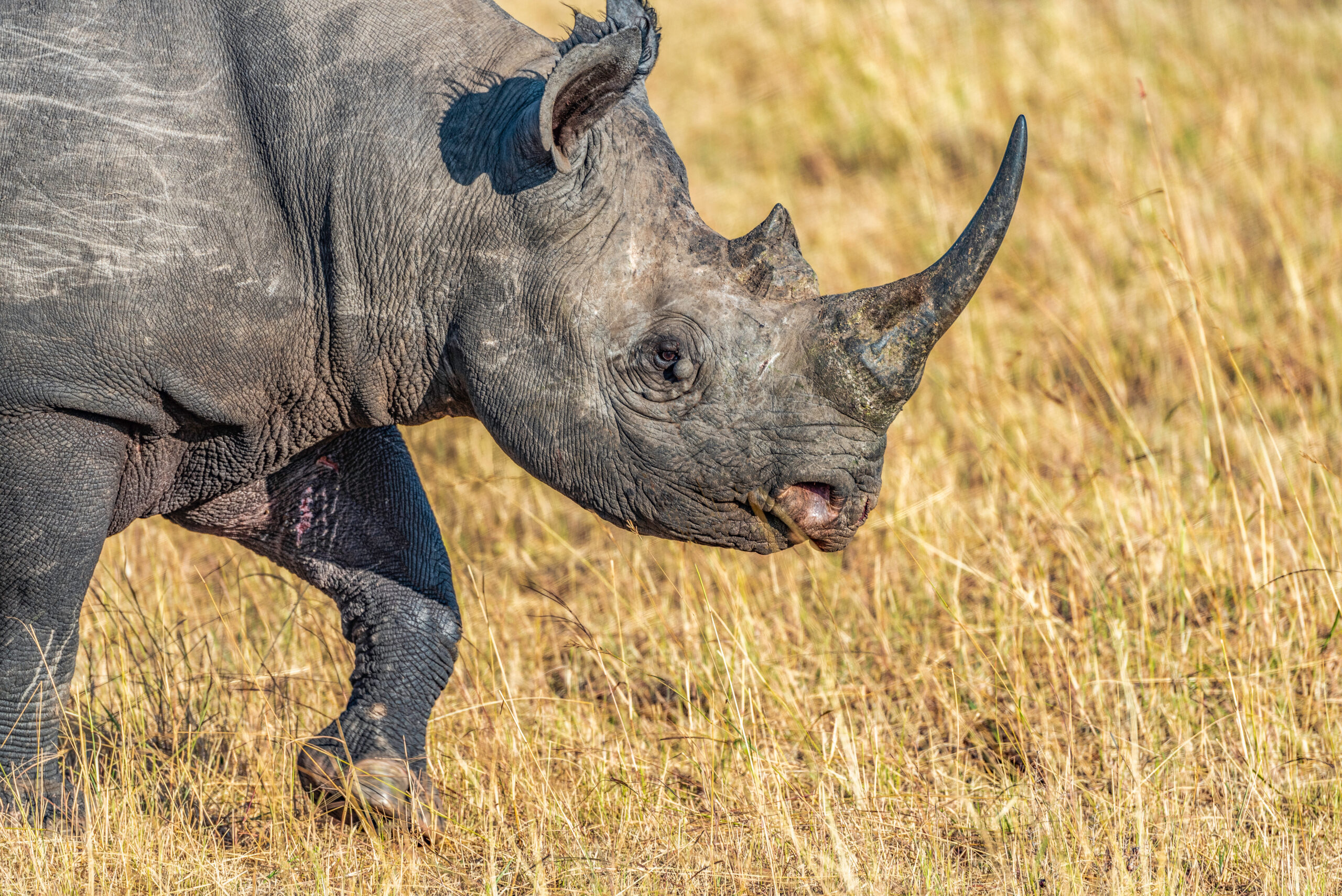
Black rhinos are browsers rather than grazers, and one of their most distinctive adaptations is their pointed, prehensile upper lip. Unlike the broad, square mouth of the predominantly grazing white rhino, the black rhino’s lip can grasp individual leaves, shoots, twigs and small branches. This allows a very large herbivore to feed selectively from woody vegetation.
Research conducted in Tsavo between 1967 and 1969 provides an unusually detailed picture of this feeding behaviour. Researchers examined approximately 3,600 black rhino feeding stations across six different habitat types and recorded rhinos feeding on 102 plant species belonging to 32 botanical families.
Importantly, the rhinos did not simply consume vegetation according to what was most abundant. They showed clear selectivity in their feeding, with herbs, shrubs and plants from the legume family forming important components of the diet, while grasses were rarely selected.
This dietary diversity is an important adaptation to a variable environment such as Tsavo. Depending heavily on only a handful of plant species would leave rhinos particularly vulnerable when those plants became scarce. By exploiting a broad range of browse, black rhinos have more options as vegetation changes between habitats and seasons.
However, a broad diet does not mean that all plants are equally valuable. Black rhinos remain selective about what they consume. Suitable habitat therefore depends not simply on having large quantities of vegetation, but on providing sufficient diversity, availability and quality of appropriate browse throughout the year.
A selective feeder in a diverse landscape
The diversity of plants recorded in the Tsavo study is important because it challenges the idea that black rhinos simply eat whatever woody vegetation they encounter.
Research elsewhere in Kenya has similarly found that black rhinos can consume a wide range of plants while showing clear preferences among them. Plant abundance matters, but so too can characteristics such as nutritional value, chemical defences and the physical structure of the plant.
This means that suitable black rhino habitat cannot simply be measured by the amount of vegetation it contains.
Two areas with apparently similar quantities of bush may provide very different feeding opportunities if the species composition, nutritional quality or structure of that vegetation differs.
For conservationists, the distinction matters. A landscape must provide enough suitable browse throughout the year, including during periods when preferred foods become less readily available.
What happens during the dry season?
Tsavo’s vegetation responds strongly to rainfall. Following rain, new growth can provide herbivores with a greater abundance of nutritious vegetation. As conditions dry, plants mature, leaves are lost and the availability of particular foods changes.
Black rhinos respond by changing what they eat.
Recent research on eastern black rhinos (Diceros bicornis michaeli) in three Kenyan reserves used DNA metabarcoding of dung to examine how diets changed with environmental conditions. The researchers found substantial dietary diversity and seasonal changes in the plants being consumed.
One particularly interesting finding concerned Vachellia and Senegalia, the groups containing many of the trees commonly referred to as acacias. Their occurrence in rhino diets increased when vegetation productivity was lower. The researchers suggested that these plants may therefore function as important fallback foods during less productive periods.
This provides a more nuanced picture than simply describing acacias as a favourite black rhino food.
A plant can be ecologically important not because it is always the most desirable option, but because it remains available when other foods become scarce.
In a highly seasonal environment, resilience can depend as much on the foods available during difficult periods as on those eaten when conditions are good.
Diet may influence reproduction
The same Kenyan research produced another important result.
This does not mean that changing diet alone determines reproductive success. Reproduction in a long-lived mammal is affected by numerous interacting factors. However, the association provides important evidence that environmental conditions and nutritional ecology can influence population performance.
This changes how we should think about habitat quality.
An area can contain enough food to keep adult rhinos alive without necessarily providing the conditions required for a population to grow as rapidly as possible. If females experience poorer nutrition or have to make substantial dietary adjustments during difficult periods, the effects may eventually become visible through reproduction.
For conservation, therefore, the relevant question is not simply “Can rhinos survive here?”
It is also “Can rhinos reproduce successfully here over the long term?”
Sharing Tsavo with other browsers
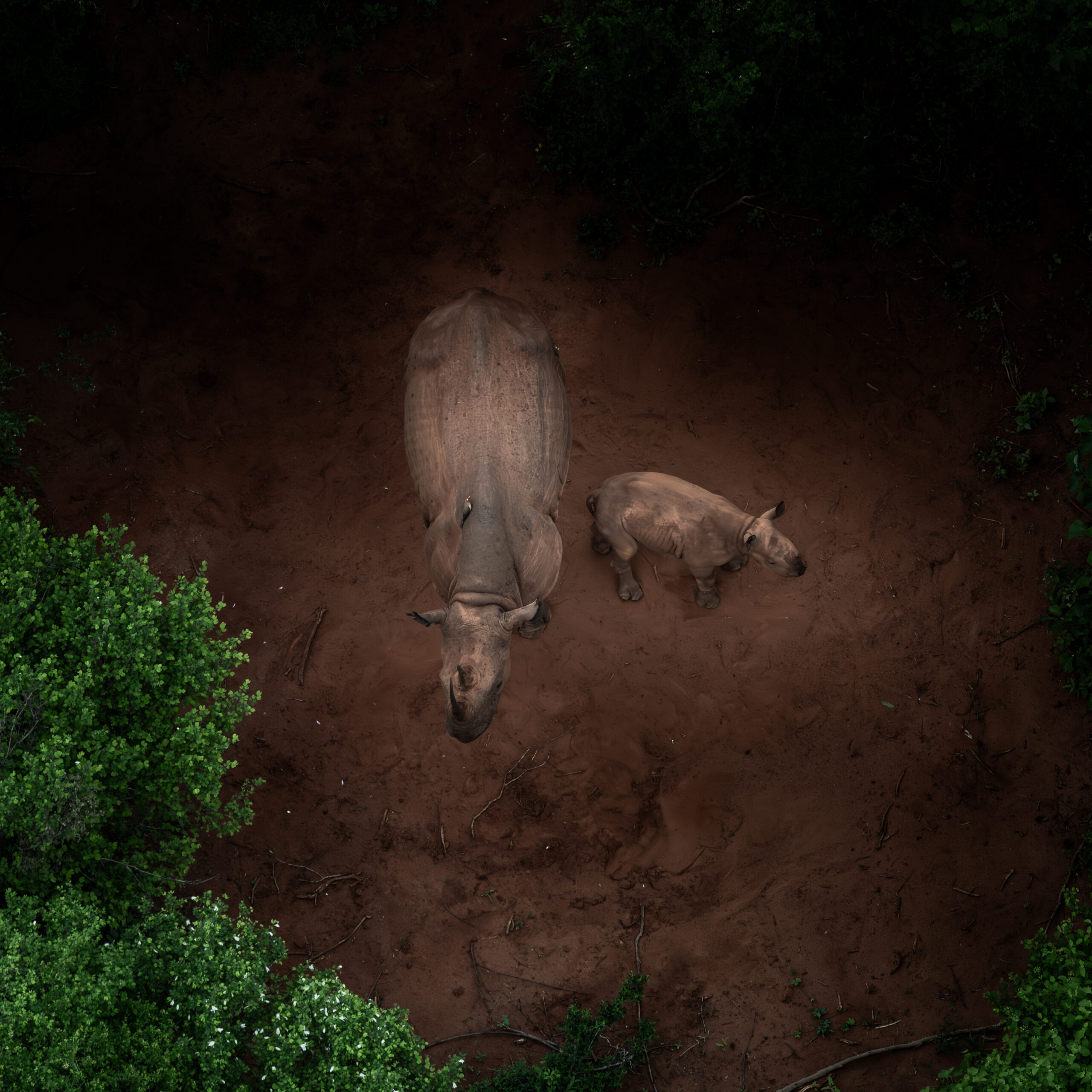
Black rhinos are far from the only animals exploiting Tsavo’s woody vegetation.
Elephants, giraffes, lesser kudu, gerenuk and numerous other herbivores browse trees and shrubs. Yet these species can coexist partly because they do not use the vegetation in exactly the same way.
Research conducted in Tsavo East examined resource partitioning among black rhinos, giraffes, lesser kudu and gerenuk. While their diets overlapped, differences in plant selection, habitat use and feeding height reduced direct competition.
A giraffe can exploit foliage several metres above the ground. Gerenuk can stand on their hind legs to reach higher vegetation. Black rhinos use their prehensile lips to select vegetation within their own feeding range.
Ecologists describe this separation in resource use as niche partitioning.
It allows several species that appear to depend upon broadly similar resources to coexist within the same ecosystem.
Elephants can change the equation
Elephants introduce another dimension because they do more than consume vegetation. Their size and strength allow them to physically alter it.
Elephants can break branches, strip bark, uproot shrubs and push over trees. At sufficient densities, these behaviours can change vegetation structure across large areas.
This does not mean that elephants are simply competitors of black rhinos. Their effects on ecosystems are much more complicated. Opening dense vegetation can benefit some species, while the loss of particular woody plants may disadvantage others.
Understanding these relationships remains important today. Changes in elephant numbers, rainfall, fire and vegetation can interact, meaning the amount of suitable black rhino habitat is not necessarily constant through time.
Coping with Tsavo’s heat
Finding food is only part of the challenge of living in a hot, seasonally dry environment.
Black rhinos also modify their behaviour in response to temperature. They frequently rest in shade during hotter parts of the day and can concentrate activity into cooler periods. Mud wallows provide another means of behavioural thermoregulation while also coating the skin.
Water remains important.
Although black rhinos can live in relatively dry environments, this should not be confused with an ability to live indefinitely without drinking. Access to dependable water influences how rhinos use landscapes, particularly as dry conditions intensify.
A suitable home range therefore needs to provide more than browse. Rhinos must be able to move between feeding areas, water, shade, resting sites and other important resources.
A landscape connected by movement
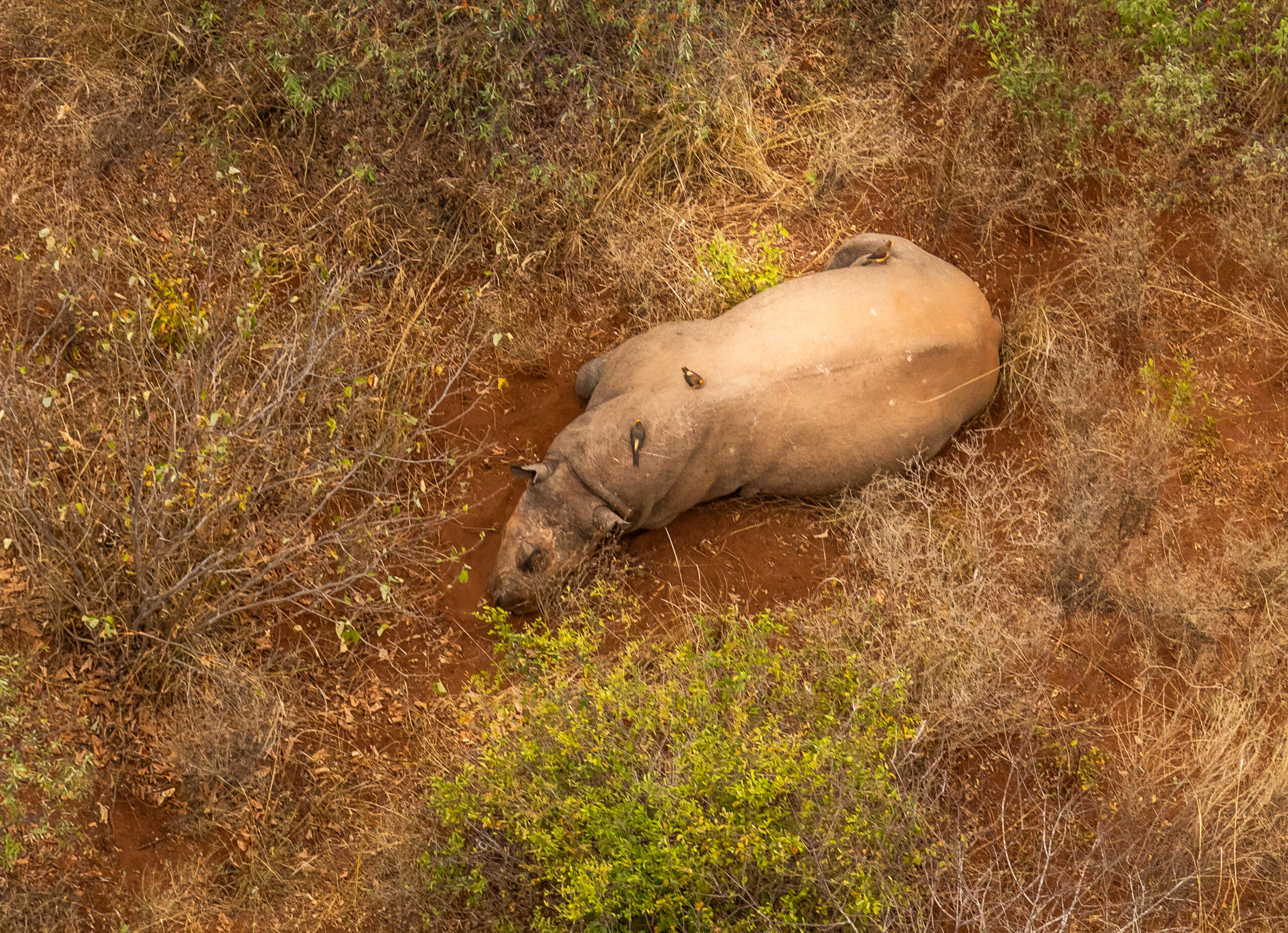
Black rhinos are generally solitary, but they are not socially isolated.
Individuals maintain overlapping home ranges and communicate through scent marking, urine and dung. Communal dung sites, known as middens, can provide information about other rhinos using an area.
Movement between these sites, feeding areas, water and resting locations creates a network of repeatedly used routes across the landscape.
This is another reason why assessing habitat requires more than calculating how much vegetation exists within a particular area. Resources must also be accessible.
A productive feeding area is of limited value if an animal cannot safely move between it and reliable water. Similarly, fragmentation or disturbance can potentially affect rhinos even without directly removing vegetation.
For a large mammal, the arrangement of resources across a landscape can be as important as their abundance.
Drought changes more than water availability
Drought is often discussed primarily in terms of water, but for a browser such as the black rhino its effects extend throughout the food web.
Reduced rainfall changes plant growth and vegetation productivity. Preferred browse may become less available, forcing animals to alter their diets or movements. Remaining water sources may become increasingly important, potentially concentrating wildlife within smaller areas.
Severe or prolonged nutritional stress can ultimately affect body condition and reproduction.
Black rhinos possess considerable behavioural and dietary flexibility, but that flexibility has limits. A sufficiently prolonged change in vegetation can alter the number of rhinos a landscape is capable of supporting.
This makes long-term monitoring particularly important in variable ecosystems such as Tsavo.
How many rhinos can Tsavo support?
Ecologists use the term carrying capacity to describe the number of animals an environment can support over time. For black rhinos, calculating it is considerably more complicated than measuring the area of available habitat.
Conservationists need to consider the quantity and quality of browse, rainfall, vegetation structure, access to water, home-range requirements, competition and reproductive performance.
These factors also change.
Several wet years may produce abundant browse and allow rhinos to use areas that become considerably less productive during prolonged drought. Elephant activity, fire and changes in vegetation communities can further alter habitat quality.
Why Tsavo matters for black rhino recovery
Kenya is one of the most important remaining strongholds of the eastern black rhinoceros, and Tsavo represents an important part of its potential recovery.
The scale of the Tsavo Conservation Area provides something increasingly difficult to secure for large mammals: extensive habitat.
But space alone is not enough.
Long-term black rhino recovery requires secure habitat containing appropriate browse, dependable access to water and sufficient connectivity for animals to establish ranges and encounter potential mates.
This is why monitoring animals and monitoring the landscapes supporting them must go together.
Tsavo Trust works alongside the Kenya Wildlife Service and other conservation partners to monitor black rhinos within the Tsavo ecosystem. Aerial surveillance, ground monitoring and the identification of individual animals contribute to a growing understanding of where rhinos occur, how they use the landscape and how populations are changing.
These data can help conservationists distinguish between an area that simply contains rhinos and one capable of supporting a growing population over the long term.
An animal shaped by its habitat
Black rhinos are highly adapted browsers, combining selective feeding, dietary flexibility and behavioural adaptations to survive in Tsavo’s variable environment. However, their long-term recovery depends on protecting not only individual rhinos, but also the diverse and connected habitats they require to feed, reproduce and expand.