

Sexual dimorphism refers to consistent physical or behavioural differences between males and females of the same species beyond the reproductive organs. These differences can include body size, weaponry, ornamentation, colouration, or behaviour. Across African wildlife, sexual dimorphism provides clear insight into how evolution shapes animals in response to competition, reproduction, and survival in challenging environments.
African elephants: One of the most dimorphic land mammals
The African elephant is a strong example of sexual dimorphism among terrestrial mammals. Adult males are substantially larger than females, with greater body mass, thicker skulls, broader foreheads, and, on average, much larger tusks. These differences become more pronounced with age.
Male elephants continue growing for much longer than females, a trait linked to reproductive competition. Larger body size and heavier tusks confer advantages in contests between bulls for access to breeding females. Physical dominance influences mating opportunities, particularly during musth, when males experience elevated testosterone levels and increased aggression.
Super Tuskers: Extreme expression of male dimorphism
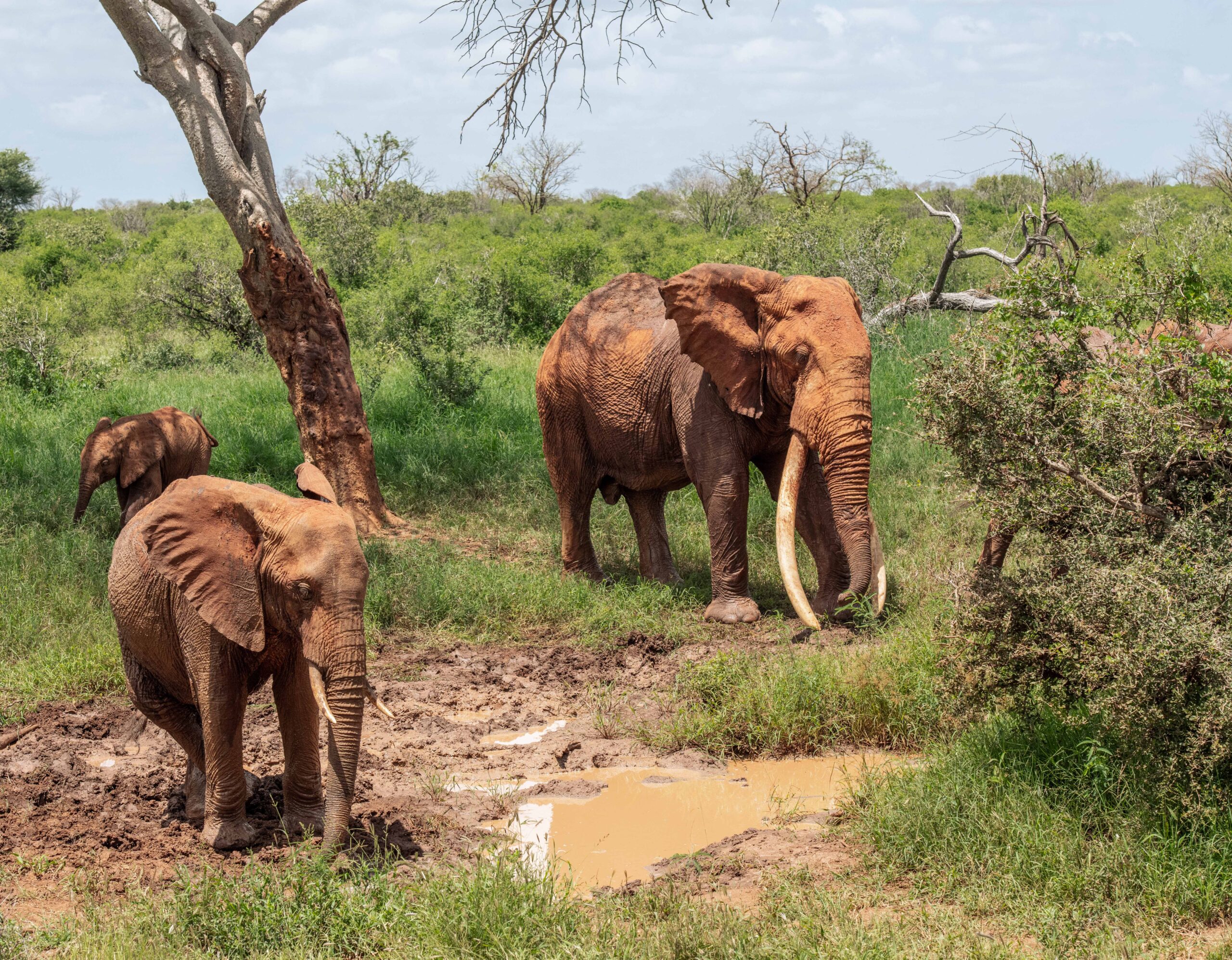
Within male elephants, Super Tuskers represent an extreme outcome of sexual dimorphism. These individuals are characterised by exceptionally long and thick tusks, often reaching or dragging along the ground, combined with very large body size. Super Tuskers are almost always older bulls, reflecting decades of growth and survival. There are currently 12 recognised and monitored Super Tuskers in the Tsavo Conservation Area.
These traits arise from a combination of genetics, nutrition, and longevity. Large tusks provide advantages in dominance displays and physical confrontations with rival males. At the same time, the rarity of Super Tuskers today reflects intense historical and ongoing selective pressure, as individuals with the largest tusks were disproportionately targeted by ivory hunters. As a result, Super Tuskers are not only biologically distinctive but also conservation-critical.
Why female elephants are different
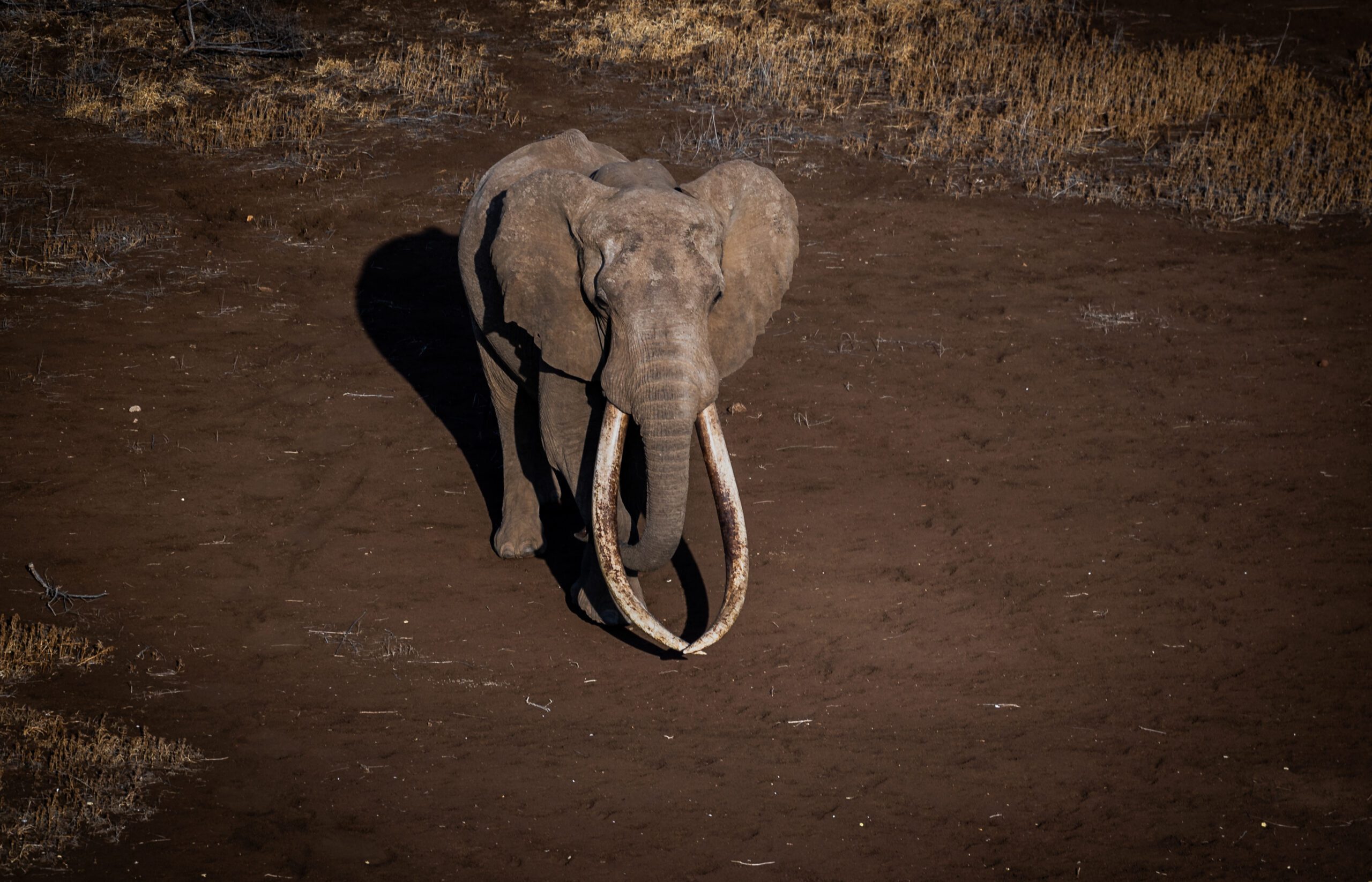
Female elephants are generally smaller-bodied than males and, on average, have smaller tusks. However, this pattern is not absolute. Some females develop tusks of exceptional length, even if they are typically thinner than those of males. Within Tsavo, these individuals are often referred to as Iconic Cows, a term used to describe females with notably long, well-formed tusks that remain visible well into adulthood. The late Dida is a well-known example of this category.

The presence of large tusks in some females highlights that tusk development is influenced by a combination of genetics, environment, and survival over time, rather than sex alone. While females do not engage in the same form of physical competition for mates as males, tusks still play functional roles in foraging, digging for water, and modifying the landscape.
Female reproductive success is primarily linked to calf survival rather than dominance. Selection has therefore favoured traits that support calf rearing, mobility, and long-term leadership within matriarchal family groups. In elephant societies, experience, memory, and ecological knowledge, rather than body size or tusk mass, determine leadership. Sexual dimorphism in elephants thus reflects differing reproductive pressures rather than a simple hierarchy of size or strength.
Lions: manes as signals, protection, and regional variation
Male lions possess manes while females do not, making the Lion one of Africa’s most recognisable examples of sexual dimorphism. The mane functions primarily as a visual signal of maturity, health, and hormonal status. Darker, fuller manes are associated with higher testosterone levels and may deter rival males while influencing female mate choice. Female lions lack manes because they are the primary hunters within the pride, where reduced heat load, agility, and camouflage provide clear advantages.
Manes are also theorised to provide physical protection during fights between males. The thick hair around the neck and throat may reduce the severity of bites and scratches during combat, which often targets these vulnerable areas. This protective role may help explain why manes persist despite their physiological costs.
Tsavo’s unique maneless male lions
However, mane development varies significantly across regions. In the Tsavo Conservation Area, male lions are often maneless or have very sparsely developed manes. This is widely attributed to environmental factors, particularly high temperatures and thorny vegetation, which increase the thermal cost of carrying a dense mane. In such conditions, reduced mane growth may improve heat regulation without substantially affecting reproductive success.
The Tsavo example demonstrates that sexual dimorphism is not fixed but can be shaped by local environmental pressures. While manes can offer advantages in signalling and protection, their expression reflects a balance between reproductive benefits and survival costs in different habitats.

Reversed dimorphism: Spotted Hyenas
In contrast to many mammals, the Spotted hyena exhibits female-biased sexual dimorphism. Females are slightly larger, more aggressive, and socially dominant over males.
This pattern is linked to elevated androgen exposure during development. In highly competitive clan systems, dominant females gain priority access to food, which directly improves cub survival. Larger size and aggression in females are therefore favoured because they increase reproductive success in an environment where competition is intense and food access is critical.
When sexual dimorphism is minimal
Not all species show strong dimorphism. In crocodilians, for example, males may average larger than females, but differences are largely driven by age, territory quality, and access to food rather than distinct sex-specific traits. External appearance offers few reliable indicators of sex.
This illustrates that sexual dimorphism evolves only when reproductive or ecological pressures favour divergence between males and females. Where both sexes occupy similar roles, differences remain limited.
Display and mate Choice: Birds and ornamentation
Some of the most dramatic examples of sexual dimorphism occur in birds, where traits evolve primarily through mate choice rather than physical competition. The Peacock is a classic example. Males possess large, energetically costly tail displays, while females are relatively cryptic.
Such traits function as honest signals of fitness. Only individuals in good condition can maintain exaggerated ornamentation. Similar principles apply to several African bird species, including widowbirds and bustards, where males display elaborate plumage or behaviours during breeding seasons.
Extreme global examples beyond Africa
Some species outside Africa demonstrate sexual dimorphism taken to biological extremes.
In deep-sea anglerfish, females are large, free-living predators, while males are tiny. Once a male encounters a female, he may permanently fuse to her body, losing independent function and surviving as a source of sperm. This adaptation reflects the difficulty of finding mates in low-density deep-sea environments.
In some arachnids, including widow spiders, females are much larger and more conspicuously coloured than males. In certain cases, females may kill and consume males during or after mating, a strategy linked to reproductive efficiency rather than aggression.
Why sexual dimorphism matters for conservation
Understanding sexual dimorphism is essential for conservation. When one sex carries traits favoured by selection, such as large tusks or manes, that sex may also be disproportionately vulnerable to human pressures. Removing large males or dominant females can disrupt social structures, breeding systems, and long-term population stability.
Traits that evolved over thousands of years can be lost within a few generations when selective pressures change rapidly.
Final thoughts
Sexual dimorphism reflects how species balance reproduction, competition, and survival within specific ecological contexts. African wildlife provides clear examples, from the pronounced size differences seen in elephants to the signalling and protective roles of lion manes, and female dominance in species such as spotted hyenas.
The Tsavo Conservation Area illustrates these patterns at their extremes. Tsavo remains one of the last landscapes where Super Tuskers persist, representing the far end of male dimorphism shaped by genetics, longevity, and survival. In contrast, Tsavo’s largely maneless male lions show how sexually dimorphic traits can be reduced where environmental pressures, such as heat stress, outweigh their reproductive benefits.
These examples demonstrate that sexual dimorphism is not fixed or purely visual, but the result of long-term evolutionary trade-offs. Effective conservation therefore depends on protecting not only species, but the ecological and evolutionary processes that shape them.