

In open savanna ecosystems, sound is one of the most effective ways animals communicate over distance. For lions, vocal communication is central to maintaining social structure, defending territory, and coordinating movement across large landscapes. The lion’s roar is among the most powerful vocalisations produced by any terrestrial mammal, and it serves a clear biological purpose rather than being a simple expression of aggression.
How far can a lion’s roar travel?
Under favourable conditions, a lion’s roar can be heard up to 8 kilometres (approximately 5 miles) away. Distance depends on several environmental factors, including air temperature, wind speed, humidity, and landscape openness. Roaring is most effective at night and during the early morning, when cooler air layers allow sound waves to travel further with less distortion.
The effort required to produce a roar is significant. Because roaring is energetically costly, lions use it strategically rather than continuously.
Why do lions roar?
Roaring is primarily a form of long-distance communication. Its main functions include:
Territorial advertisement
Roars signal occupancy and strength to neighbouring lions, reducing the need for direct physical confrontation.Pride cohesion
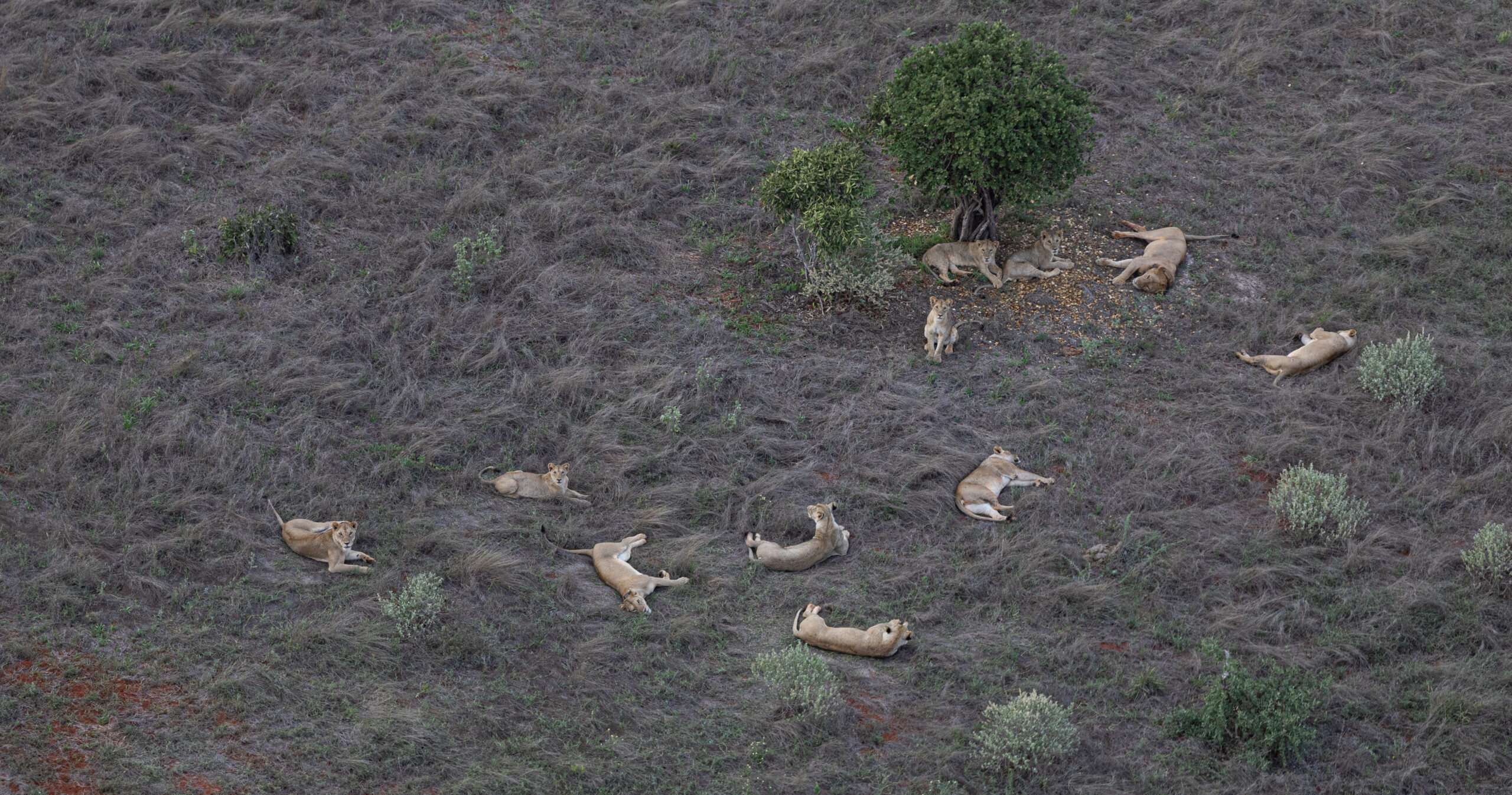
Lions in the same pride may be spread across several kilometres. Roaring helps individuals locate one another and maintain contact.Mate guarding and deterrence
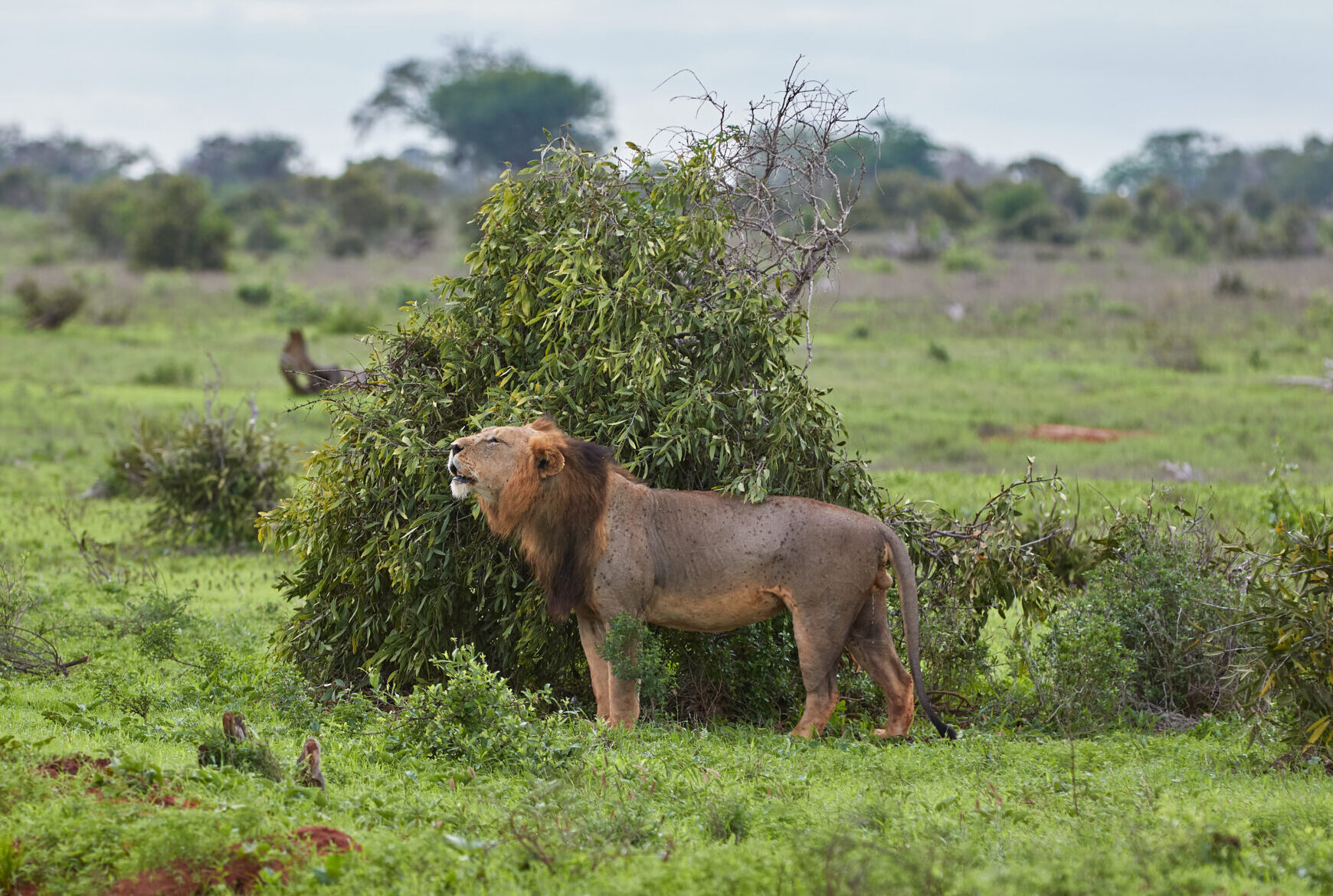
Male lions roar to discourage rival males and to signal continued control over a territory that includes breeding females.
Both males and females roar, although male roars are deeper and typically carry further due to body size and vocal anatomy. Female roars play an important role in reuniting pride members and coordinating movement.
How lions communicate beyond roaring
Roaring is only one component of a broader communication system. Lions also use:
Short-range vocalisations, such as grunts, moans, and contact calls
Visual signals, including tail position, posture, and facial expression
Scent marking, through urine spraying and ground scraping
Together, these signals allow lions to communicate across different distances and contexts. Roaring functions specifically as the long-range element of this system.
How communication supports hunting coordination
Lions do not roar during hunts. Silence is essential when stalking prey. Instead, communication related to hunting occurs before and after the event.
Roaring helps pride members regroup after being dispersed and maintain awareness of each other’s positions within their territory. Actual hunting coordination relies on:
Learned group roles
Visual cues and body positioning
Short, low-volume vocalisations at close range
The effectiveness of cooperative hunting is therefore supported indirectly by long-distance communication, rather than driven by it.
The nocturnal soundscape
Lions roar most frequently at night, when sound transmission is optimal and visual cues are limited. In this context, roaring contributes to a wider acoustic landscape that allows animals to assess presence, dominance, and movement without direct contact.
For lions, this reduces the risk of unnecessary conflict and helps maintain stable spacing between neighbouring prides and coalitions.
Why roaring matters ecologically
Roaring behaviour reflects more than individual expression. It is closely linked to territory size, pride structure, and population density. Changes in roaring frequency or spatial patterns can indicate shifts in social stability, habitat connectivity, or disturbance.
In large, intact landscapes such as Tsavo, natural sound-based communication remains an important mechanism through which predators organise space and social relationships.
A lion’s roar is not simply an iconic sound of the African savanna. It is a highly effective communication tool that can travel several kilometres, allowing lions to defend territory, maintain social cohesion, and reduce direct conflict.