

The Southern ground hornbill is one of Africa’s most distinctive birds. Large, terrestrial, and long-lived, it occupies open savanna ecosystems where it plays an important ecological role as both predator and ecosystem indicator. Unlike most birds, its population dynamics are shaped by extremely slow reproduction, delayed maturity, and an obligate system of cooperative breeding. These traits make the species biologically remarkable, but also particularly vulnerable to environmental change.
A ground-dwelling hornbill of the savannas
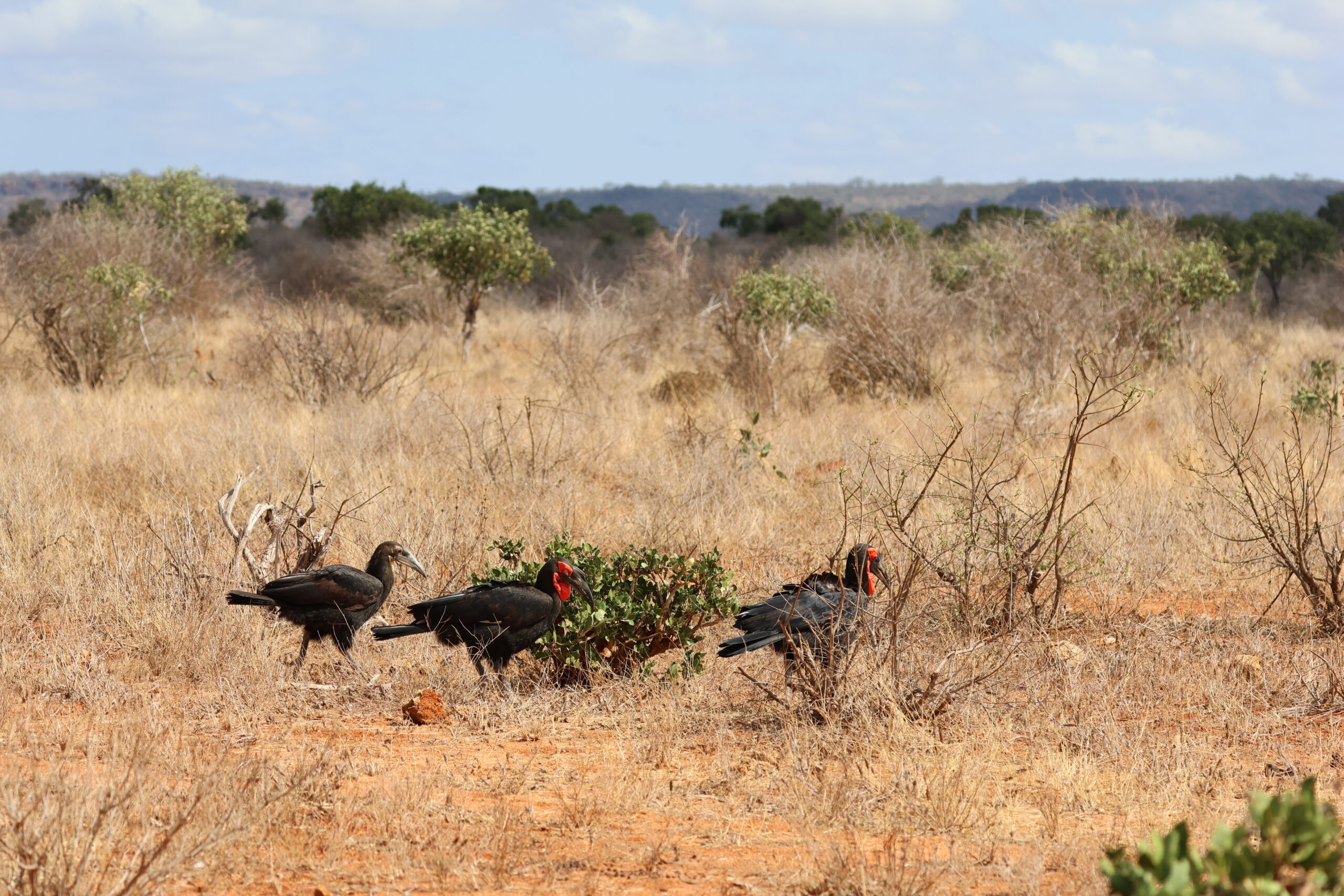
Southern ground hornbills are found across much of sub-Saharan Africa, primarily in open savanna and savanna–woodland mosaics. Their range extends from southern Africa northwards into parts of East Africa, including Kenya, where they occur at the northern edge of their distribution.
Unlike arboreal hornbills, southern ground hornbills spend most of their time on the ground. They walk long distances while foraging and only fly when necessary, typically to reach roost sites or nests high in large trees. Their deep, resonant calls, often given at dawn, can carry several kilometres and play an important role in territorial defence.
Diet and foraging behaviour
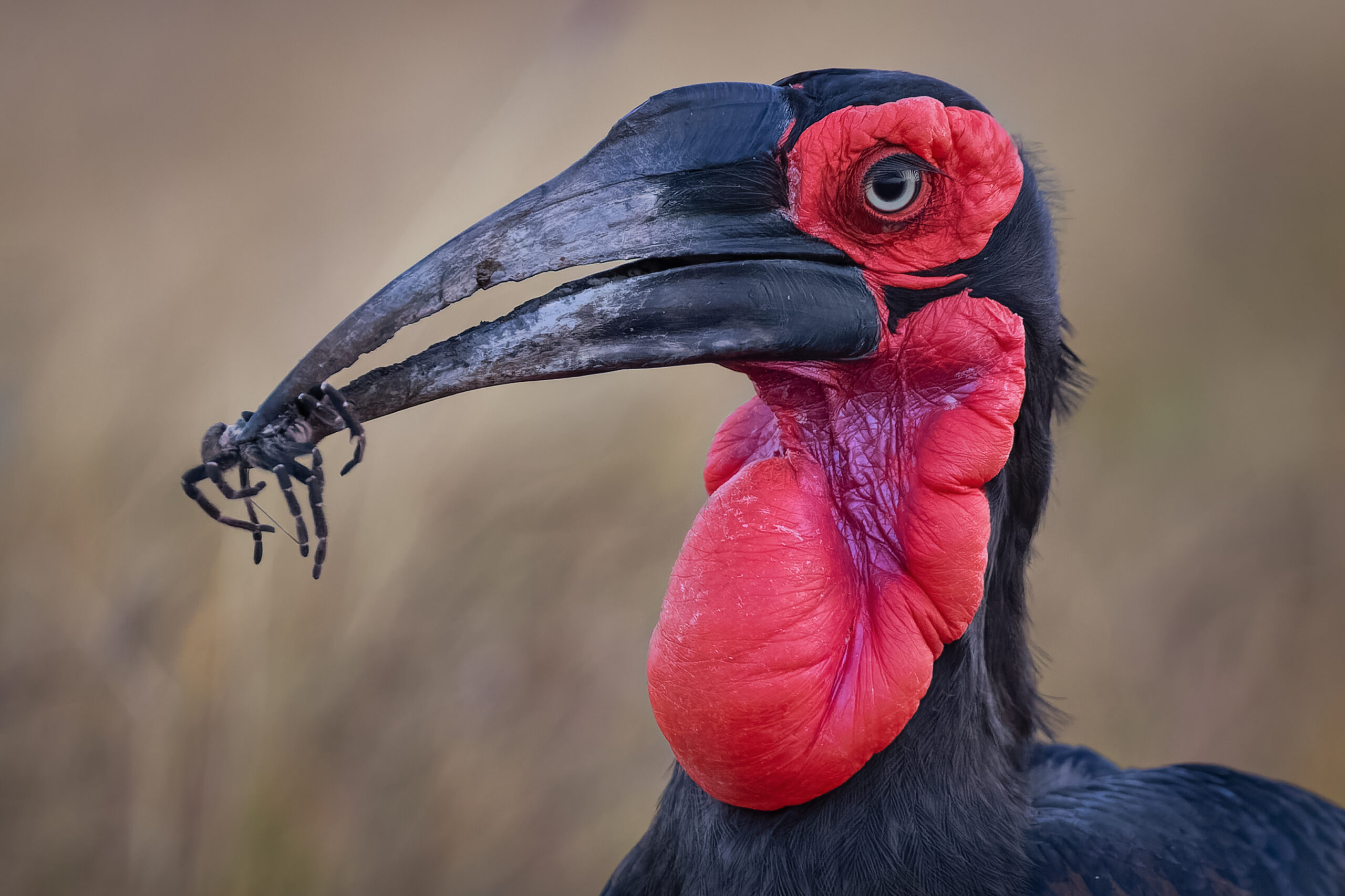
Southern ground hornbills are opportunistic carnivores. Their diet consists mainly of large insects, particularly beetles and grasshoppers, but also includes reptiles, amphibians, small mammals, birds, and occasionally carrion. Foraging is done on foot, with individuals scanning the ground and using their strong bills to capture and subdue prey.
This ground-based hunting strategy is well suited to open habitats and contributes to the regulation of invertebrate and small vertebrate populations within savanna ecosystems.
An unusual breeding system
One of the most distinctive features of the southern ground hornbill is its breeding system. Rather than breeding as isolated pairs, the species will sometime rely on cooperative groups. Each group typically consists of a dominant breeding pair supported by one to several helpers, most often male offspring from previous breeding attempts.
These helpers do not breed themselves. Instead, they assist with territorial defence, predator vigilance, and the provisioning of food to the incubating female and the chick. Young birds may remain with their natal group for many years, gradually gaining experience before dispersing to attempt breeding elsewhere.
This cooperative system is not optional. Long-term studies show that successful breeding is rare without helpers. The extended period that young birds spend within the group allows them to acquire the skills required to raise a chick in a species where reproductive opportunities are infrequent and demanding.
Nesting and chick rearing
Southern ground hornbills nest in large cavities, usually high in mature trees, though rock faces and earth banks may also be used. Breeding is closely linked to seasonal rainfall, which influences food availability.
Females typically lay two eggs several days apart. If both eggs hatch, only one chick is normally raised. The second egg functions as a form of insurance in case the first fails to hatch or dies early. Once the surviving chick is established, food is directed exclusively to it.
Incubation lasts around 40 days. The chick remains in the nest for approximately three months and is entirely dependent on the group for food. Even after fledging, it continues to rely on adults and helpers for extended periods.
Longevity and a slow life history
Southern ground hornbills are among the longest-lived bird species, with life expectancies estimated at 50 to 60 years. However, this longevity is paired with an exceptionally slow reproductive rate. Birds do not reach sexual maturity until around 10 to 12 years of age, and even established groups typically fledge only one chick every several years.
This means that population growth is inherently slow. Losses of adults, whether through habitat degradation, poisoning, or persecution, can take decades to replace. From a conservation perspective, this life-history strategy makes the species highly sensitive to sustained increases in mortality.
Conservation context
The biological characteristics that make the southern ground hornbill distinctive also increase its vulnerability. Large territories, low population densities, delayed breeding, and very low reproductive output limit the species’ ability to recover from declines. Across parts of its range, populations have decreased due to habitat loss, loss of large nesting trees, poisoning, and direct persecution.
Effective conservation depends on maintaining extensive, connected savanna habitats, protecting mature trees that provide nesting sites, and reducing sources of adult mortality. Understanding the species’ cooperative breeding system and long-term dependency on stable group structures is central to any meaningful management strategy.
Final thoughts
The southern ground hornbill represents a markedly different approach to survival among birds. Long life, delayed reproduction, and cooperative breeding define its ecology and shape its relationship with the landscape. These traits allow it to persist in variable savanna environments, but they also mean that population declines can be slow to reverse.
By examining how this species lives, breeds, and interacts with both ecosystems and human cultures, we gain insight into the complexity of savanna systems and the importance of long-term, process-focused conservation approaches.