

Water is a defining factor in elephant ecology. In semi-arid landscapes such as the Tsavo Conservation Area, access to reliable and safe water influences elephant movement, behaviour, and long-term survival. One of the most striking and well-documented behaviours associated with water scarcity is the digging of wells in dry riverbeds. This behaviour is not simply a response to drought. Evidence shows that elephants dig for water even when surface water is nearby, raising important questions about why they do it and how this behaviour shapes wider ecosystems.
Water requirements and elephant movement
Elephants are large-bodied mammals with substantial daily water needs. An adult elephant can drink up to 150–200 litres of water per day, depending on temperature, activity levels, and diet. Maintaining hydration is essential for thermoregulation, digestion, and overall physiological function.
As a result, elephant movements are closely linked to the distribution of water sources. Herds are known to maintain long-term spatial memory of rivers, seasonal pans, springs, boreholes, and riverbeds that retain subsurface water long after surface flow has ceased. In dry seasons, these remembered locations become critical refuges.
How elephants dig for water
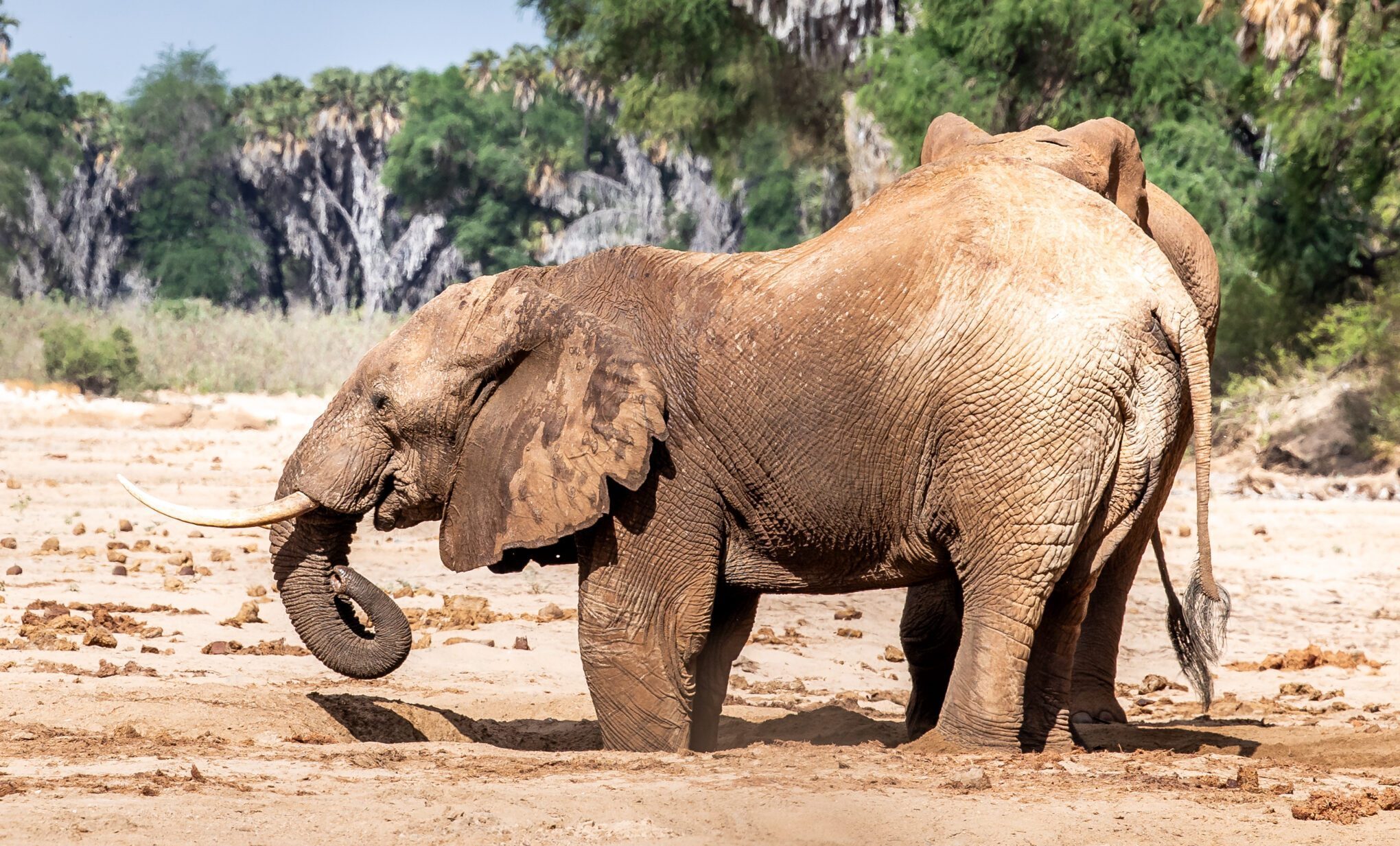
Elephants typically dig for water in sandy or alluvial riverbeds. Using their tusks, they loosen compacted sand and gravel, while the trunk is used to remove material and probe deeper layers. Once the excavation reaches saturated sand, water slowly seeps into the hole, forming a well.
This ability is largely unique to elephants. Their size, strength, tusks, and highly dexterous trunks allow them to access water that is out of reach for most other species. Wells may be shallow or exceed a metre in depth, depending on local geology and the depth of the water table.
Accessing cleaner water beneath the surface
Research published in the Pachyderm Journal provides important insight into why elephants invest significant effort in digging wells even when surface water is available. Elliott et al. (2008) found that elephants preferentially access water filtered through sand, which is typically less contaminated by bacteria than open pools.
Sand acts as a natural filtration system, reducing microbial loads and organic contaminants. Subsurface water is also cooler and less exposed to faecal pollution from multiple species congregating at surface pools. The study showed that elephants often dig wells only metres away from free-flowing water, indicating that water quality, not availability, is the primary driver of this behaviour.
The same research suggests that elephants breaking into borehole pumps and water storage tanks are likely responding to the same incentive: access to cleaner water than that available in adjacent open drinking areas. Whether elephants distinguish between water sources using taste, smell, or a combination of both remains unknown, but their choices are consistent and repeated.
Desert-dwelling elephants and selective water use
This behaviour is particularly evident among desert-adapted elephant populations. In some arid regions of Namibia, elephants dig wells even when visible surface water is present, reinforcing the conclusion that digging is a deliberate and selective behaviour rather than an act of desperation.
Such patterns suggest learned behaviour passed across generations, shaped by long-term experience in water-limited environments. The consistency of well-digging across different regions supports the view that elephants actively assess water sources and make informed choices about where to drink.
Elephants as providers of shared water resources
Elephant-dug wells rarely benefit elephants alone. Once water is exposed, it becomes accessible to a wide range of other species, including antelope, birds, and smaller mammals that lack the physical ability to dig through compacted sand.
In northern Kenya, herders are known to follow elephant movements during dry periods, using freshly dug wells in dry riverbeds as temporary water sources for livestock. These interactions are not new and reflect a long-standing coexistence shaped by shared reliance on scarce water resources in arid landscapes.
Through this process, elephants function as ecosystem engineers. By accessing and exposing subsurface water, they increase water availability across the landscape, particularly during prolonged dry periods.
Sand dams, water retention, and elephants in Tsavo
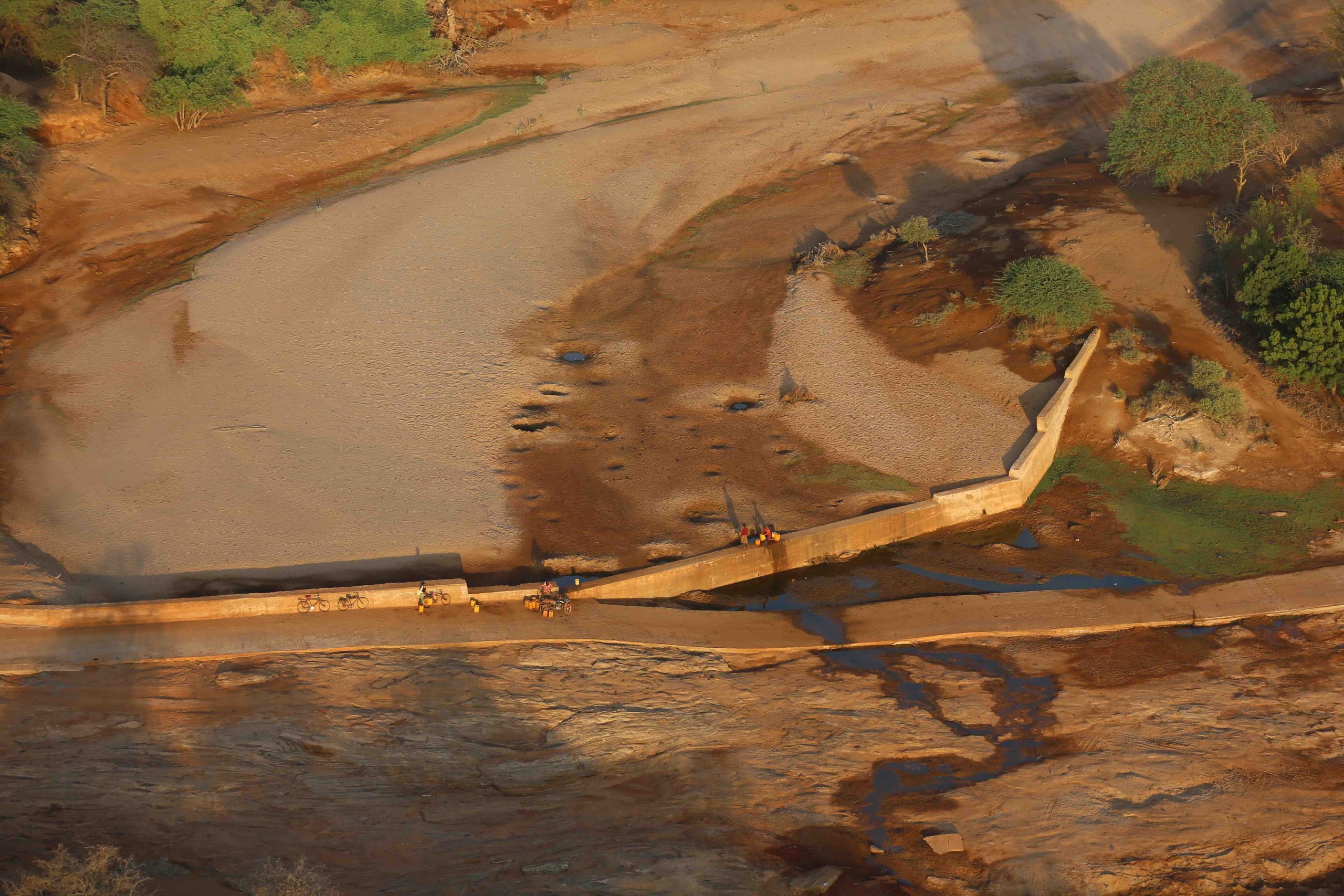
In the Tsavo Conservation Area, Tsavo Trust has partnered with Sand Dams Worldwide to implement a pilot sand dam project designed to improve water retention for both wildlife and communities living adjacent to the Parks. To date, 13 sand dams have been constructed at carefully selected locations along seasonal watercourses, with plans for more over the coming years.
Sand dams are simple concrete structures built across riverbeds. They do not block the natural flow of water. Instead, they slow it down. During the rainy season, water carrying sand and silt meets the dam. The heavier sand settles and accumulates behind the structure, while finer silt and water continue downstream as normal.
Over time, a substantial body of sand builds up upstream of the dam. When the rains end, this sand remains, trapping large volumes of water within its pore spaces. Stored in this way, the water is protected from evaporation, naturally filtered, and available well into the dry season.
The ecological effects are visible after just one rainy season. Vegetation around sand dams improves, soil moisture increases, and wildlife activity intensifies. Elephants are frequent users of these sites, digging into the sand to access water. Once they have finished drinking, other species often make use of the wells created by the elephants, extending the benefit across the ecosystem.
Water, elephants, and landscape resilience
Elephant well-digging highlights the close relationship between animal behaviour and landscape processes in dry environments. By accessing cleaner subsurface water and making it available to others, elephants contribute to ecological resilience during periods of water stress.
Understanding this behaviour is important for conservation planning. Protecting natural river systems, maintaining subsurface water availability, and supporting water retention initiatives such as sand dams all help sustain wildlife populations and reduce pressure on limited surface water sources.
Help support Tsavo Trust’s efforts in protecting habitats wildlife and communities.